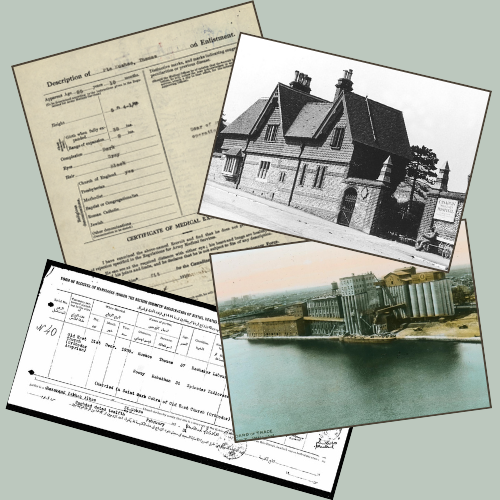
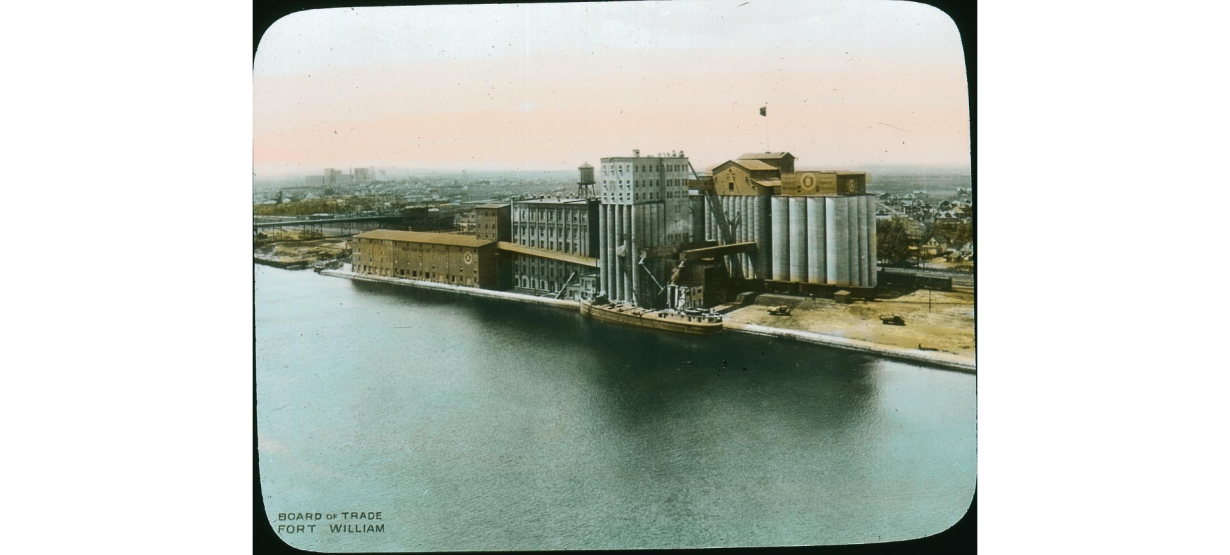
Kushoo Thoms (AKA Kushoo Thomas) was born in Urmia, in northern Persia (Iran) in 1893. While we don’t have records of his exact immigration date, he arrived in Canada around the year 1913. He settled in Fort William (now Thunder Bay), where he worked as a grain elevator labourer at the Olgilvie Flour Mill. Although the reasons for his immigration to Canada are unknown, he was Assyrian and may have chosen to leave Urmia to escape ethnic and religious persecution. The early 20th century was a dark time for Assyrians living within the Ottoman Empire and in neighboring Persia. The rise of the Young Turks movement and Turkish nationalism led to increasing anti-Christian sentiment and violence. By the beginning of the First World War, the Assyrian genocide (known as the Sayfo) had begun. Hundreds of thousands of Assyrians were killed or displaced by Ottoman forces. While just beyond the borders of the Ottoman Empire, Assyrians in Urmia and other Persian border communities were also targeted in the Sayfo.
Although Thoms was now in Canada and away from the ethnic violence happening in his homeland, his immediate family remained in Urmia. After the Russian Revolution in 1917, the Russian military, who had been occupying Persia since 1909, was forced to leave the country. The resulting power vacuum led to increased violence and eventually an Ottoman invasion of Urmia by July 1918. The news from Persia must have deeply affected Thoms. Although he was not a British subject, he decided to voluntarily enlist in H company, 1st Depot Battalion of the Manitoba Regiment on June 27, 1918, in Port Arthur, Ontario.
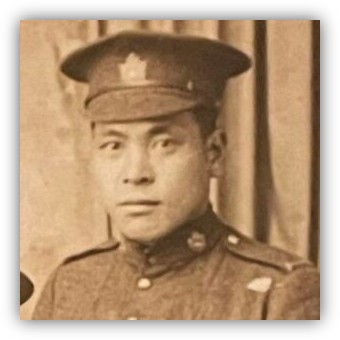
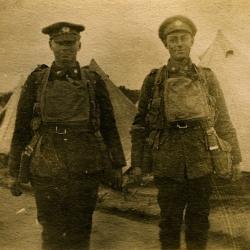
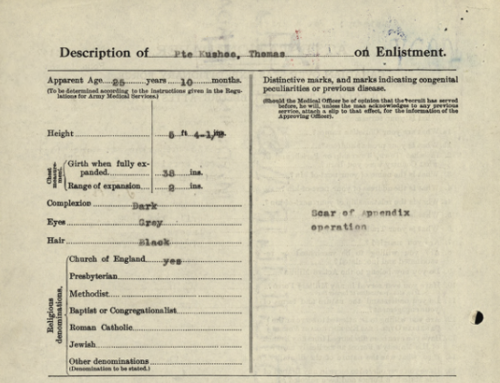
While there are no identifiable images of Thoms, his personnel record of his service in the war provides us with some information on his appearance. He was 5 foot 4.5 inches tall and 144 pounds. He had a dark complexion, brown eyes and a scar from an appendectomy that he had in 1916. Although not noted on his medical examination upon enlistment, other documents in his file note that he had small tattoo markings on three of his fingers on his right hand. These likely were rushma, a traditional type of tattoo used in some Assyrian communities at the time.
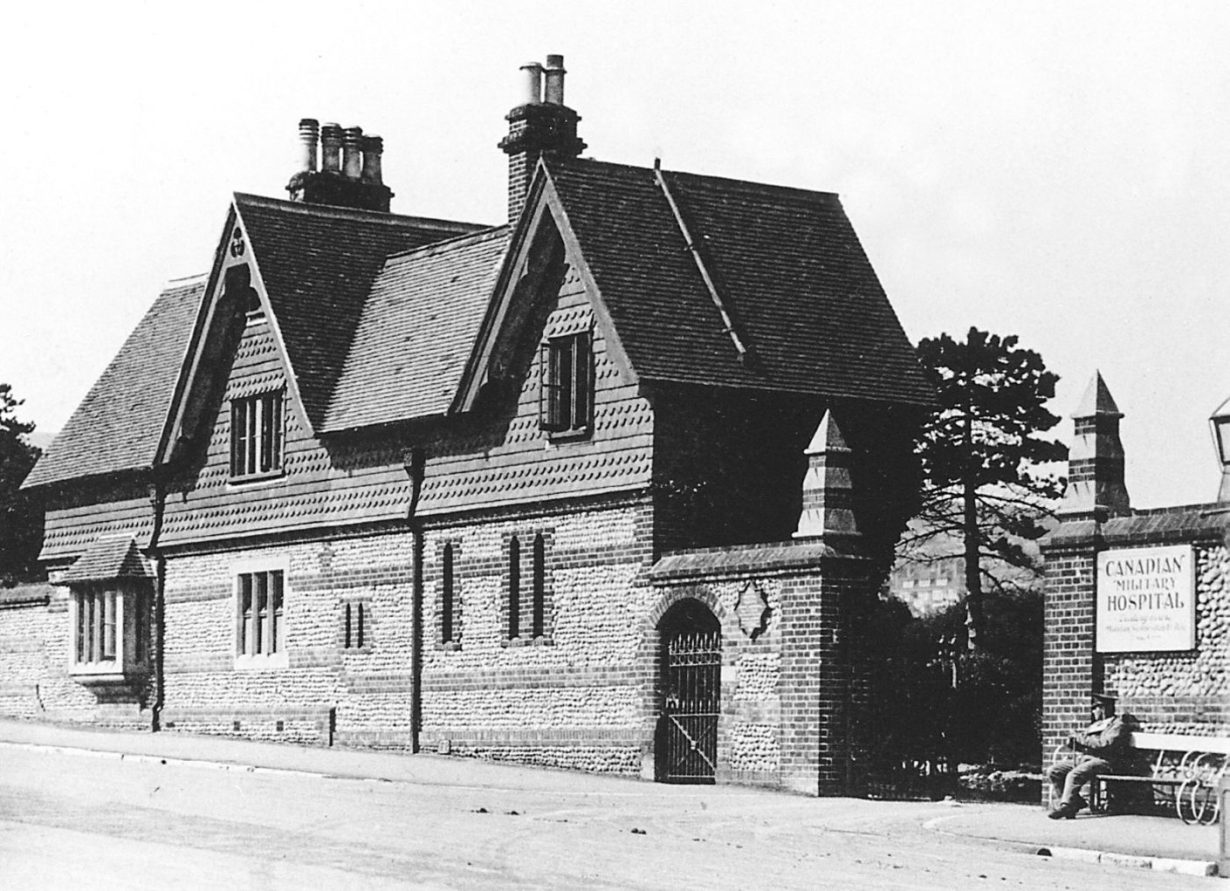
On August 15, 1918, Thoms arrived in England and was subsequently transferred to the 18th Reserve Battalion in Seaford. Reserve battalions, like the 18th, generally provided reinforcements to other units who suffered casualties or needed additional personnel. The war ended before Thoms could be sent to the front, however, and he likely spent most of his time training and preparing for eventual battle. On December 11, 1918, one month after the war ended, he was sent to work at the 14 Canadian General Hospital. Although the war was over, there were still many military personnel who needed treatment while convalescing. Thoms’ time at the hospital also coincided with a major and deadly outbreak of influenza. Between January 1 and March 31, 1919, the hospital saw 830 patients with the virus, and 30 died as a result of illness. While we do not have a record of Thoms role at the hospital, it is likely that he worked as an orderly. Orderlies played many roles including patient transport, ward cleaning and general hospital labour. Thoms worked at the hospital until they stopped taking on new patients on June 30, 1919. On July 18 he started his journey back to Canada on the Winifredian. He was officially discharged from service in Port Arthur on July 31, 1919. Back from his service overseas, Thoms resumed his work at the flour mill. On July 30, 1924, he took the Oath of Allegiance and became a naturalized citizen of Canada.
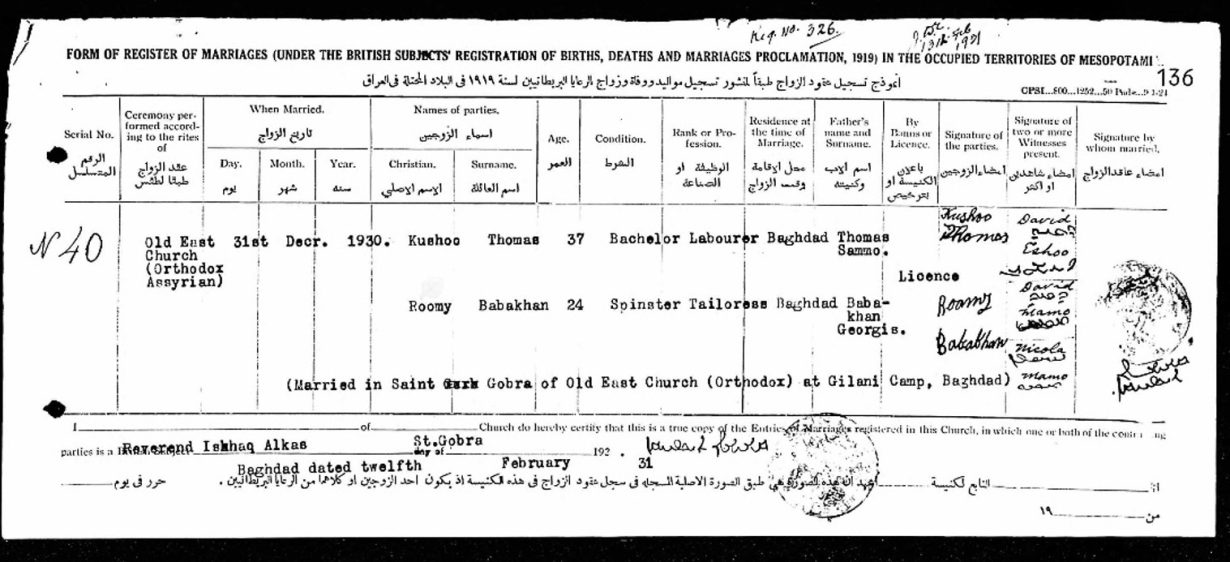
In late 1930, Thoms travelled to Iraq. In the aftermath of the Sayfo, many Assyrians from Urmia had fled to Iraq and were living in refugee camps in Baghdad. It was during this trip that Thoms married his wife Roomy Babakhan (Benjamin). Kushoo and Roomy were married at the St. Gobra of Old East Church at Gilani Camp on December 31, 1930, and the newly married couple returned to Canada the following March. Together Kushoo and Roomy made a life together in Fort William. Kushoo continued working at the mill for over 30 years and Roomy eventually became a store clerk. In 1951, Roomy’s mother immigrated to Canada and moved in with the couple at their house on Francis Street. The Thoms moved to Walkerville, Ontario (now part of Windsor) around 1961 after Kushoo retired from the mill. Kushoo lived in Walkerville until his death on May 19, 1969. He is buried in St. Alphonsus Cemetery in Windsor.
Stories like Kushoo Thoms are often overlooked when discussing the First World War. He did not fight in any battles. His actions overseas were never mentioned in newspapers, nor remarkable enough to merit a medal for bravery. Yet, like so many, he volunteered to serve and played an important supporting role in Canada’s efforts overseas. Moreover, as one of the only Assyrian Canadians to serve, his story provides us a unique look into the experiences of Middle Eastern soldiers in the Canadian Expeditionary Force.
Written by Anthony Badame for Honouring Bravery
Sources
History of No 14 Canadian General Hospital, Library and Archives Canada
Kushoo’s Personnel file, Library and Archives Canada
Windsor Star (May 20, 1969). Obituary for Kishoo Thoms.