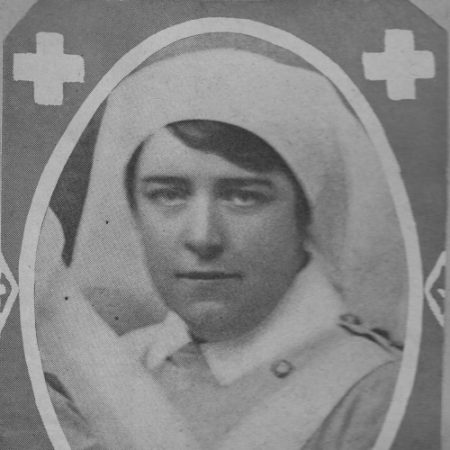
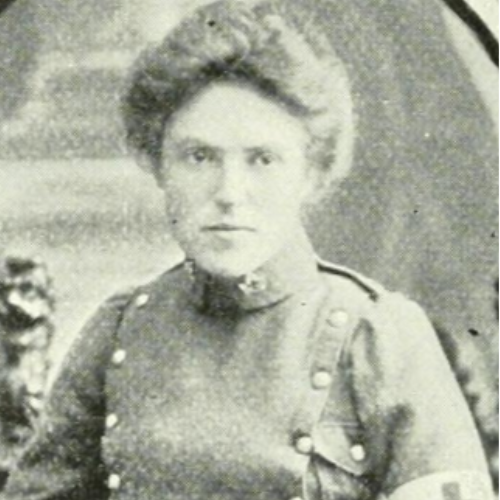
At the turn of the 20th century, women had few opportunities to serve in Canada’s military. Some of the first women to be allowed to serve were the nursing sisters of the Boer War. Marcella Richardson was one of the twelve Canadian women who cared for thousands of soldiers throughout the war.
Early life
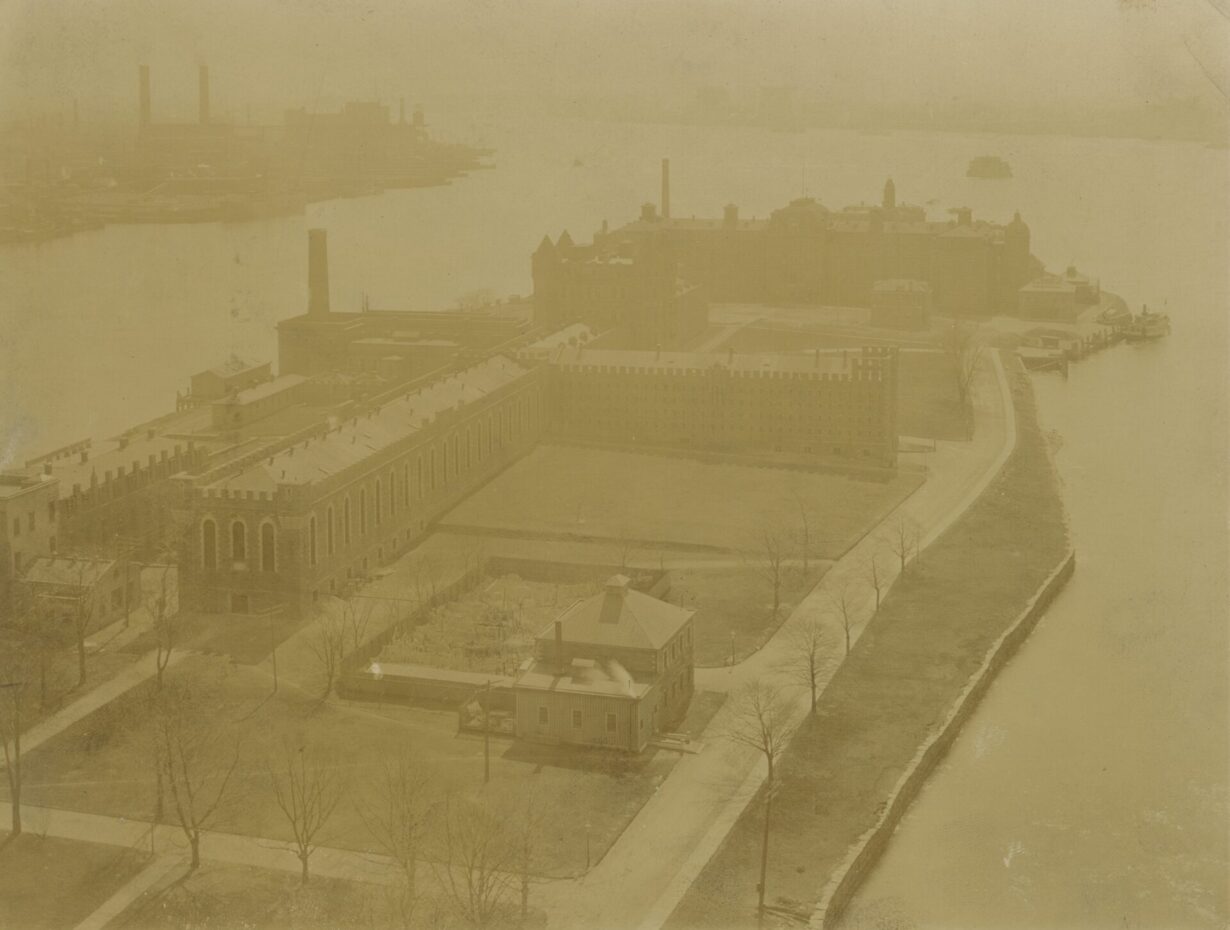
Marcella Percy Richardson was born on November 13, 1873 in Woodstock, Ontario. When she was a young child, her family moved to Saskatchewan. Her father, Hugh Richardson, was a Supreme court judge for the Northwest Territories in Regina, who most notably presided over the trial of Louis Riel during the 1885 Northwest Rebellion. Marcella attended boarding school at the Convent of the Congregation de Notre Dame in Ottawa and excelled her classes. In fact, in 1886 she received the Governor General’s medal for her academic excellence. Shortly after graduation, she moved to New York to train as a nurse at the Charity Hospital Training School on Blackwell’s Island (now known as Roosevelt Island).
Professional nursing was still a relatively new concept, with only a handful of institutions providing nursing instruction. Many Canadian women travelled to the United States to receive this education, which included hands-on experience caring for the sick. Marcella had found her calling. In 1889, after completing her certification, the school hired her as a supervising nurse to help train new students. She would stay in this position until the start of the Boer War.
What was the Boer War?
The Boer War (1899-1902), also known as the South African War, was a colonial conflict between Great Britain and the Boer Republics of South Africa: The South African Republic (Transvaal) and the Orange Free State. When Britain took control of parts of South Africa in the early 19th century, the Boers, who were primarily descendants of Dutch settlers, refused to submit to British Rule. Seeking to gain total control over the Boer Republics, Britain eventually declared war against the Boers in 1899. While primarily fought between two white colonial groups, thousands of Indigenous Africans served in both support and combat roles. The British also applied a scorched earth policy that destroyed Indigenous African farms and homes and created thousands of refugees. The British set up over 100 civilian “refugee” camps, which soon became known as concentration camps. Black Africans and Boers were confined in different camps; tens of thousands died of disease and starvation.
Canadians were divided over whether to get involved in the war. Many English Canadians believed it was Canada’s duty to help Britain, while many French Canadians, having their own strained history with British imperialism, felt sympathy for the Boers. However, after intense pressure, the government decided to send troops to South Africa. This marked the first time that Canada sent troops overseas for a foreign war. Over 7000 Canadians in three contingents served during the conflict. Canadians fought in many Battles in South Africa but are primarily remembered for their important role securing victory during the Battle of Paardeberg in 1900.
The Boer War years
In 1899, the Canadian military made the decision to send a group of nurses for medical support alongside each contingent of soldiers serving in the Boer War. Out of the many applications received, only twelve nurses were eventually chosen to take part. Each Nursing Sister was granted equal pay to that of a lieutenant.
Canadian Nursing Sisters of the Boer War
Georgina Pope
Sarah Forbes
Elizabeth Russell
Minnie Affleck
Margaret MacDonald
Deborah Hurcomb
Marcella Richardson
Margaret Horne
Florence Cameron
Eleanor Fortesque
Amy Scott
Margaret Smith
Marcella was selected as one of four nurses to travel to South Africa as part of the second contingent. On Janurary 20,1900, Marcella boarded the Laurentian in Halifax to start the long journey to South Africa. Before leaving, the Montreal Daily Star interviewed her and the other nurses of the Second Contingent. Speaking about her role in the war, Marcella said “…really we do not know what we are going to do ourselves. Beyond the fact that we have two khaki uniforms and two sailor hats, we don’t know what they are going to do with us.”
Less than a month later, Marcella moved to a temporary hospital in Kimberly. The town was still recovering from a Boer siege, which had recently ended. Marcella and three other Canadian nurses worked at a temporary hospital, which was set up in a masonic temple that contained only basic supplies. Besides some British orderlies, they ran the hospital alone.
She arrived in Cape Town on February 17th and first worked at the British No. 3 General Hospital in Rodebosch. Nursing Sisters were not allowed to be near the front and instead, worked out of base hospitals where they tended to soldiers who had been transported further away from the fighting. The vast majority of soldiers that they treated were in hospital due to infectious diseases rather than battle wounds.
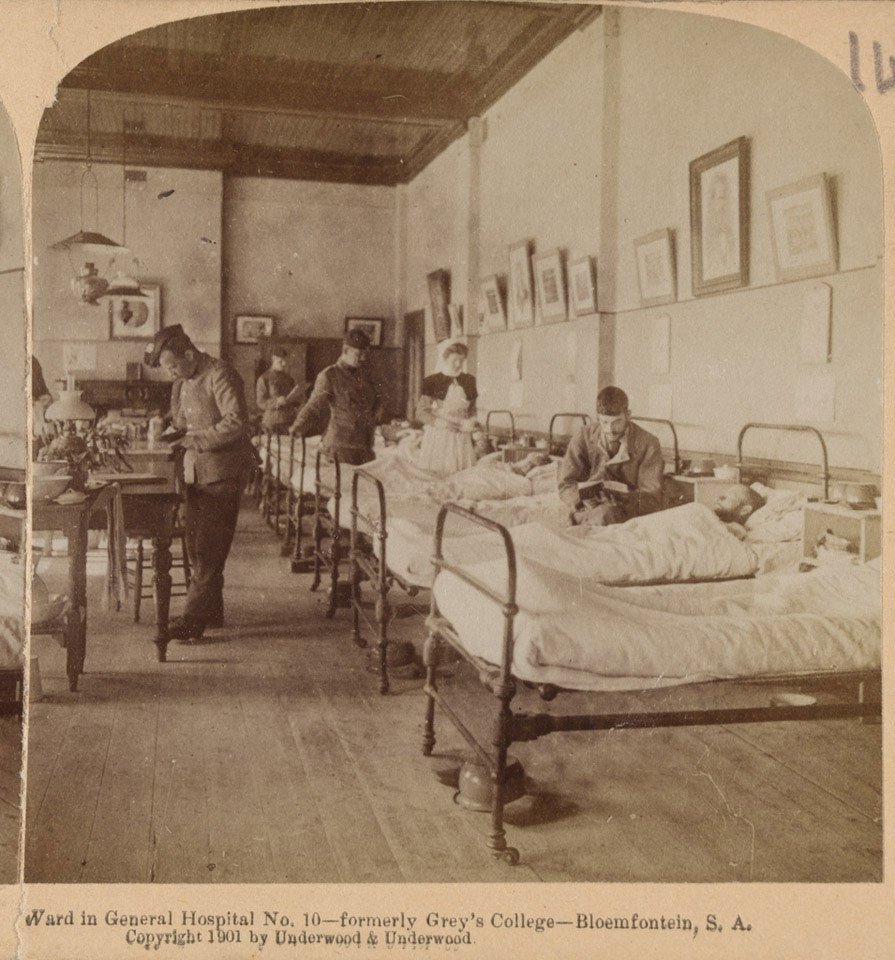
In late April 1900, Marcella was sent to Bloemfontein, once the capital of the Orange Free State, to work at the No. 10 General Hospital. This became one of the most difficult postings for the Nursing Sisters. Supply lines to the city were not always secure, which made it difficult to get food and resources. Potable water was also in short supply and poor sanitation resulted in major typhoid and dysentery outbreaks. Marcella and two of her three colleagues became very sick with enteric fever. One of the nurses was invalided back to England. Marcella stayed in South Africa and fortunately recovered.
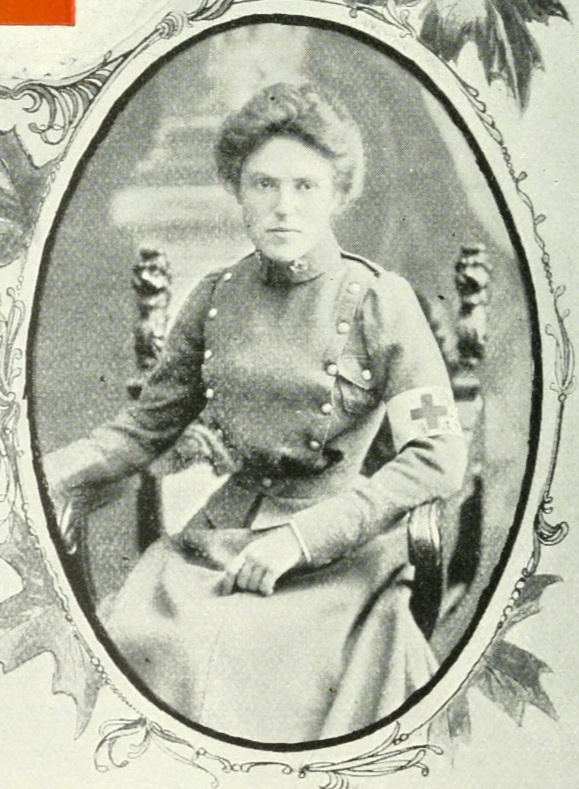
As British troops gained more Boer territory, Marcella was once again transferred. She reached the Irish Hospital in Pretoria on July 20, 1900, and stayed there until she returned to Canada in January 1901. However, later that same year, Marcella returned to South Africa to work with the Canadian contingent to the South African Constabulary. In total, Marcella spent nearly five years working in South Africa both during and after the war.
Marcella’s contribution during the Boer War did not go unnoticed. In 1901, she was mentioned in the dispatches of the London Gazette for her work keeping the hospitals “in a state of efficiency”. She also received both the Queen’s Medal and the King’s medal for her military service in South Africa (although she lost both medals in a fire at the Gilmore Hotel in Ottawa in 1906). In 1904, she became one of the first nurses appointed to the newly formed Canadian Army Medical Corps Reserve as a result of her service. Her service in the Boer War also qualified her to apply for a land scrip through the Militia Department in 1908. She was given a parcel of land near Kincaid, Saskatchewan, but sold the land around 1914.
First World War service
When Canada entered the First World War, Marcella was once again ready to serve. She was sent to France in November 1914 to work with the No. 2 Canadian Stationary Hospital. This unit was the first to land in France during the war. Marcella transferred to the No. 11 (Imperial) General Hospital in Boulogne and was later mentioned in dispatches for her “gallant and distinguished service in the field”.
During her service in Boulogne, the hospital saw as many as 1200 people a day. It was exhausting work. The stress caused Marcella severe gastritis, and she suffered a gastric hemorrhage. Although she eventually recovered, reports back to Canada mistakenly said that she died because of her illness. Her recovery was not without its own complications, however. According to one account, a zeppelin bombed the building that she was recovering in and she narrowly escaped. Eventually, she was granted leave back in Canada.
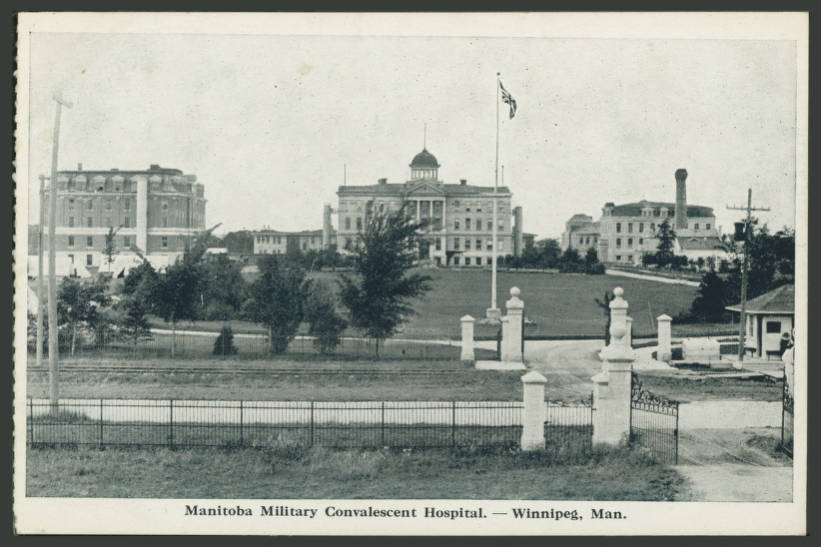
Instead of going back to Europe, Marcella worked in hospitals in Canada. She became the matron of Deer Lodge Military Hospital in Winnipeg before becoming the principal matron for the Tuxedo Military Hospital and for the entirety of Military District 10 (which included all of Manitoba and parts of Western Ontario). By 1917, she was also supervising the mobilization of nurses in western Canada overseas. She transferred to Military District 13 in Calgary in June 1918 and remained the principal matron of the district until her demobilization in 1919.
Later years
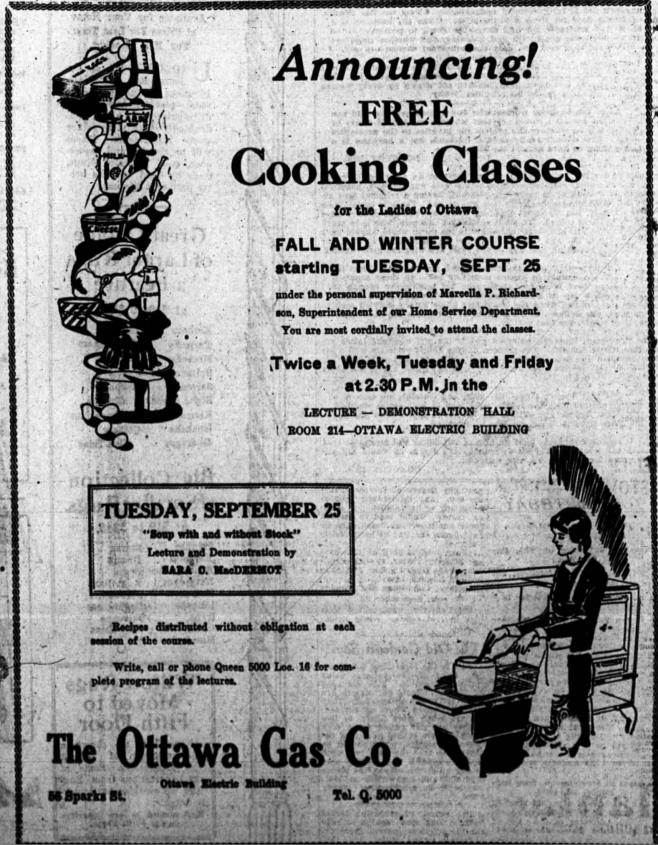
After the war, Marcella returned to New York. In 1928 the Ottawa Gas and Electric Companies hired her to be the new superintendent of their Home Service Department, and she moved to Ottawa. The Home Service Department dealt with educating the public on topics of home economics and provided services like cooking classes. Although not a nursing position, Marcella’s years of supervisory experience made her the perfect candidate. She worked at the company until 1932. In her later years, she moved to Miami, Florida and died at a convalescent home there on June 20, 1958. Her cremated remains were buried at Beechwood cemetery in Ottawa.
Marcella Richardson was a true trailblazer. As one of the first women to serve in Canada’s military, she helped pave the way for countless other women to serve.
Written by Anthony Badame for Honouring Bravery
Sources
The Canadian thresherman and Farmer (December 1916). New Men from Battered Hulks. pages 14 and 30.
The Evening Mail (Sep 17, 1906). Many Deaths Likely in Ottawa Hotel fire. Page 5.
Free Press Prairie Farmer (Jan 3, 1901). Col Evans and Maj Williams Returning. Page 7
The Leader-Post (Jul 6, 1886). Regina- A Lady Gold Medalist. Page 1.
The Leader-Post (Apr 1, 1916). Former Regina Girl Gains Honour as Nurse. Page 6.
London Gazette (September 10 1901). [Mentions in Dispatches]. page 5969.
Manitoba Free press (April 23, 1915). Canadian Nurse Dies at the Front. Page 16.
The Montreal Star (Jan 22, 1900). Nurses Attracted Attention. Page 6.
The Montreal Star (Dec 24, 1901). Field Hospital for South Africa. Page 7.
The New York Times (June 16,1892). Trained Nurses Graduate. Vol 41 (1273).
The Ottawa Citizen · (Jun 23, 1915). Ottawa Nurse Serving with Distinction. Page 1.
The Ottawa Journal (Sep 22, 1928). Miss M. P. Richardson. Page 17.
The Ottawa Journal (Sep 24, 1928). Announcing free cooking classes. Page 10.
The Ottawa Journal (Sep 07, 1932). Miss Richardson honoured. Page 8.
The Ottawa Journal (Jun 24, 1958). Miss M. Richardson: War nurse dies. Page 5.
Telegraph-Journal (Jan 8, 1900). Ladysmith Attacked. Page 2.
The Winnipeg Tribune (Dec 1, 1917). Nurses Mobilize for War Service. Page 19.
Blanchard, Jim (2010). Winnipeg’s Great War: A city comes of age. University of Manitoba Press.
Canada Newspaper Co. (1916). For returned Canadian Soldiers.
Imperial Order of the Daughters of the Empire Manitoba (1916). Souvenir, 1916
Labat, Gaston (1901). Le livre d’or (The golden book) of the Canadian contingents in South Africa.
Library and Archives Canada. First Report Canadian Red Cross Society
Library and Archives Canada. Marcella Richardson’s Militia and Defence personnel file.
Library and Archives Canada. Marcella Richardson’s Militia and Defence Personnel file (2).
Library and Archives Canada Marcella Richardson’s WWI Military Personnel file.
Mann, Susan (2005). Margaret MacDonald: Imperial Daughter. McGill-Queen’s University Press.
National Army Museum. (c. 1901). Ward in General Hospital No. 10, formerly Grey’s College, Bloemfontein, S.A
Norris, Marjorie (2010). Sister Heroines : the roseate glow of wartime nursing, 1914-1918. Northwest Printing.
Novelty Mfg. & Art Co., Limited (1917-1919). Manitoba Military Convalescent Hospital. Winnipeg Public Library.
NYC Department of Records and Information Services. Image of Charity Hospital on Blackwell’s Island