‘Welsh dash’, meaning to be brave and gallant, is a virtue much valued by the Royal Welch Fusiliers, Wales’s most senior regiment of foot. This was exemplified by Captain Edward Bell VC. During the Crimean War, Bell famously seized a heavy Russian gun by dashing forward with little regard for his own safety before pointing his empty revolver at the drivers’ head, leading to him dismounting his horse and fleeing. For this gallant endeavour, Bell was awarded one of the Royal Welch Fusiliers’ first Victoria Crosses.1 The gun can still be seen today displayed at the regiments’ museum in Caernarfon Castle, North Wales. Almost a century later, this bold tradition of ‘Welsh dash’ would be again exemplified by none other than a rural Canadian farm labourer from Manitoba.
The CANLOAN Scheme
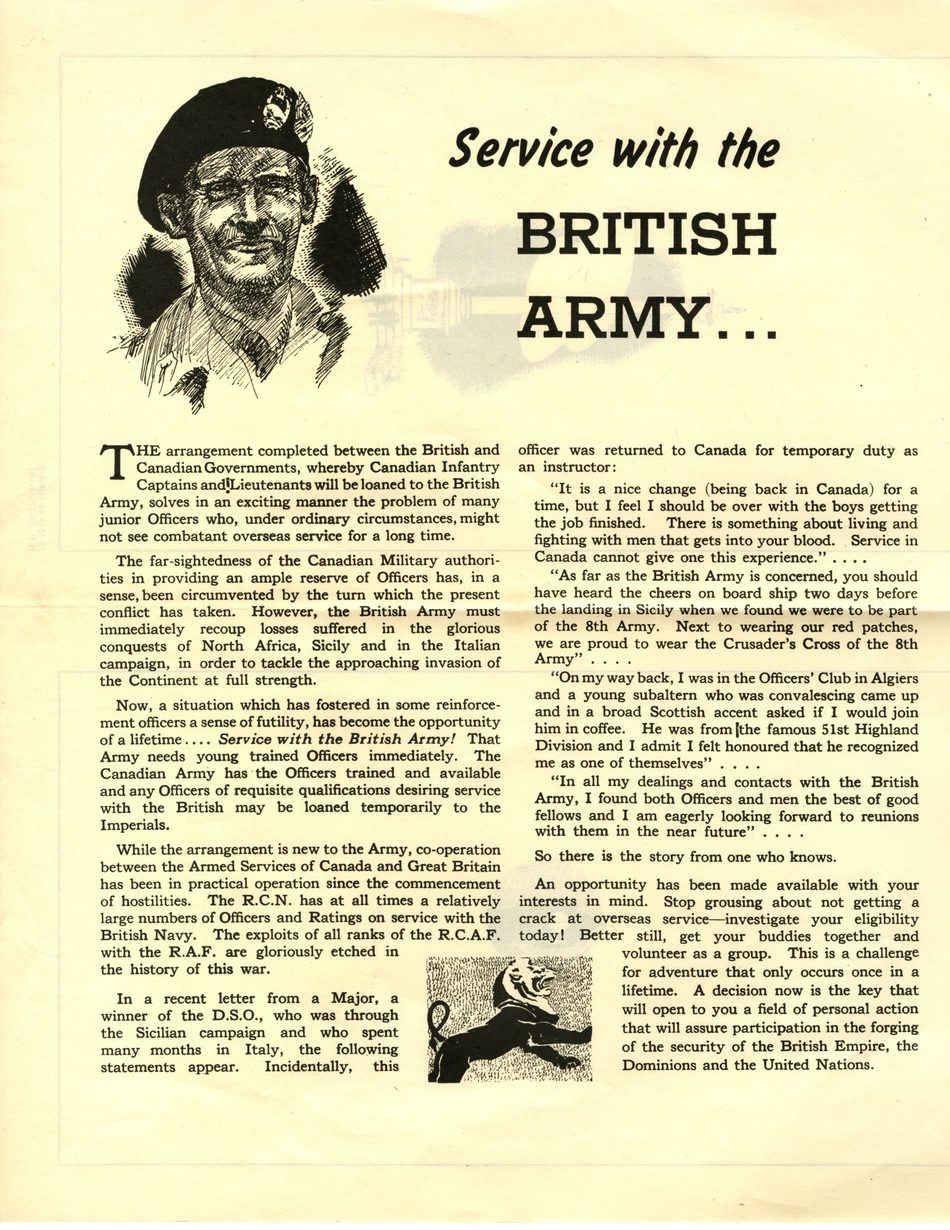
In 1942 and 1943 the British army was in crisis. Fighting a global war against the axis powers had stretched its armies beyond any reasonable measure. Compounding this issue was the rapid expansion of the British army in the leadup to an expected invasion of Northwest Europe. It was discovered that Britain could not supply the required quantity of junior officers to meet this demand. Canada, however, had the opposite problem. At this time the Canadian army had a surplus of officers, due in part to the disbanding of two Home Defence divisions. In response to these issues, the CANLOAN scheme was devised in the autumn of 1943, whereby Canadian infantrymen could volunteer to serve within British infantry regiments. In total, 673 Canadians volunteered; these officers were considered British for all purposes except pay and were given special three-digit serial numbers with the prefix CDN.2
Image: Recruitment leaflet promising early action with the British Army bearing the likeness of Bernard Montgomery (University of Western Ontario).
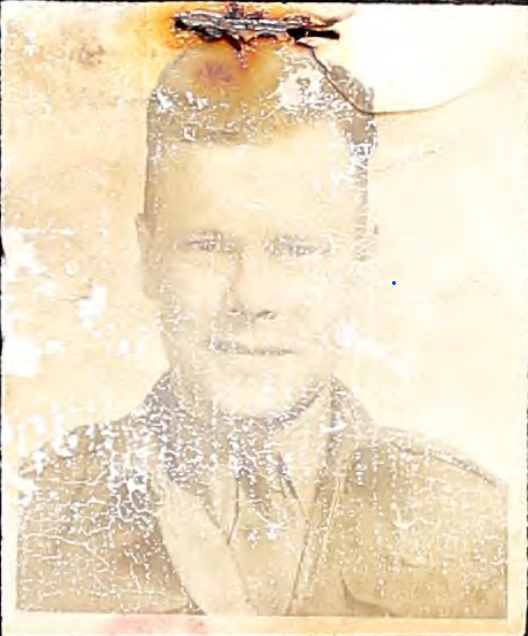
James Murray Suttie
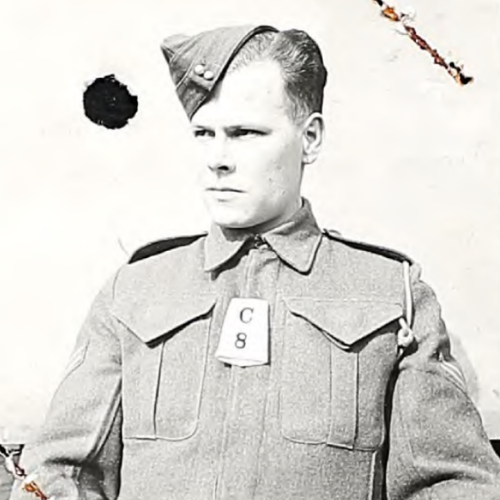
James Murray Suttie, a “Typical young Western Canadian of the best type. An excellent representative officer for the British Army”3 was born on the 12th of October 1916 in Wellwood Manitoba to Mr. John Duncan Suttie and Mrs. Elizabeth Suttie, both Protestant crop farmers of Scottish descent.4 Suttie, a follower of the United Church of Canada and a subscribed member of his local Orange Lodge, continued practicing his parent’s Protestant traditions. At age 16, he completed the eleventh grade and left school to take up a one-year course in typing, shorthand and bookkeeping. Leading an exceptionally active lifestyle, the office life didn’t suit Suttie and he returned to his father’s 1200-acre farm in 1933. There, he enjoyed his life farming, wrestling, hunting and fishing in the Manitoba countryside with his parents and three younger brothers, William, John and Charles. When he wasn’t doing these or working, he played chess, ice hockey, baseball, collected military badges and read histories, biographies and historical novels. In 1937, as his father’s farm grew, Suttie assumed further responsibility as a ‘tax accountant’, which routinely took him 192 kilometres east to Winnipeg. It was here in Winnipeg that a 24-year-old Suttie volunteered for service with the Princess Patricia’s Light Infantry on the 5th of January 1940.5
Suttie, with a long history of persistent physical activity, began his basic infantry training at Fort Osborne Barracks in Winnipeg with enthusiasm. One commanding officer noted that he was “Keen. Willing to learn. Co-operative. Reliable. Appears well able to adapt himself as required.”6 At Fort Osbourne Barracks, Suttie was introduced to the “common-to-all-arms” training curriculum. Procedure and discipline were instilled through close order drill, routine inspections, common punishments and lectures on the fundamentals of military life.7 In April, Suttie embarked for England to join the Patricias, who had already departed in October 1939. While there, he completed his advanced training, and his specialist training as a regimental clerk.
Founded in 1914, Princess Patricia’s Canadian Light Infantry is today regarded by the Canadian Armed Forces and its veterans as one of Canada’s most respected and storied regiments.8
Perhaps, as someone who enjoyed military history and fiction, it was this reputation that inspired Suttie to volunteer for service within Princess Patricia’s Canadian Light Infantry. Suttie’s service within the regiment however would be largely uneventful, arriving in Liverpool, England in April 1940 before transiting to Aldershot camp in Hampshire. He took several courses while in Hampshire and one officer remarked that Suttie was ‘an excellent student, and an example to others’.9 The Patricias would spend three years deployed in the United Kingdom with the Canadian Second Brigade, most of which was spent in coastal defence and training in various parts of the country. Suttie, for his part, served as a company clerk for the regiment before transferring to rear divisional Headquarters. as an admin clerk in September 1941.
Deciding that he was best suited for the infantry officer lifestyle, he began his training in SOTC A-34 (a specialist officer training center for CANLOAN candidates) on the 11th of December 1943, three months after volunteering for the scheme. In March 1944 he graduated as an officer of the British Army, departing for England again that May.
On the morning of the 25th of June, 158 Brigade, which now comprised the 4th, 6th and 7th battalions of the Royal Welch Fusiliers, departed from Maidstone, Kent to Gold Beach, Normandy. The blistering heat and dusty conditions that greeted the Brigade set the tone for what was to come in the following weeks. For seven hours, Welchmen marched across the battle-scarred Normandy terrain. Suttie’s colleague, Captain Nick Cutcliff recalled the scene: ‘Here we saw our first dead Germans. One sniper in camouflage smock was already turning green, his lips receding from his teeth. Near the Forward platoon were several others and a couple of dead Tommies were lying in the open. I went to look at them. I had to get used to the sight sooner or later and the sooner the better.’10
Fortunately, an advance party consisting of A Company, 4th Battalion had cycled ahead of the Brigade column to identify the path into the depths of the bocage11, leaving behind bright white signs marked with the famous black flash of the Royal Welch Fusiliers. Along the way they were warmly greeted by ‘people of all ages cheering and waving’ on cobbled streets of Bayeux.12 B Company, however, marched on foot. When they arrived at Crepon, they discovered a sign that read ‘Only two miles to assembly area – keep going – keep smiling’. Eventually they arrived at a large cattle farm situated on the Rue Aux Vaches. The humble shelter was Suttie’s final respite before moving into defensive positions in the Bretteville area on the 28th of June. That night was Suttie’s first experience of action. While taking a patrol out to scout for enemy positions, he received a wound in the head following a surprise contact. Regardless of his injury, he carried on leading his platoon to the objective. He later returned to the regimental aid post for treatment, where he had his wounds dressed and then immediately returned to hold his position against a German counterattack. The Winnipeg Tribune notes that ‘he displayed very fine leadership.’13
Those early July days were marked by sporadic contact with the enemy, and continuous mortar shelling. German forces secured firm defences in the bocage, taking advantage of overlapping arcs of machine gunfire over the expansive fields. The hedgerows provided suitable cover from which effective supporting fire could be dealt. This, paired with a layered and complex system of shallow communications trenches, ensured that 4th Battalion’s push through Normandy was tiresome at best, and lethal at worst. On the first of July, the battalion concentrated in the Bretteville area taking over defensive positions from 44 Brigade. The battalion headquarters was temporarily constructed in Mondrainville, with two companies taking defensive positions in Tourville. 14 At an unknown date near this area, Suttie was mentioned as showing ‘outstanding courage and leadership’, when, as leader of a fighting patrol, he and his platoon were caught in the open by hostile machine gun fire. He advanced with three fusiliers and ‘dislodged’ the enemy with hand grenades and captured a machine gun.
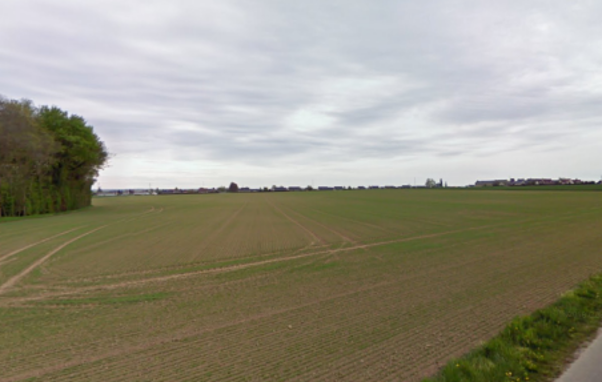
By the 17th of July, the battalion was desperately short of manpower following the battles for Evrecy. All of B Company’s officers had been killed, except for Lt. James Murray Suttie.15 Much of the fighting on this day and the next was undertaken by a motley force drawn from several companies.16 Locating any missing men became more important than ever. That night, much like his predecessor Captain Edward Bell; Suttie led his platoon with ‘great dash and vigour’, returning only to the Battalion headquarters once his entire platoon had been virtually wiped out. Here he made the discovery that he was the sole surviving B Company officer.17 Still unsatisfied, the former Patricia returned to the fray alone to round up and retrieve an unknown number of wounded Fusiliers from prior failed patrols.18 On the 19th of July, Suttie again headed out into unknown territory to make contact with a platoon that had strayed beyond communication range, taking only a patrol of two fusiliers with him. His Military Cross citation states that ‘he carried out the patrol with great boldness and complete disregard for his own safety’.19
Four months later, on the 19th of October, James Murray Suttie, now an Acting Captain, was awarded his Military Cross under recommendation of Major Cumberland, Commanding Officer of the 4th Battalion. However, the Canadian press received word of his achievement from Canadian Defence Headquarters even before Suttie himself did. One month before Suttie received his award, on the 20th of September 1944, the Nanaimo Daily News notes that Suttie was the first CANLOAN to have been awarded the Military Cross.20
Suttie had little time to celebrate his achievement. His battalion was now entangled in the second stage in the liberation of the Netherlands. ‘A’ Company (of whom Suttie was now an officer) advanced toward heavily fortified and well dug-in German positions outside the medieval city of s’Hertogenbosch.21
It was during this advance that Acting Captain James Murray Suttie was cut down by German machine gun fire.22 Aged only 28, he was immediately declared Killed in Action. His remains were temporarily buried on a roadside near Hintham until he could be taken to the consecrated cemetery in Groesbeck in June of 1946.
An inventory of Sutties’ belongings was also drawn up and sent to his brother William. Amongst his belongings was a spare ‘RWF’ cap badge, perhaps signaling his attachment to the regiment.
Unlike their reporting on Suttie’s M.C., the Manitoba press was slow to share the news of his death. The first paper to do so was the Winnipeg Tribune on the 2nd of December 1944. The article reads: ‘Twenty-eight Manitobans are named in the 737th casualty list of the war issued by the Canadian (Active) Army. They Are: KILLED IN ACTION: MANITOBA REGIMENT Capt. James Murray Suttie, M.C., William Suttie (Brother) Wellwood. (cont.)’23*
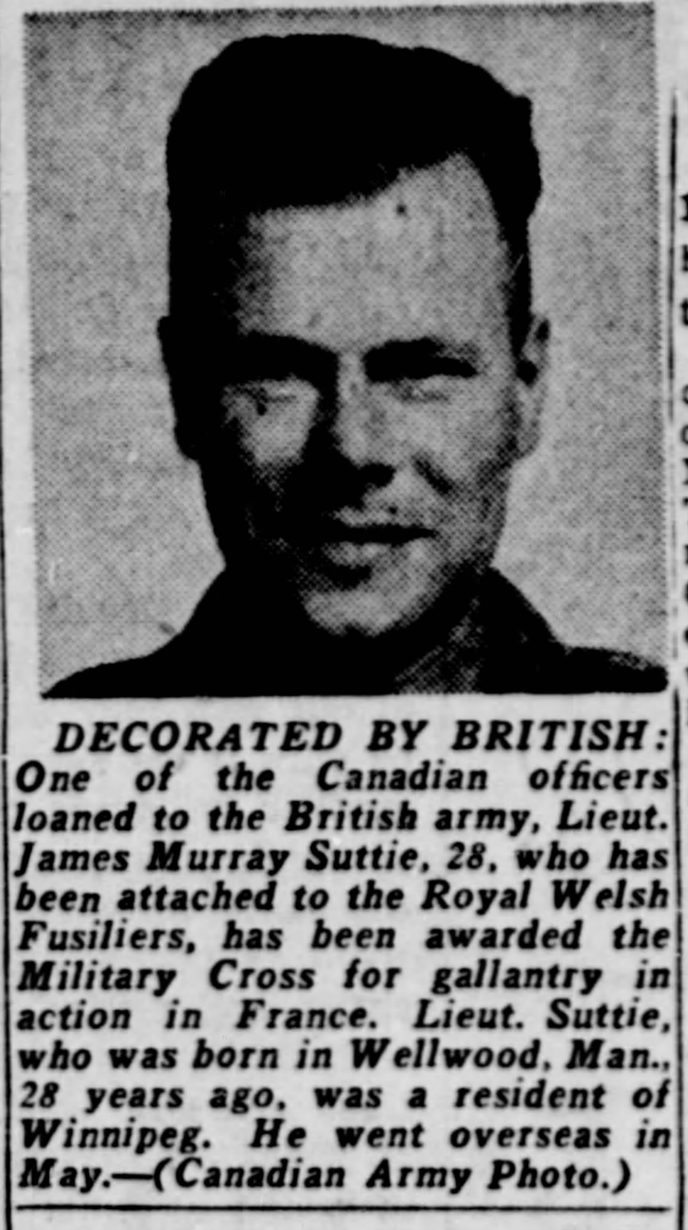
From three long years serving in two logistical roles, to joining the war in an immensely hostile environment, Suttie managed to prove himself not only as a competent soldier, but as a strong, effective and adaptable leader. His story is both one of a fine Western Canadian of the best type, who experienced one of the most difficult training courses the Canadian Armed Forces could offer, and one of a Welsh hero who rapidly adopted the regiment’s long-standing tradition of ‘Welsh dash’.
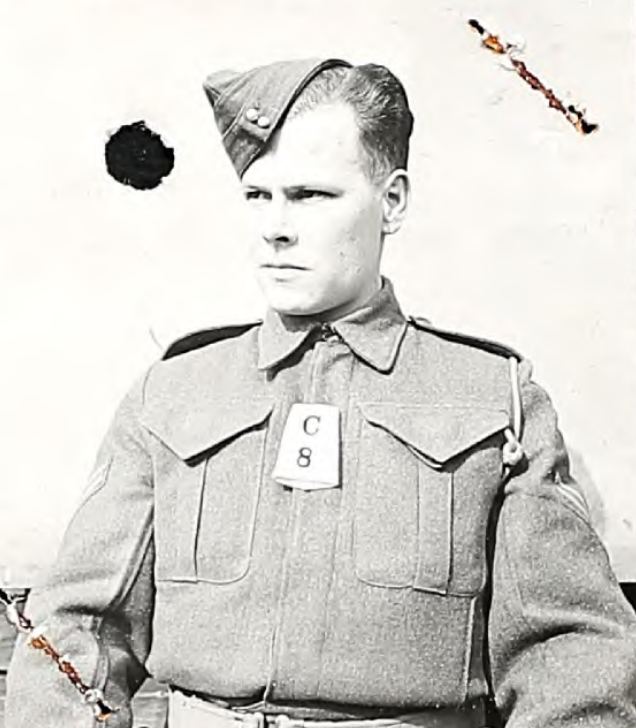
In memoriam, James Murray Suttie. M.C.
CDN/283
1916-1944
Article Written by Dylan Gash for Honouring Bravery
Works Cited
- Major. E.O. Skaife O.B.E. A Short History of the Royal Welch Fusiliers. Gale & Polden Ltd. ↩︎
- Smith, Wilfred I. Codeword: CANLOAN. Toronto: Dundurn press 1992. ↩︎
- LAC: Record Number: R112, Volume 30907, SUTTIE, JAMES MURRAY. Officer recommendation report letter. ↩︎
- LAC: Record Number: R112, Volume 30907, SUTTIE, JAMES MURRAY. M.F.W.77 16M 10-44. ↩︎
- LAC: Record Number: R112, Volume 30907, SUTTIE, JAMES MURRAY Personnel selection board form M.F.M 196. ↩︎
- LAC: Record Number: R112, Volume 30907, SUTTIE, JAMES MURRAY. Officer recommendation report letter. ↩︎
- Col. C.P. Stacey. The History of Private Jones. Official History of the Canadian Army in the Second World War: Vol1 Six Years of War. Pub. Authority of the Minister of National Defence. ↩︎
- PPCLI Book of Remembrance Volume V. Gaunt press. (2025). ↩︎
- LAC: Record Number: R112, Volume 30907, SUTTIE, JAMES MURRAY. OSCB No2. ↩︎
- Delaforce P. (1996) Red Crown and Dragon. Amberley Publishing. ↩︎
- Bocage is a term used to broadly describe the Normandy terrain, particularly the fusion of wide open pastures and small forested areas. ↩︎
- Cpl. Sidney Gri.iths. Diary. 1944. ↩︎
- The Winnipeg Tribune. 31. Oct. Tue. 1944. Page 13 (Winnipeg MT). ↩︎
- 4th Battalion Royal Welch Fusiliers War Diary, June and July 1944. ↩︎
- RWF Regimental Records Volume V Part 2. ↩︎
- 7th Battalion Royal Welch Fusiliers War Diary, June and July 1944. ↩︎
- WO 373/49/486. ↩︎
- WO 373/49/486. ↩︎
- WO 373/49/486. ↩︎
- Nanaimo Daily News. 20. Sep. Wed. 1944. Page 2 (Nanaimo BC). ↩︎
- The Red Dragon p.220. ↩︎
- LAC: Record Number: R112, Volume 30907, SUTTIE, JAMES MURRAY. M.F.W.77 16M 10-44. ↩︎
- The Winnipeg Tribune. 4. Dec. Mon. 1944. Page 3. (Winnipeg MT). * Note: the newspaper list Suttie as a member of the Manitoba Regiment in error. ↩︎
- The Winnipeg Tribune. 20. Sep. Wed. 1944. Page 5. (Winnipeg MT). ↩︎