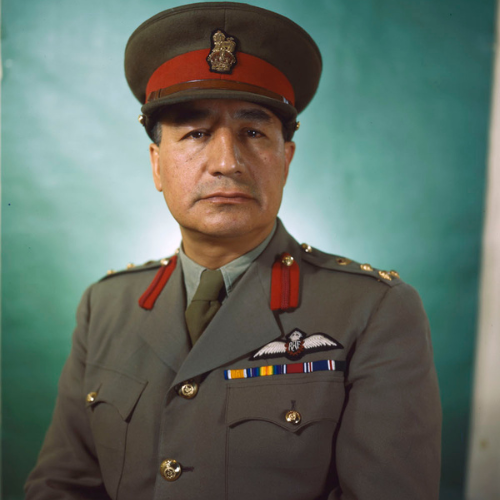
During the First and Second World Wars, thousands of Indigenous soldiers served in Canada’s military. One highly respected individual who served in both conflicts was Oliver Milton Martin. Born in 1893 on the Six Nations Grand River Reserve, Martin was a member of the Kanyen’kehà:ka (Mohawk) Nation. He attended high school in Caledonia and joined The Haldimand Rifles (later renamed the Dufferin and Haldiman Rifles of Canada) as a bugler in 1909. Around 1913, he was selected by the Six Nations Council to receive a scholarship to go to law school. However, the Department of Indian Affairs refused to approve the Council’s request, and he was unable to go. Instead, he found work as a teacher.
Service in the First World War
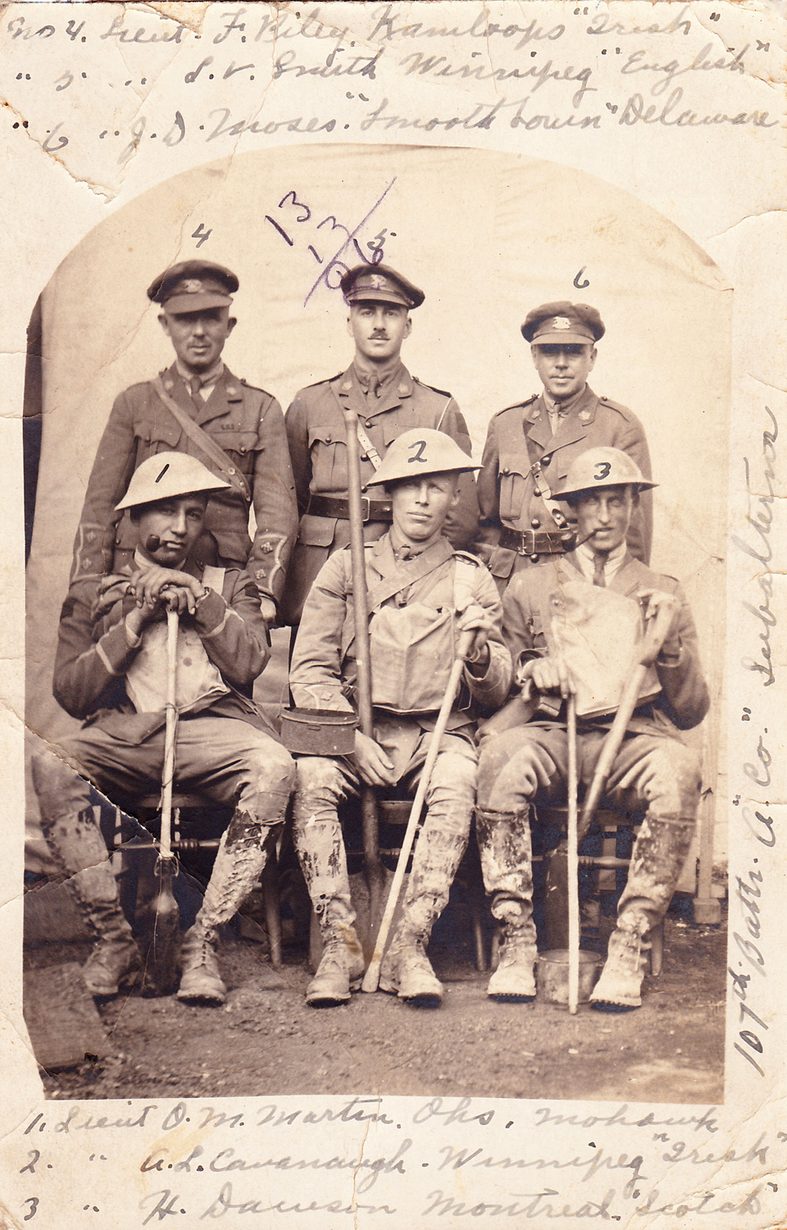
In 1916, Martin enlisted in the First World War. As he was commissioned in the Haldiman Rifles, he joined the Canadian Expeditionary force as a Lieutenant. In January 1917, he was reassigned to the 107th Timberwolf Battalion and fought with the battalion in France and Belgium.
Although some First Nations soldiers felt that they were treated with respect on the battlefield by other soldiers, there were still cases of discrimination. Overseas, he was assigned to transport 400 Indigenous soldiers to a military camp. Their train had a four-hour layover in London. Senior officers told Martin that he was not allowed to let any of them off the platform as they believed that as Indigenous peoples, the soldiers would end up causing some sort of disturbance in town. Martin ignored the senior officer, risking his own commission in the process, and allowed the soldiers to leave the station. Every soldier was back on time to leave, and no disturbances occurred.
After serving with the Timberwolf battalion and surviving a German gas attack, Martin transferred to the Royal Flying Corps in late 1917. He first trained as an observer in England. Later, in June 1918, he became one of only a few Indigenous pilots in the military. While in England, he married his first wife, Irene Preece (the two later divorced in 1929). Martin returned to Canada in 1919. He continued serving part-time with the Dufferin and Haldimand Rifles of Canada and eventually became Lieutenant Colonel in 1930.
Between the wars
In 1921 Martin was once again teaching school on the reserve. At the time, many returning Indigenous soldiers had purchased farms on the reserve via the Soldiers Settlement Act, but some could not keep up the payments, and the properties were being resold by the Department of Indian Affairs. The local Indian agent asked him if he would like to take over one of these farms and Martin agreed, but only on the condition that he would be allowed to continue teaching on the reserve. However, three months later, he received an official notice telling him that since he had purchased the land under the act, his job as a teacher was being terminated. As a result, Martin decided to leave the reserve and voluntarily enfranchise. Martin chose to enfranchise as he felt this was the only way for him to take control of his own affairs. It is important to remember that at this time, Indigenous peoples were considered wards of the state and did not have the same rights as non-Indigenous Canadians. While enfranchisement allowed him to vote and manage his own finances, it also came at a cost. Enfranchisement meant a loss of Indian status, and, among other things, he could no longer live or buy land on the reserve.
“I left our reserve against the very definite wishes of my father and mother and all my people.”
—Oliver Martin (Special Joint Committee on Indian Act, 1946).
Martin eventually decided to enroll at the Normal School to receive a formal education in teaching. He graduated in 1922 and the following year got a job at Secord Elementary in East York. At Secord, he met his second wife, Lilian Bunt, and the two of them married in 1935. The following year, he became the principal of Danforth Park School. In 1937 he also had the opportunity to take part in the military delegation for the coronation of George VI. He was the only Indigenous person in the delegation.
Second World War and beyond
When the Second World War began, Martin again wanted to serve. In December 1939 he was named Commander of Canada’s Fourth Infantry Brigade and promoted to Colonel. In 1940, he became the commander of the 13th Infantry Brigade and served in Niagara-on-the-Lake. In 1941, he became the highest-ranking Indigenous person in the military at the time and the first Indigenous person to hold the role of brigadier. He later commanded the 18th Infantry Brigade in Nanaimo, BC and eventually was in command of troops in Military District 2 in Ontario. He finally retired from the military in 1944.
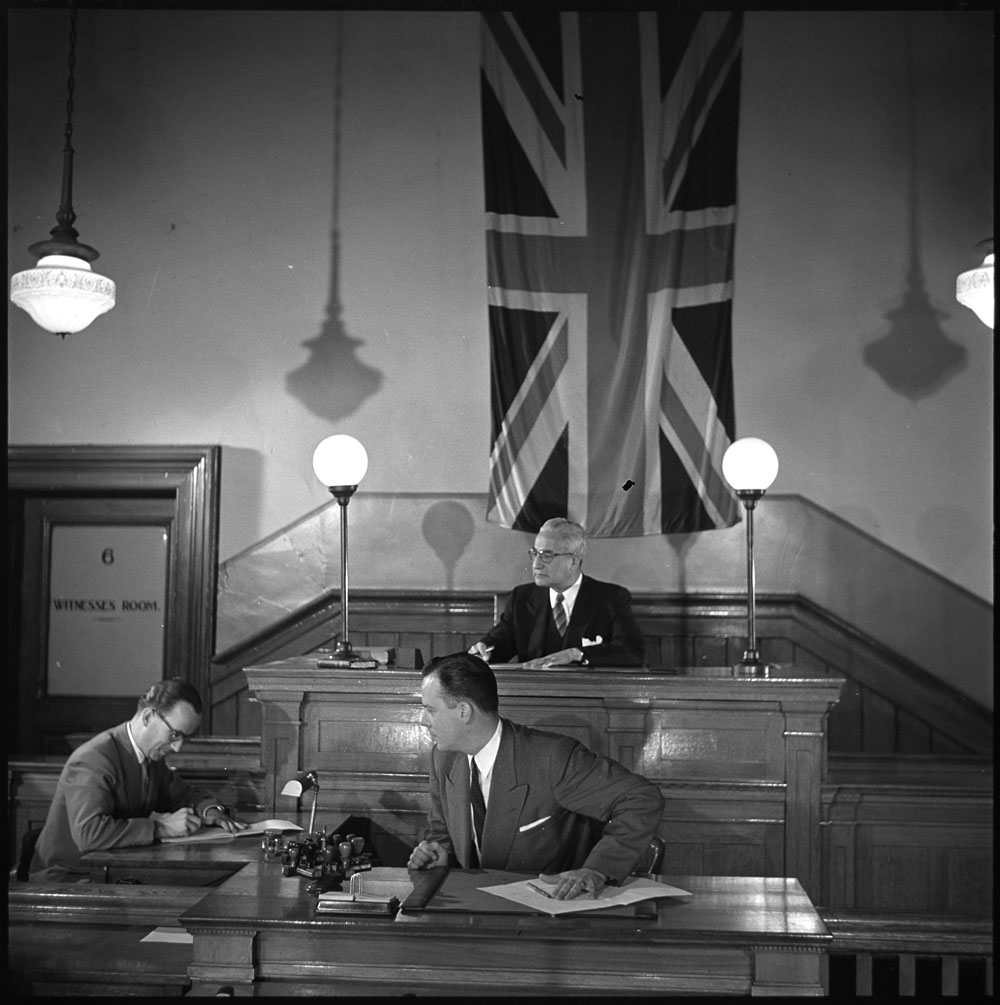
Soon after leaving the Armed Forces, Martin was appointed as a lay magistrate for the County of York on November 22, 1944. He was the first Indigenous person to receive a judicial posting in Ontario and was aware of the significance of his appointment. On one occasion, someone in his courtroom referred to another individual as a foreigner. He responded by saying “This is a country of many nationalities and people should not go around calling one another foreigners. As far as that goes, you are all foreigners— except me”. He had a reputation as being very fair-minded and level-headed in the courtroom and was highly respected.
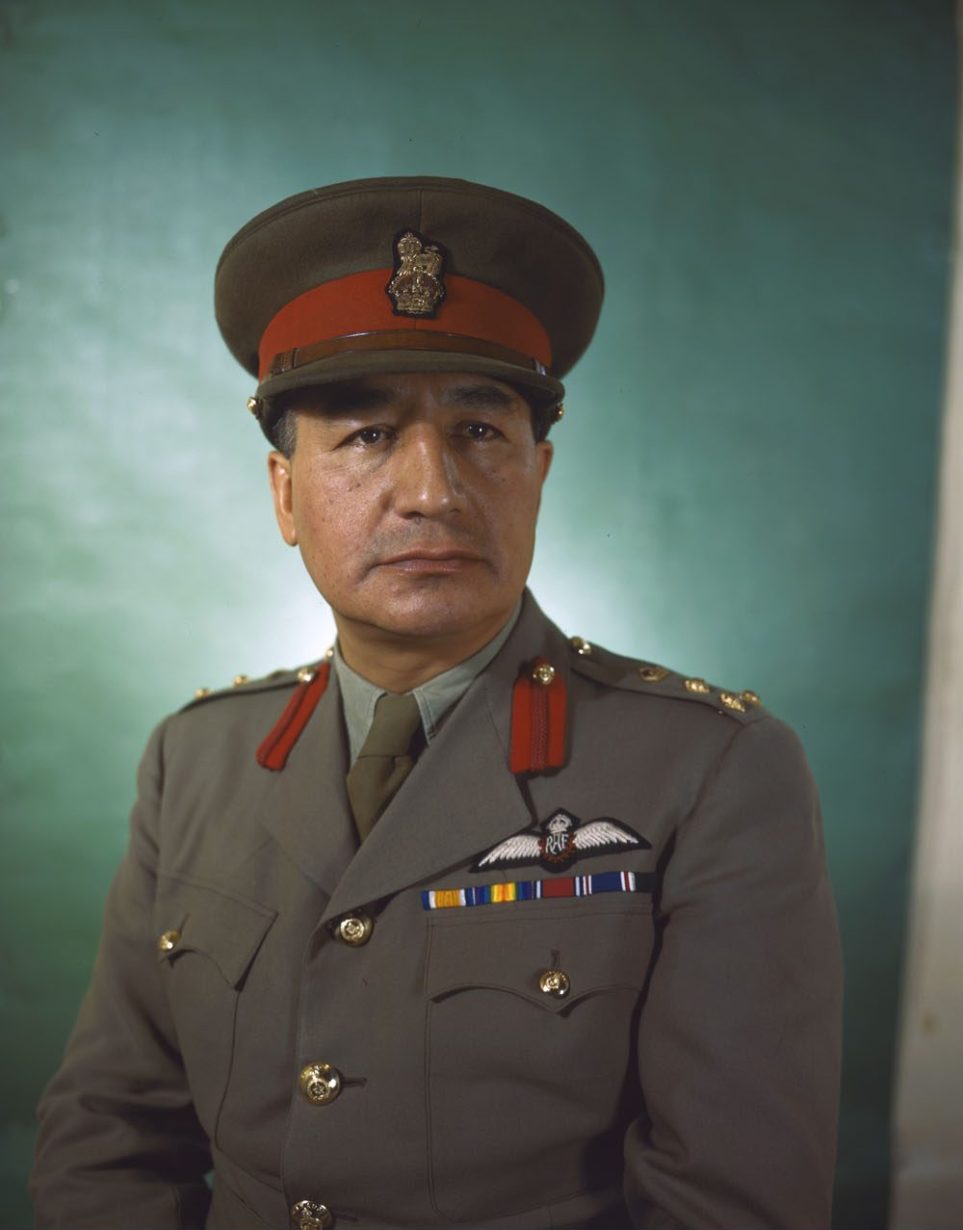
Throughout his life Martin advocated for Indigenous rights and education. At the 1929 Ontario Education Association conference, he argued that Ontario textbooks inaccurately portrayed Indigenous Canadians and their role in Canadian history and asked for more accurate sources for his students. In 1946 he had the chance to advocate for Indigenous rights on a national scale when the Canadian government created a Special Joint Committee to review the Indian Act. Martin was asked to testify at a committee hearing. As part of his statement, he pushed for better education for Indigenous students and advocated the use of day schools over residential schools:
“I personally only know one Residential School. I refer to the Mohawk Institute, which I inspected just before the war and found that the vocational training which the children got there consisted chiefly of the girls doing the necessary housework and the boys doing farm labour and chores around stables. I hope that is not the type of training which passes under the heading vocational training in other residential schools because if so, it is of no value in the preparation of children for earning a living after they leave school…In the education of Indian children stress should be laid not only on the three R’s but on vocational training in preparation for future usefulness as Canadians and on the history of the contribution of the Indian people to the growth of Canada in order to give Indians pride in their race.”
— Oliver Martin (Special Joint Committee on Indian Act, 1946).
During the hearing, Martin also advocated for changes to the Indian Act that would allow Indigenous Canadians to have more rights, including right to the vote, without having to be enfranchised. He also felt that Indigenous Canadians should have better representation in parliament. The Indian Act was revised in 1951 and although, many of the recommended changes to the Act were not implemented until much later, the 1951 version of the Act removed the ability of the government to enfranchise an Indigenous person without their consent and ended the ban on potlatch and other ceremonies.
Martin died after a brief illness in 1957 and is buried in Pine Hills cemetery in Scarborough. When news of his passing reached the York County court, they had a moment of silence for him and adjourned their session for the day out of respect. Oliver Martin demonstrated his dedication to serve Canada throughout his military career. He selflessly risked his own commission to ensure his soldiers had the same rights as non-Indigenous soldiers and taught recruits with kindness. After his military service, he continued to advocate for the rights of others for the rest of his life.
Written by Anthony Badame for Honouring Bravery
Sources
Joint Committees, 20th Parliament, 2nd Session : Special Joint Committee on Indian Act, vol. 1
Nielsen, Robert (1953). ‘Fair-minded’ Indian magistrate makes mark in three professions. Star Weekly November 21. Page 11.
Personnel record, Oliver Milton Martin
Sinclaire, Gordon (1939). Indian Colonel Regrets Brigade Has Lost kilts. Toronto Daily Star, December 13, pg 5.
Toronto Star (1929). East York School Teacher Says History Books wrong. April 22. Pg 20.