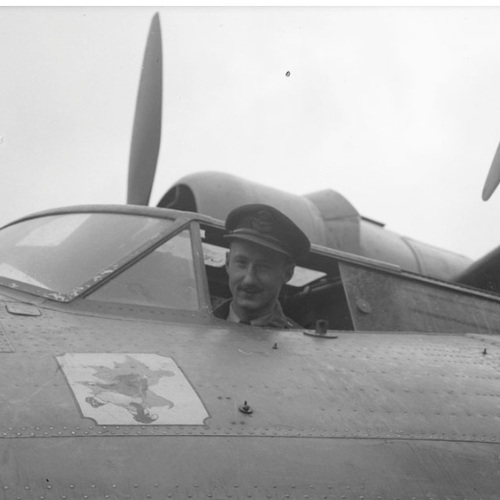
In our exhibit The Forgotten Front, we briefly highlight Leonard Birchall’s role as the ‘Saviour of Ceylon’. However, Birchall’s impact during the Second World War goes well beyond his actions in Ceylon. He also helped to protect and ensure the well-being of Prisoners of War (POWs) after his capture by the Japanese. Let’s take a closer look at the courage and leadership that Birchall demonstrated throughout the war.
Early life and career
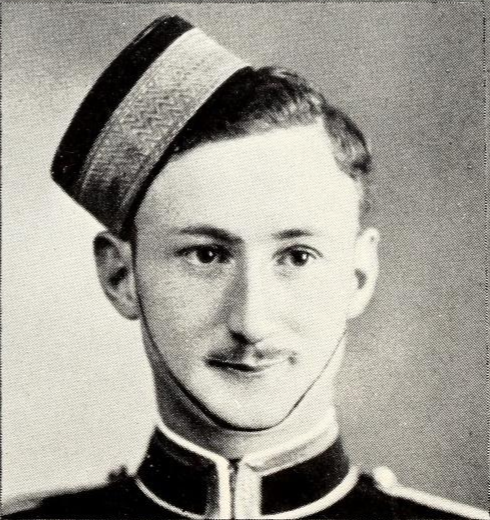
Leonard Birchall was born in St. Catherines, Ontario in 1915. After finishing high school, he enlisted in the Royal Canadian Corps of signals. However, his real dream was to become a pilot. In 1933 he enrolled at the Royal Military College in Kingston. While there, he was active in extracurricular activities including basketball, track and field, and acting. It was noted that “his wit and humour have lightened life at the college both in and out of class.” Upon graduation in 1937, he was commissioned into the RCAF and later posted to Dartmouth, Nova Scotia as part of No. 5 Squadron, where he flew anti-submarine combat patrols at the start of the Second World War.
In 1941, Birchall was chosen to fly with 413 Squadron in the Falkland Islands and became Squadron leader and deputy commander. Flying Catalina aircraft, the squadron was in charge of air reconnaissance and antisubmarine patrols. In March 1942, the squadron was transferred to Ceylon (Sri Lanka) to work with South East Asia Command (SEAC).
An important warning
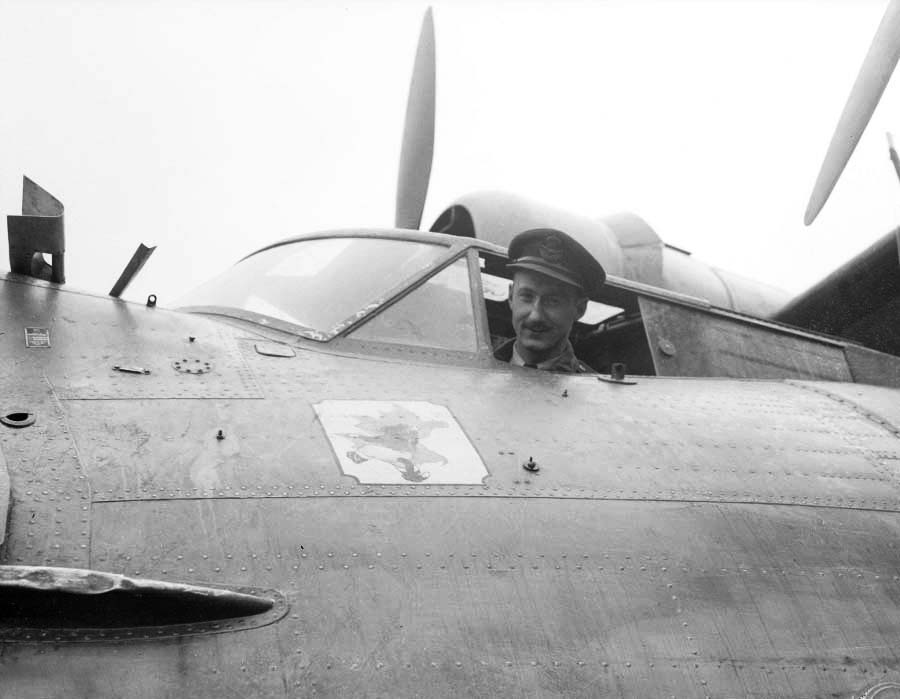
Only two days after arriving in Ceylon, Birchall and his crew were on patrol when they spotted a Japanese naval fleet approaching in the distance. Although they knew the danger of getting closer to the fleet, they also knew that they had to find out more information to warn the rest of SEAC.
Birchall had no cover when he approached the fleet. As he and his crew drew nearer, they began to radio fleet headquarters in Columbo to warn them of what they saw. They were on their third transmission when Japanese Zero fighters1 from the aircraft carrier Hiryu shot the plane down. The shots hit the gasoline tanks of the Catalina, which caused a fire and the crew abandoned their plane for the ocean. Of the 9-person crew, only 6 survived. These survivors were picked up by a Japanese ship.
Message received
Birchall’s crew was able to provide SEAC with important intelligence about the surprise attack of Ceylon, including the number and types of ships in the fleet, as well as the fleet’s speed and course. Although the intelligence did not prevent the Japanese from attacking, the knowledge allowed the Allies to better prepare. It also created a chain of events that eventually led to an Allied advantage on the Asia Pacific front. After the attack on Ceylon, three of the four Japanese aircraft carriers in the attack were forced to return to Japan. As a result, they could not take part in the Battle of the Coral Sea. Since this battle virtually ended in a tactical draw, the Japanese were forced to try again, this time at the Battle of Midway, which ended in an Allied victory and is often seen as a major turning point in the Asia-Pacific.
Looking back, British Prime Minister Winston Churchill said that the most dangerous and distressing part of the war was when he got word of the attack on Ceylon. Churchill said that an airman, who he titled the Saviour of Ceylon, diverted the crisis by relaying the news. Churchill, who was referring to Birchall, believed that this saviour had perished when the plane crash-landed in the Indian Ocean. Little did he know that Birchall had in fact survived and was held as a POW for the remainder of the war.
Life as a POW
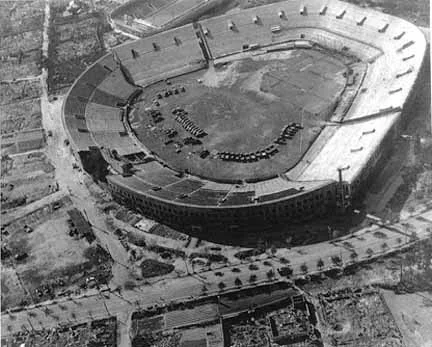
Once the Japanese picked up Birchall and the remaining crew from the Indian Ocean, they transported them to a naval interrogation camp in Ofuna, Japan. Shortly after, Birchall was transferred to another camp located at a baseball stadium in Yokohama. As he was the highest-ranking POW at the camp, it became his duty to ensure the welfare of the other POWs. This was an extremely difficult task. The POWs endured severe beatings from Japanese guards and were forced to work as labourers. They were put on a starvation diet, which caused severe malnourishment and health issues. They also had no access to proper medical equipment. Besides the poor treatment, many POWs felt distrust towards their superiors and worried the officers would use their higher rank to get more food/supplies.
Birchall worked hard to build trust with the other POWs and ensure that they were treated as well as they could under the circumstances. Food was portioned in front of all the POWs. If someone felt an officer was getting more than their share of food, they could switch their portions with them (no questions asked). Birchall and the other officers also stood in front of the other POWs when they were being beaten. If one of the POWs was caught stealing supplies or food, Birchall ordered the officers to tell the Japanese guards that they instructed their man to steal, so that they would be punished instead. Birchall also ensured that records were kept of all supplies so that the other prisoners knew what they were being used for. For important medical supplies, like morphine, there also had to be a unanimous vote by the men before they could be used so that everyone had a say on how it was being used. As a result, Birchall’s camp had a fatality rate of less than 2%, compared to 30% at the other camps.
“Food was essential. Everybody was starving. You don’t know what it’s like to be starving, and I mean it…You just had to keep saying to yourself all the time am I being selfish? I can’t afford to do this. If I take this somebody might die…The selfishness… you had to defeat that. It’s awful when you’re doing this and you’re looking at something and you say ‘God you know. I’m hungry and starved and here’s a little bit of food’. It’s an awful big temptation to be selfish.”
—Leonard Birchall reflecting on his time as a POW (The Saviour of Ceylon).
However, Birchall’s actions often came at the cost of his own well-being. On one occasion, Birchall hit a Japanese guard who had beaten another POW, who could not walk, for not working. Birchall was court marshalled and hung by his thumbs in a birdcage (a type of torture device) while waiting for his trial. Although he was eventually sent back to camp, he was later transferred to another camp on Tokyo Bay for staging a sit-down protest to ensure that sickly POWs were not forced to do labour. Birchall was later transferred to a fourth camp in the mountains. By the time he was officially liberated by members of the US military on August 24, 1945, he had spent 3 years and 4 months as a POW. Throughout his imprisonment, Birchall kept 22 diaries that documented his experiences as a POW, which he buried to keep safe. These diaries were eventually recovered. When the war crime trials against Japan started, Birchall was asked to testify, and his diaries were used as evidence.
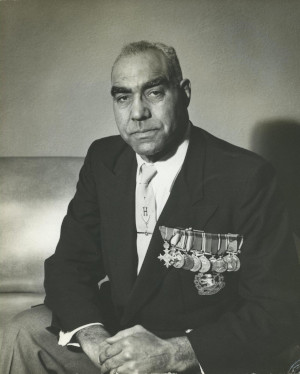
Birchall received the Distinguished Flying Cross for his actions to warn the British of the attack on Ceylon once he was liberated. He also received the Order of the British Empire (OBE) for “continually display[ing] the utmost concern for the welfare of fellow prisoners with complete disregard for his own safety. His consistent gallantry and glowing devotion to his men were in keeping with the finest traditions of the service”.
Post-War and legacy
Birchall continued to serve in the RCAF and eventually reached the rank of Air Commodore. He retired after over 60 years of service and passed away in 2004 at the age of 89. Leonard Birchall left behind an important legacy of selflessness and leadership. Besides helping to warn the Allies of a Japanese attack, he also made the lives of many POWs better and got them through horrible circumstances.
Written by Anthony Badame for Honouring bravery
Special thanks to the Royal Canadian Air Force Foundation’s work to preserve stories of the RCAF. For more interesting RCAF stories, check out their book Pathway to the Stars, which helped inspire this blog post.
- Zero fighters are a type of fighter aircraft used by the Japanese military during the Second World War ↩︎
Sources
Birchall, Leonard (1997). Leadership [speech]
Hood, Michael and Jenkins, Tom (2023). Pathway to the Stars: 100 years of the Royal Canadian Air Force, Aevo UTP.
Library and Archives Canada (n.d.) Squadron Leader L.J. Birchall, of 413 Squadron in the cockpit of a flyingboat (Catalina) aircraft.
Royal Military College (1937). Review Yearbook.
The Saviour of Ceylon: the story of Leonard Birchall Part 1 and part 2
US Archives. Image of Yokohama Baseball stadium, RG 331, Box 1321, SCAP- Legal Files, Misc. Manila from Allied POWS under the Japanese [website]