Note: This blog post contains content surrounding slavery, which may be upsetting or triggering for some readers. It also contains quotes from historic documents with terms that are unacceptable to use today but reflect the period in which they were created and the views of their creators.
In Ontario, few places are as closely connected to the War of 1812 as the Niagara Region. Monuments and military sites from the period are popular tourist destinations in the region and highlight the stories of individuals like Isaac Brock and Laura Secord. However, not all stories are as visible as theirs. This is particularly true for individuals of colour who participated in the conflict. Robert Jupiter was one such individual.
Early Life
Little is known about the early life of Robert Jupiter. Robert (also referred to as Bob) was born sometime around 1759. It is unclear if he was born into slavery in the United States or taken to The United States as part of the Atlantic Slave trade, but we know that by the 1770s he was enslaved in Tryon County, New York. Slavery was commonplace throughout the Dutch and British colonies of New York state. It is estimated that in 1771, New York had the highest percentage of slaves in the North with around 11% of the population of the state being slaves. Robert would have been one of around 20,000 Black individuals living there at that time.
As with most research surrounding enslaved individuals, most of what is left in the historical record about Robert’s life while enslaved is from the point of view of the family who owned him. This presents its own set of issues but nevertheless provides some insight into the work Robert was doing for the family. Robert worked for the Servos family who owned a farm and mills along the Charlotte River. Robert likely would have helped with delivering goods from the mill amongst other labour-related tasks.
American Revolution
The Servos family was strongly Tory and aligned themselves with the British during the Revolutionary War. Their farm was well-known as a meeting place for members of the British military and their allies, including such figures as Joseph Brant. In 1778, patriot forces stormed the Servos farm with the intention of arresting the head of the family, Christopher Servos. When he resisted, patriot soldiers killed him. It is unclear if Robert witnessed this event, but accounts of the event suggest that besides members of the family, some ‘servants’ (both Black and White) were also in the house when the event occurred. Regardless, the death of Christopher Servos ultimately was a turning point in Robert’s life. According to Servos family lore, Christopher’s eldest son, Daniel, who later became a lieutenant in the British Indian Department, gave Robert an opportunity after the death of his father: If Robert joined the Butler’s Rangers, he could have his freedom after the war.
Created by John Butler, Butler’s Rangers was a loyalist military group composed of recruits mainly from New York and Pennsylvania. They quartered in present-day Niagara-on-the-Lake, near what would later become Fort George1. The surviving muster rolls of the rangers do not name Robert as a member and many historians refute his involvement with the group, believing that Robert remained a slave of the Servos family after the Revolutionary War. However, if the story is true, Robert would have spent time stationed in the Niagara Region and fighting in battles around New York State.
Did you know?
Niagara-on-the-Lake was founded in 1781 and was originally called Butlersburg after John Butler and his rangers.
Relocation to Niagara
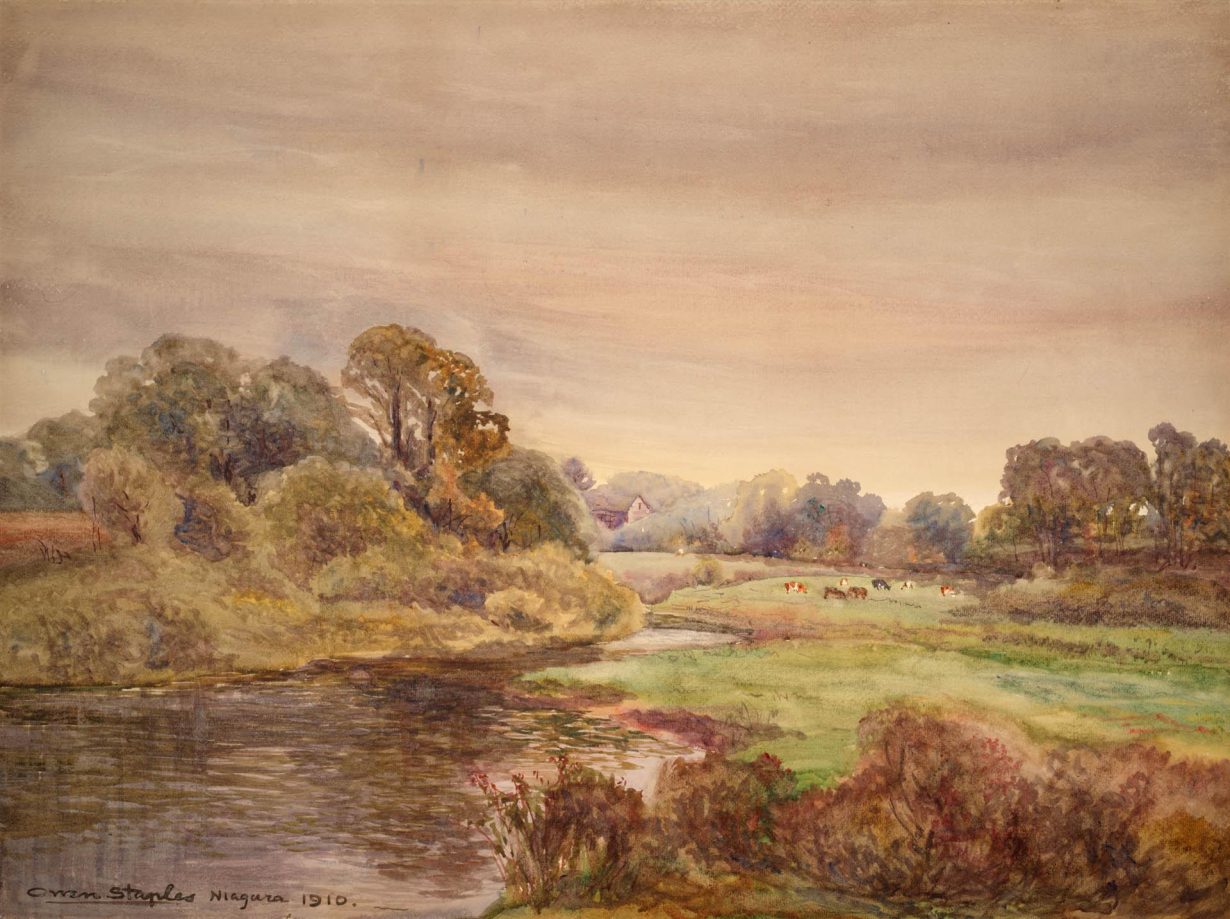
At the end of the war, many loyalist families, including the Servos, settled in Niagara. Daniel quickly rebuilt his milling business in Ontario and settled on his new farm, which he named Palatine Hill. Robert, who still worked for the Servos family, also joined them in Niagara. Again, the historical record is unclear as to what the actual relationship was between Robert and the Servos family2. It is important to remember that even in Upper Canada, owning slaves was not illegal. Legislation to limit slavery first passed in 1793 (after the Chloe Cooley incident) and slavery was not fully abolished until 1833. There is also no known record of Robert being manumitted (i.e. freed), but some scholars believe that he was free at the start of his service in the War of 1812. In 1804, Robert married Mary Ann Arrishew and settled in Chippewa. Together, they had four children: James, Janet, Patty, and Eliza.
War of 1812
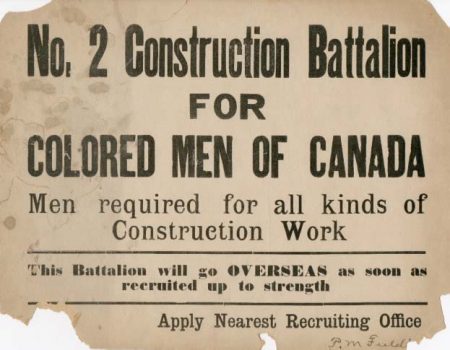
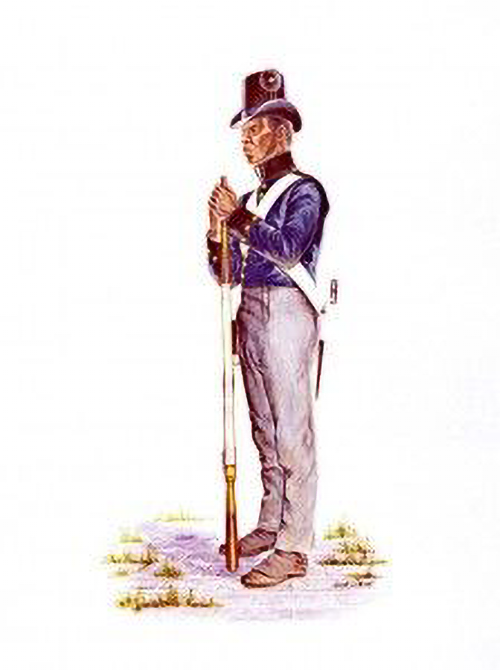
Unlike his participation in the Revolutionary War, we know that Robert served in the War of 1812 as part of Runchey’s Coloured Corps. His rate of pay as a private was £2.5.6. Composed of both free and enslaved Black men, the Corps most famously saw action during the Battle of Queenston Heights. On October 13, 1812, Robert and the other members of the corps defended the area near Queenston, Ontario against an invasion of nearly 1000 American soldiers. Robert’s corps also fought in the Battle of Stoney Creek in 1813.
Did you know?
Although Captain Robert Runchey ran the corps, the creation of Runchey’s Coloured Corps was the result of efforts by Revolutionary War veteran, Richard Pierpoint.
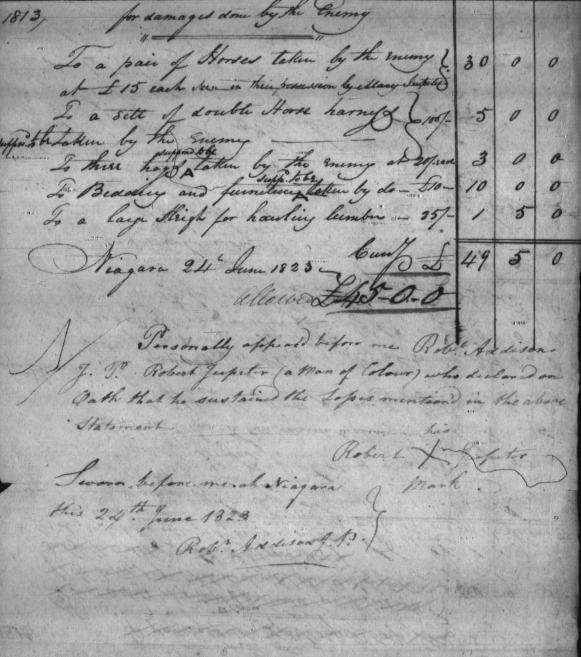
While away in battle, Robert’s wife Mary had her own encounter with American soldiers. In 1813 a group of soldiers ransacked the Jupiter farm and took property worth around £45. This included two horses, three hogs and some furniture. After the war, the family filed an official loss claim in front of the justice of the peace, who awarded them compensation for their losses.
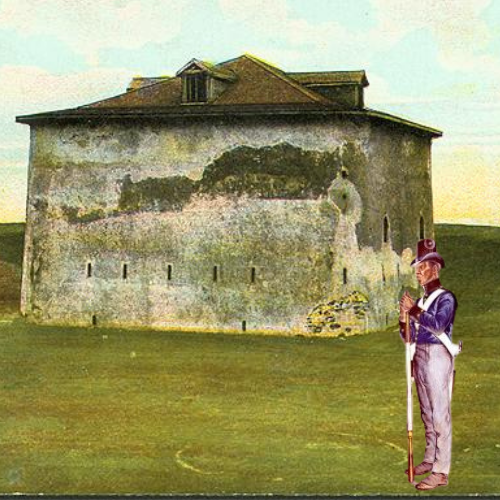
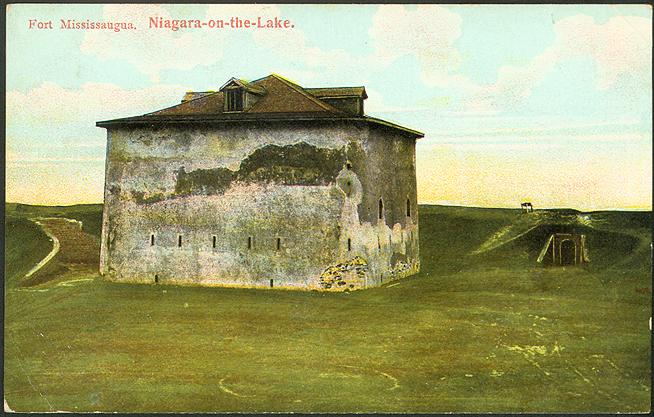
By late 1813, military officials decided to attach Runchey’s Coloured Corps to the Royal engineers as artificers (trades/construction workers). By this point, Robert had been appointed corporal. Between 1814 and 1815 the men worked to build Fort Mississauga on the banks of the Niagara River. The fort was made to replace Fort George and to defend Canada against the Americans stationed at the recently captured Fort Niagara. Fort Mississauga was also used after the war, including after the Rebellion of 1837 and during the Fenian Raids of 1866.
Did you know?
Did you know that Fort Mississauga was built on the location of Upper Canada’s First Lighthouse? The lighthouse was built in 1804 and was demolished to make way for the fort.
At the end of the war, Runchey’s Coloured Corps disbanded, and Robert went back to work for the Servos family as a labourer. In the years after his service, he continued to be a well-respected member of the community. On March 13, 1824, Robert was granted 100 acres of land in Garafraxa for his service in the war. Robert did not want to leave Niagara and asked if there was a closer, less remote piece of land. Unfortunately, officials responded by saying they could not “find a better lot for Jupiter than the one [they] located, it is in the midst of a valuable township, though rather remote.” Sadly, Robert died in April 1824 before fulfilling the necessary work on the land needed to receive the final title to the property. It was therefore never given to his family. Out of respect for Robert, The Servos family allowed Robert to be buried in their family Plot at Palatine Hill. According to the census data, Robert’s widow Mary continued living in Niagara until at least the age of 90.
Although many details of Robert Jupiter’s life have been lost to time, his story demonstrates the strength and resilience that Black Canadians demonstrated at the turn of the 19th century. Through his military career he not only helped defend Canada during the War of 1812, but also literally laid the groundwork needed to defend Niagara in subsequent years.
Written by Anthony Badame for Honouring Bravery
- There is still a site in Niagara-on-the Lake called Butler’s Barracks; however, this was built in 1818. The original barracks was near the site but was torn down to make way for Fort George in 1800. ↩︎
- For example, surviving Servos family mill account books, written first by Daniel Servos and later his son, mention that some of their wheat/products were “Delivered by Bobb” or “Delivered by my Negro” to members of the community. It is unclear if their use of the word my explicitly denoted ownership of Robert, or whether it noted him as being their employee. As a point of interest, Daniel Servos’s daughter Catherine, married Humfrey Waters, a prominent Black citizen and Corporal in Runchey’s Coloured Corps. This was very uncommon at the time and further demonstrates the complex and changing nature of the Servos family’s relationships with Black Canadians. ↩︎
Sources:
Andres, Jane (2019). Robert Jupiter: A Hero in our Own Backyard. Applewood Hollow.
Colour Corps Muster Roll Transcription. Found in Niagara-on-the-Lake Museum’s Black History Resources.
Doyle, Anthony (2006). Loyalism Patronage and Enterprise: The Servos Family in British North America. McMaster University.
Government of Canada (1851). Census records of Mary and Ann Jupiter.
The Hidden History of Slavery in New York [Documentary]
Meyler, Peter and Meyler, David (1999). A Stolen Life: Searching for Richard Pierpoint. Natural heritage Books: Toronto.
Niagara Historical Society (1899). Papers No.5.
Ontario Historical Society (1901). Paper and Records Volume III
Robert Jupiter’s War Loss Claim (1823). Found in Niagara-on-the-Lake Museum’s Black History Resources.
Servos family ledger. Niagara-on-the-Lake Museum collection.
Williams-Myers, AJ (2002). Re-Examining Slavery in New York. New York Archives Magazine