End of war
In July 2011, Canada, along with the other members of ISAF, put an end to their combat missions in Afghanistan and began the process of transition towards Afghan-led security. Part of this transition was a commitment to assisting in the development and training of a professional security force. Canada’s training mission lasted until March 2014, when the last of the Canadian troops left Afghanistan and turned over their military installations to the Afghan National Army (ANA) and the US Army, which remained active in Afghanistan until 2021.Canada maintained a diplomatic presence in Afghanistan until 2021 and invested financially in numerous projects aimed at increasing stability and supporting democracy.
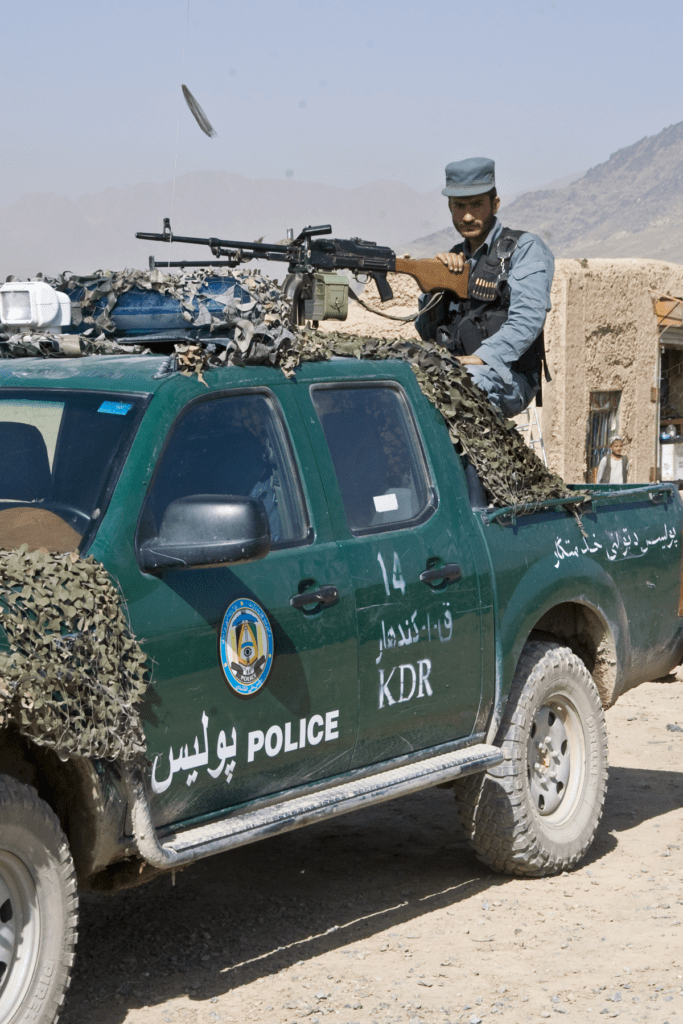
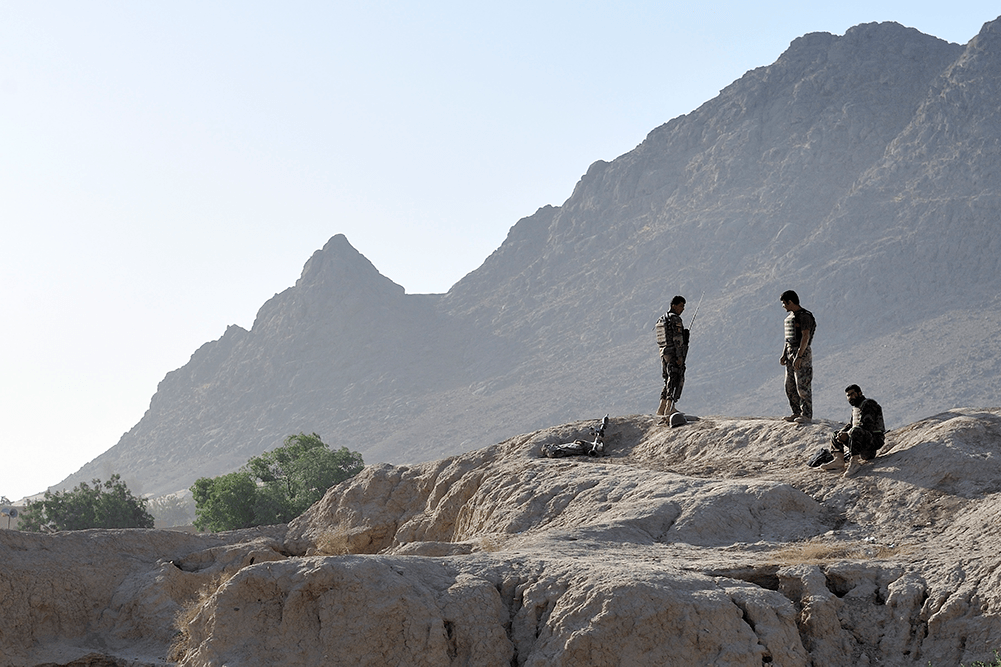
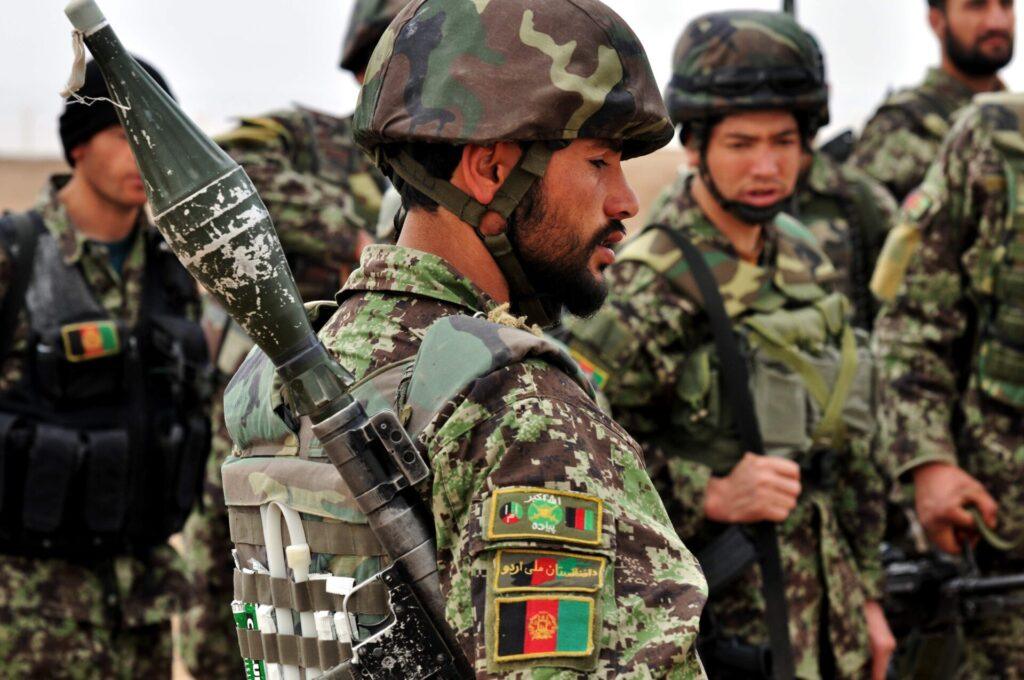
From the beginning of its engagement, NATO’s mission in Afghanistan was to support the formation of a democratic, stable, self-governing state. The development of well-trained and professional security forces, including both a national police force and a national army, was identified as a key element of this mission. NATO troops had worked alongside the ANA on a number of operations, but the force was not yet ready to be left to fight the Taliban on its own. The 2011 – 2014 training mission provided the means for a smoother transition, ensuring that the ANA was fully equipped to take on the security and combat tasks on its own.
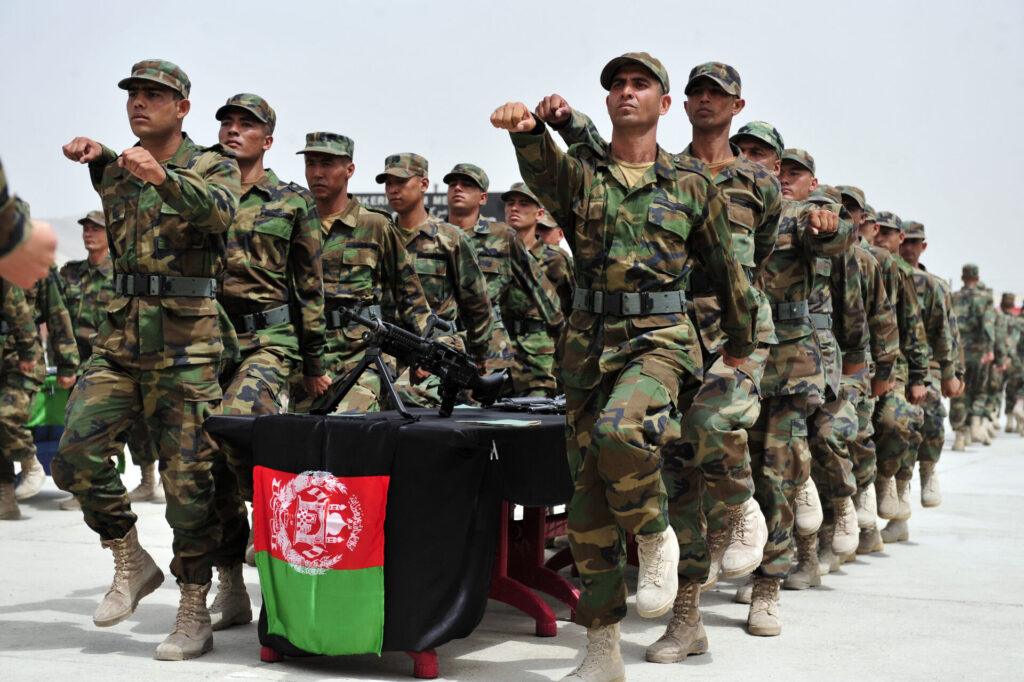
Kabul Military Training Centre
During the 2011 – 2014 NATO training mission, Afghans that enrolled in the ANA would go through 16 weeks of basic training. An important aspect of this training was literacy and a total of 64 hours was spent on lessons in reading, writing and arithmetic.
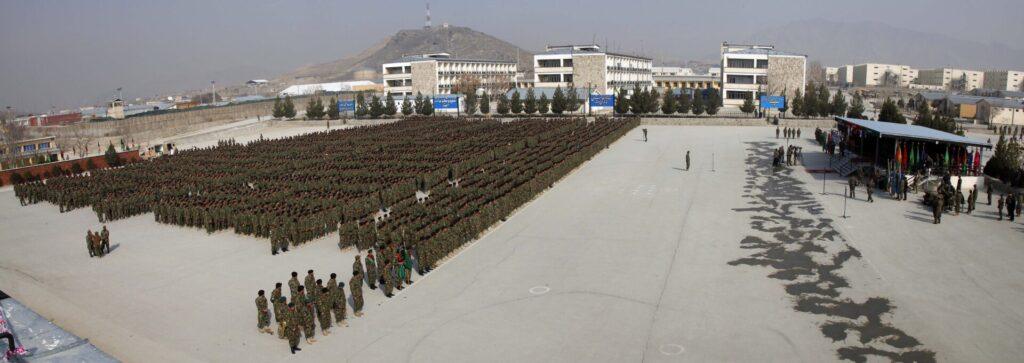
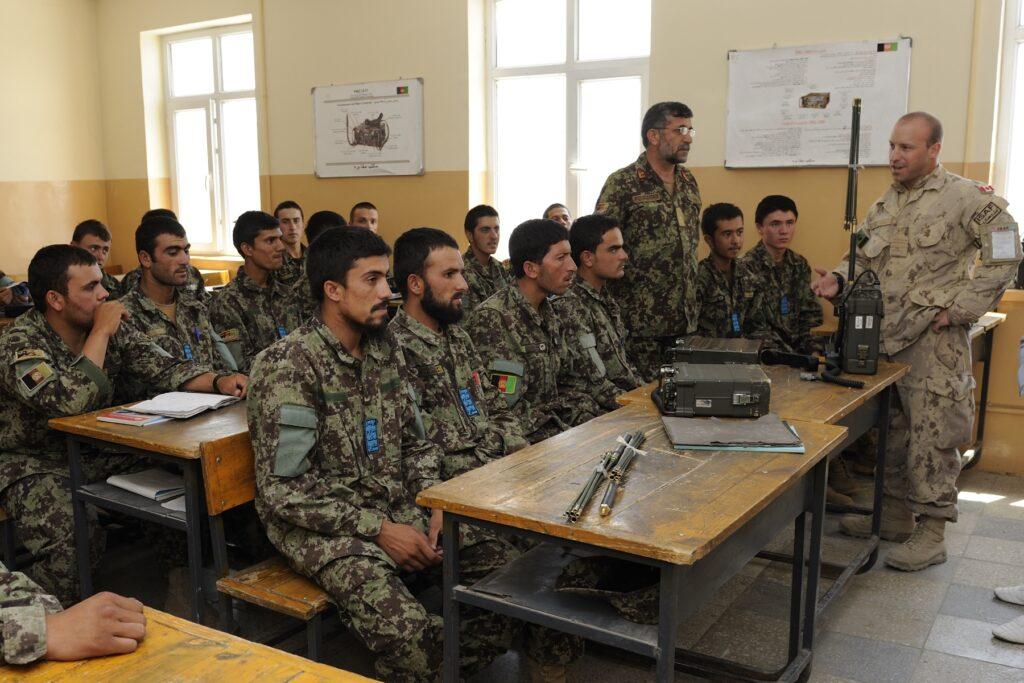
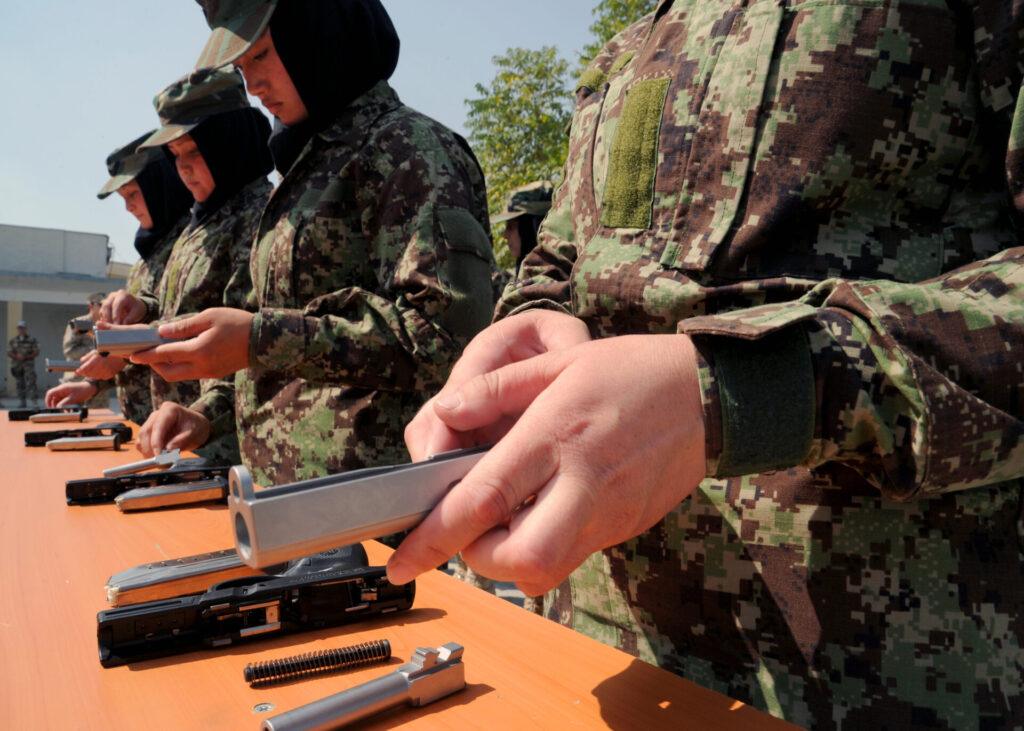
Three rotations of up to 950 Canadian soldiers brought their expertise in field training exercises, infantry tactics and leadership to Afghan training facilities, where they mentored Afghan officers and soldiers in training. When Canada and the other NATO forces left in 2014, the ANA had nearly 200,000 fully-trained soldiers.
Embassy of Canada in Afghanistan
Although Canada’s combat mission ended in 2011 and its training mission ended in 2014, a small number of soldiers were deployed to protect Canadian diplomats and the Canadian embassy in Afghanistan, which was open from 2003 to 2021.
Canada and other members of the international community also contributed, through financial means, to initiatives that they hoped would reduce poverty and increase stability, security and prosperity. Canada focused particularly on initiatives intended to help improve the situation of women and girls, through education, career opportunities, health and reproductive rights.
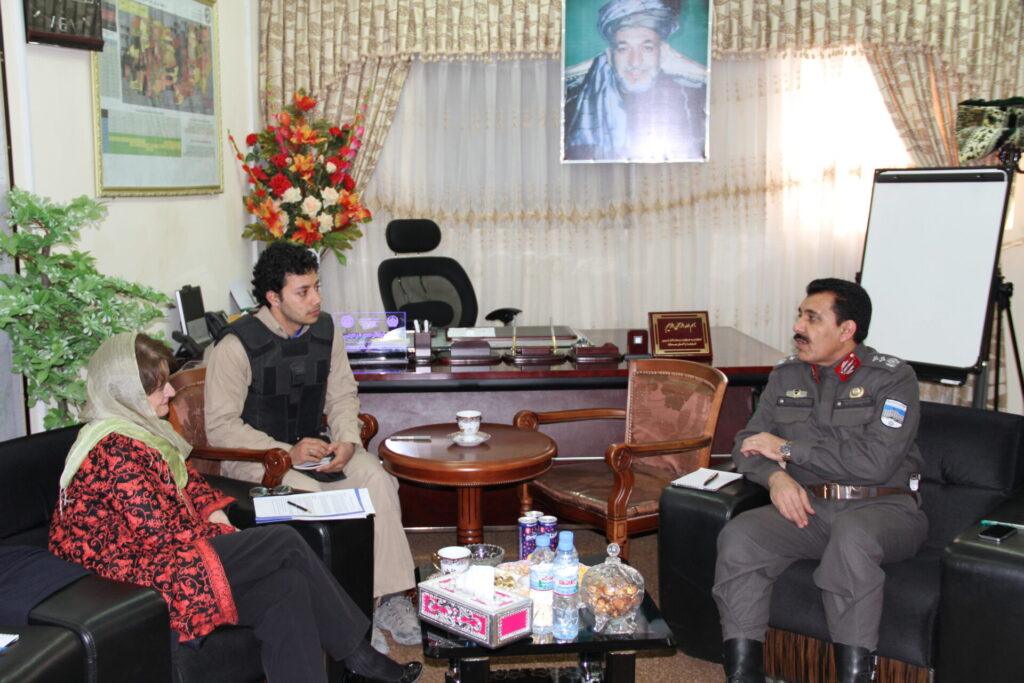
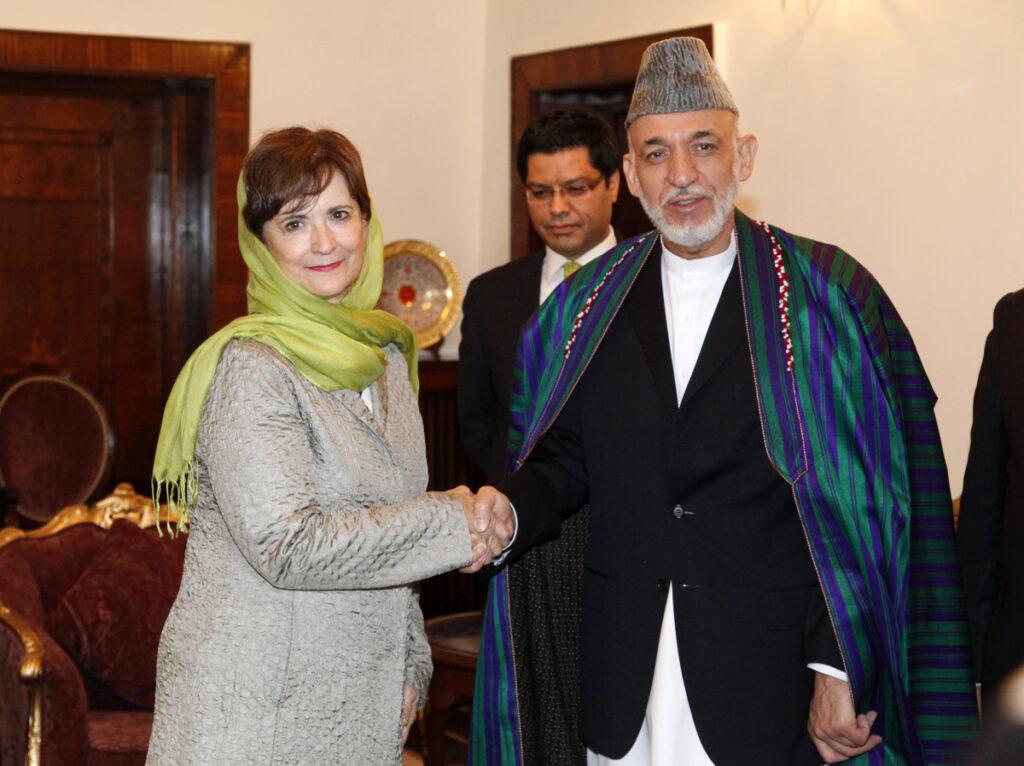
Left: a meeting between Canadian ambassador Deborah Lyrons and a senior Afghan military official. Right: Deborah Lyons with Afghan President Hamid Karzai in 2013 (Canada in Afghanistan).
August 2021 Evacuation
In 2020, the U.S. signed the Doha Accord with the Taliban, reducing airstrikes and planning for a gradual withdrawal of U.S. troops. In May 2021, with the U.S. withdrawal underway, the Taliban launched a major offensive. By August 2021, Kabul fell and Afghanistan was firmly back in the hands of the Taliban. A small force of Canadian soldiers was again deployed to assist the evacuation of Canadian diplomats as well as approximately 3,700 other persons with ties to Canada.
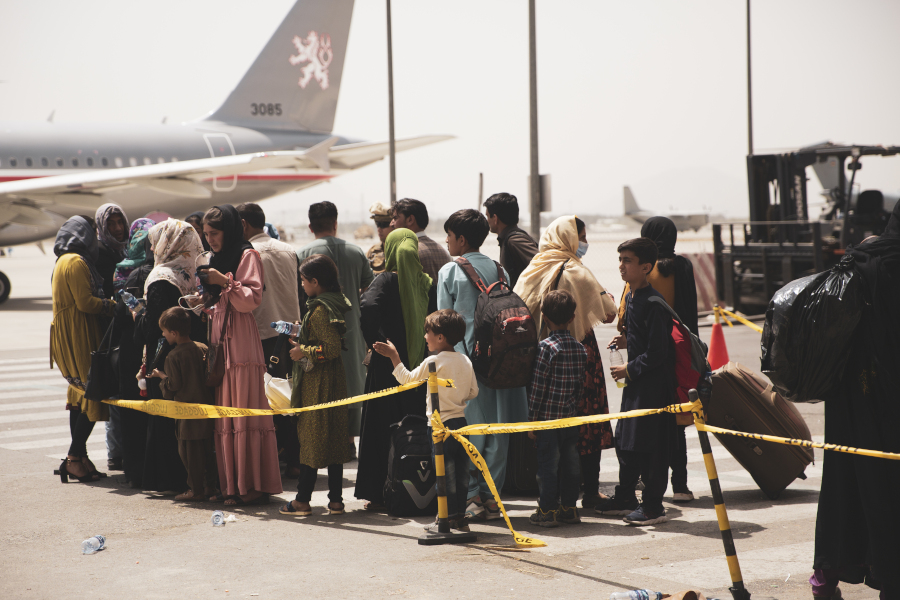
Many of those evacuated were interpreters who had served alongside the Canadian Army and their family members. Interpreters were key to the safety and success of CAF members in Afghanistan. They facilitated the connection with local communities, with the Afghan National Army and with local contractors. They also provided valuable information on local customs, and were often able to pick up on subtle signals from villagers that danger was near.
Throughout the war in Afghanistan, Afghans who worked alongside CAF and other NATO forces, whether as interpreters or contractors, risked retaliation from the Taliban. Many had already fled to Canada under special immigration programs that Canada had put in place in 2012, but family members left behind and interpreters who remained in Afghanistan when the Taliban returned to power in 2021 were in danger. To assist with the evacuation, veterans across Canada mobilized, raising funds to help bring the interpreters who had served alongside them and their family members to safety. Many of these Afghans now call Ontario home.
Homefront
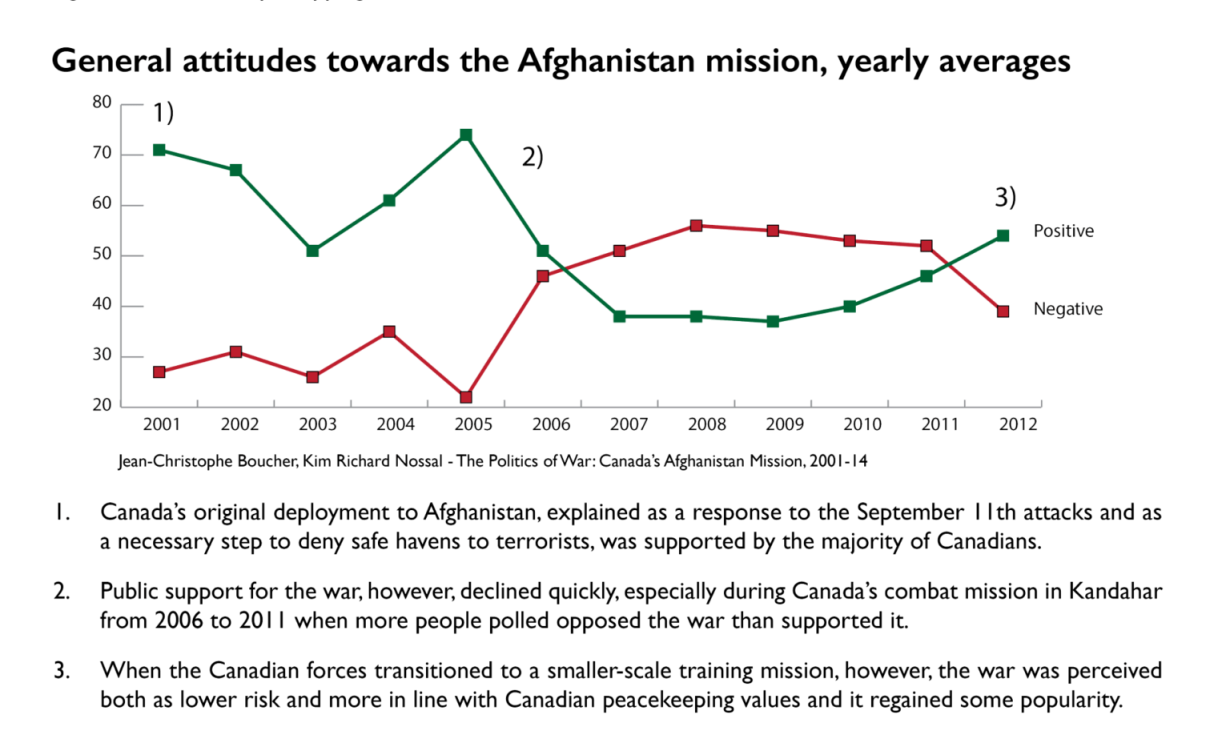
Every war fought on foreign soil also has a home front, one where the battle for legitimacy and public approval is fought. It is the government that decides to go to war or to stay at war, and the government prefers to make those decisions without losing voters. Canada’s deployment was a subject of debate throughout the war and public opinion oscillated during the 14 years that Canadian soldiers were in Afghanistan. Opinions also varied from province to province. In Quebec, opinion of the war was particularly low, with opposition to the war running as high as 77% and rarely dropping below 50%.
Commemorating the War
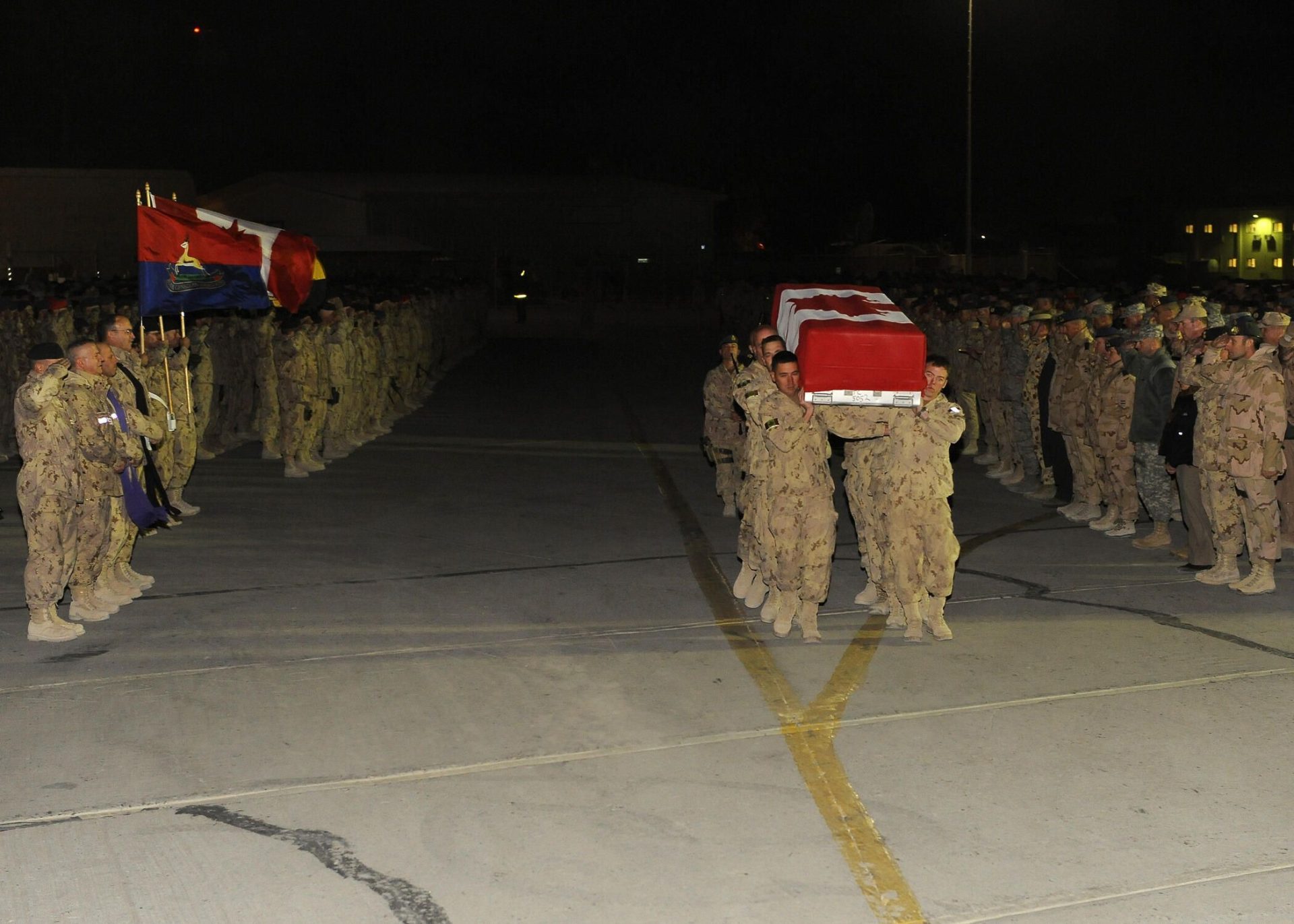
On November 5, 2014, the Light Armoured Vehicle (LAV) III Monument Program was launched to recognize the 40,000 Canadians Armed Forces (CAF) who served in Afghanistan and to commemorate the 162 Canadians who lost their lives.
The LAV IIIs were used extensively by our troops, in Afghanistan, to carry out their missions and often became their home-away-from-home. The essence of the program was to create a unique opportunity for communities to convert these vehicles into monuments as a symbol of remembrance within the hometowns of those who served and sacrificed.
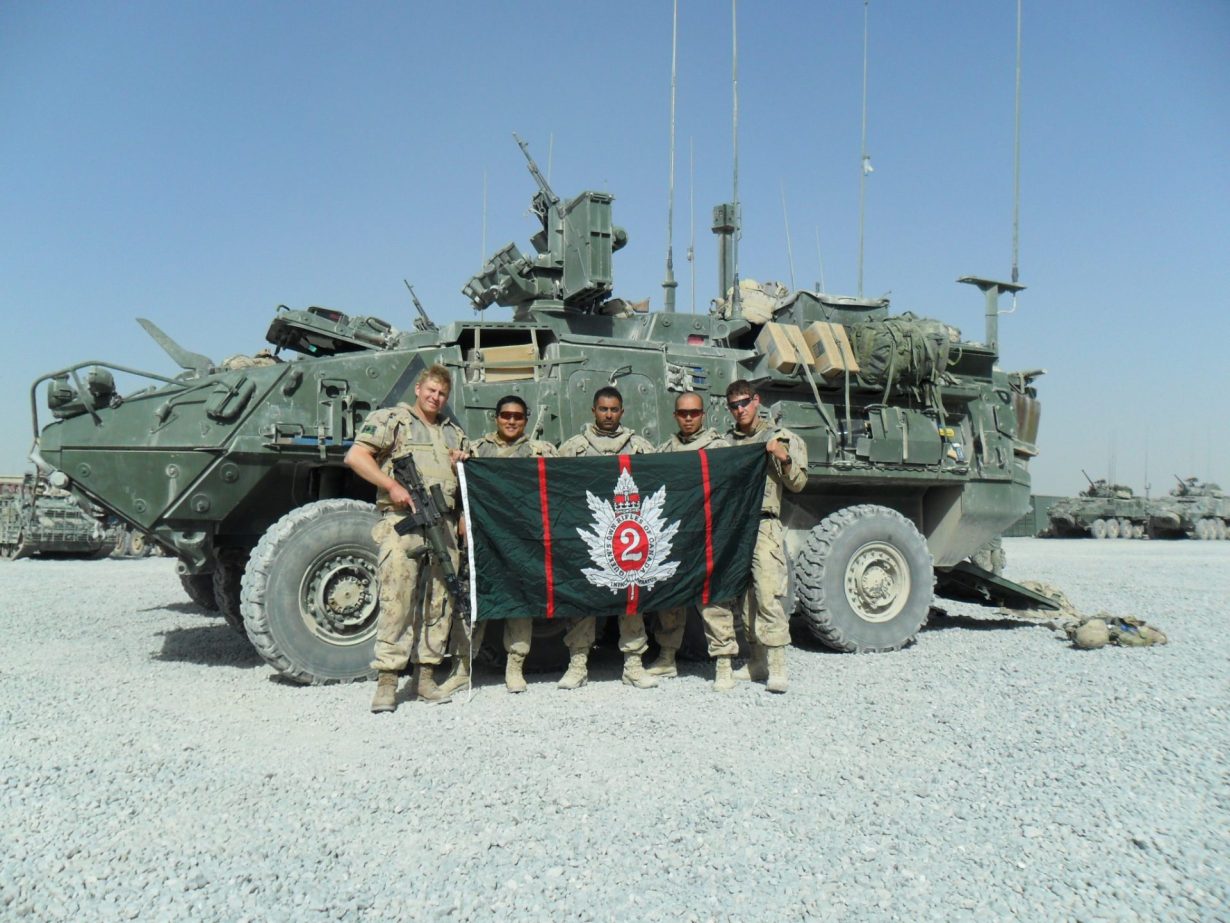
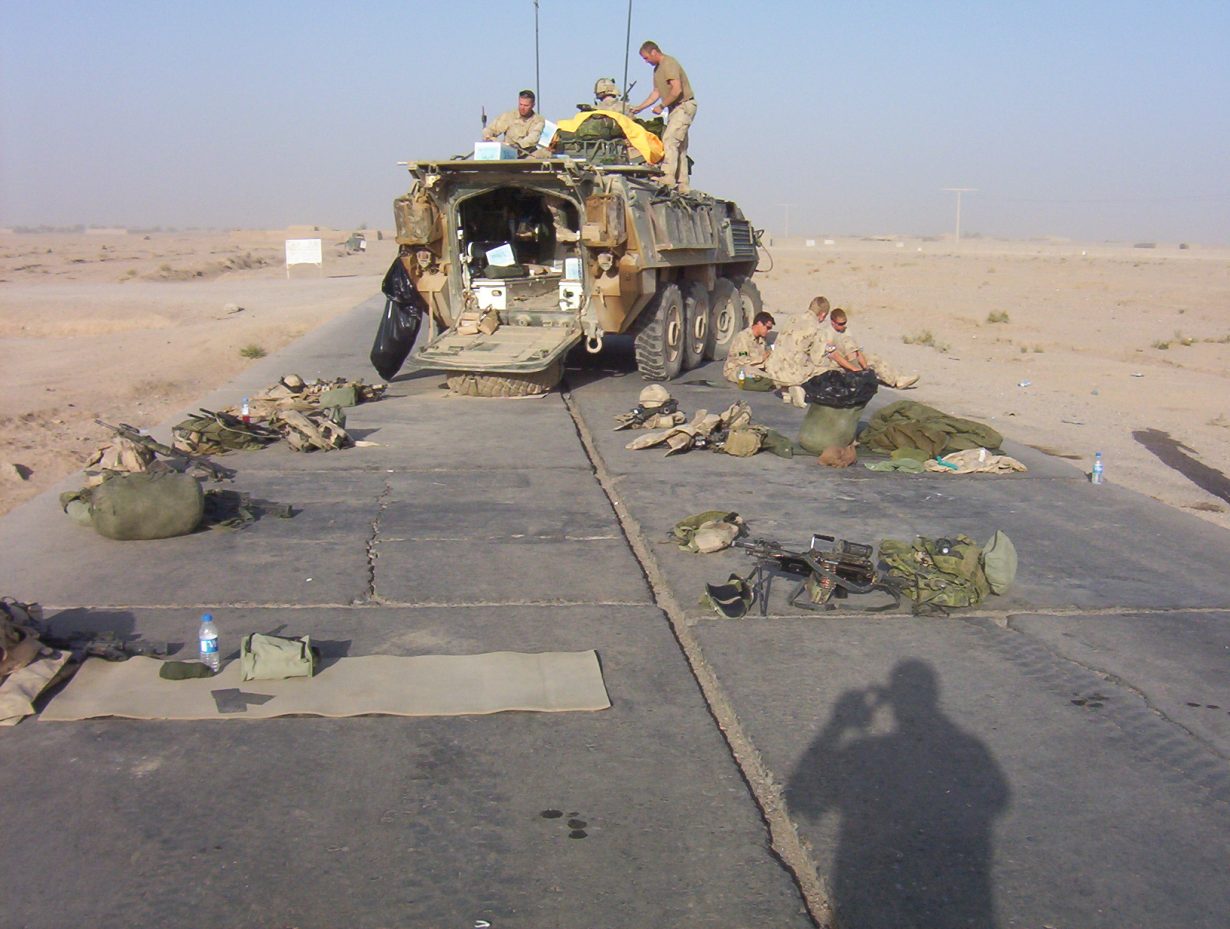
The program was made possible by the Government of Canada who donated the decommissioned and demilitarized LAV IIIs to the program. The monuments were prepared in London, Ontario by Militex Coating Inc. with the assistance of Fanshawe College welding students who earned course credits for their efforts.
The program closed after unveiling 33 monuments in communities from coast-to-coast.
Explore: Use the map below to learn about Canada’s 33 LAV III monuments. What role can monuments serve in honouring the military service of members of the Canadian Armed Forces?
Did you know?
Many members of the Canadian Armed Forces received military decorations in recognition for their immense bravery during the War in Afghanistan. These decorations include the Star of Military Valour, the Medal of Military Valour, the Medal of Bravery, Mention in Dispatches, the Meritorious Service Cross, the Meritorious Service Medal, and various command commendations.
What do Canadians think of the war now?
There are no reliable statistics that can tell us what Canadians think today. Canadian troops have been out of Afghanistan for a number of years now, and the Taliban continued to fight for control of Afghanistan after they left. In 2020, the United States negotiated with the Taliban and signed the Doha Agreement, agreeing to withdraw American troops. In 2021 the Taliban launched an offensive, sweeping through the country from May to August with incredible speed. In August 2021, the Taliban captured Kabul with little resistance and the Afghan President, Ashraf Ghani, fled the country. The US military withdrew, evacuating more than 123,000 people via airlift. The war was over.
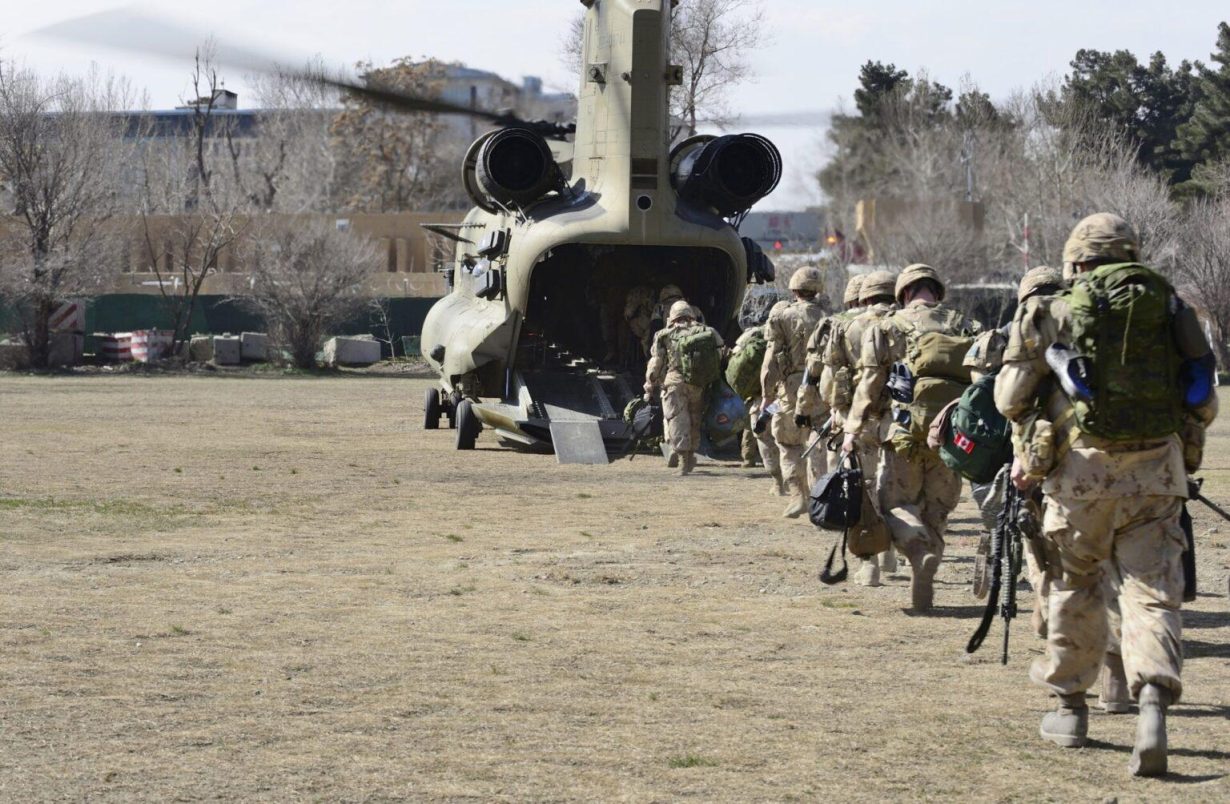
Some argue that Canada’s contributions in Afghanistan have amounted to nothing, as the infrastructure that Canadian soldiers helped build and the freedoms they promoted are rapidly eroding under Taliban rule. Others argue that the years of relative stability and the promotion of education and personal liberties during the US and NATO intervention will help Afghan civilians resist the harshest aspects of Taliban rule. Some others claim to know too little about the war to have an opinion.
Reflect: What are your thoughts about Canada’s contributions in Afghanistan ?
While we cannot say that the opinion within all members of the Canadian Army is homogeneous, there is a consensus: it is important to highlight Canadian participation, to commemorate the 159 Canadian soldiers killed in action and to support the veterans of this war.
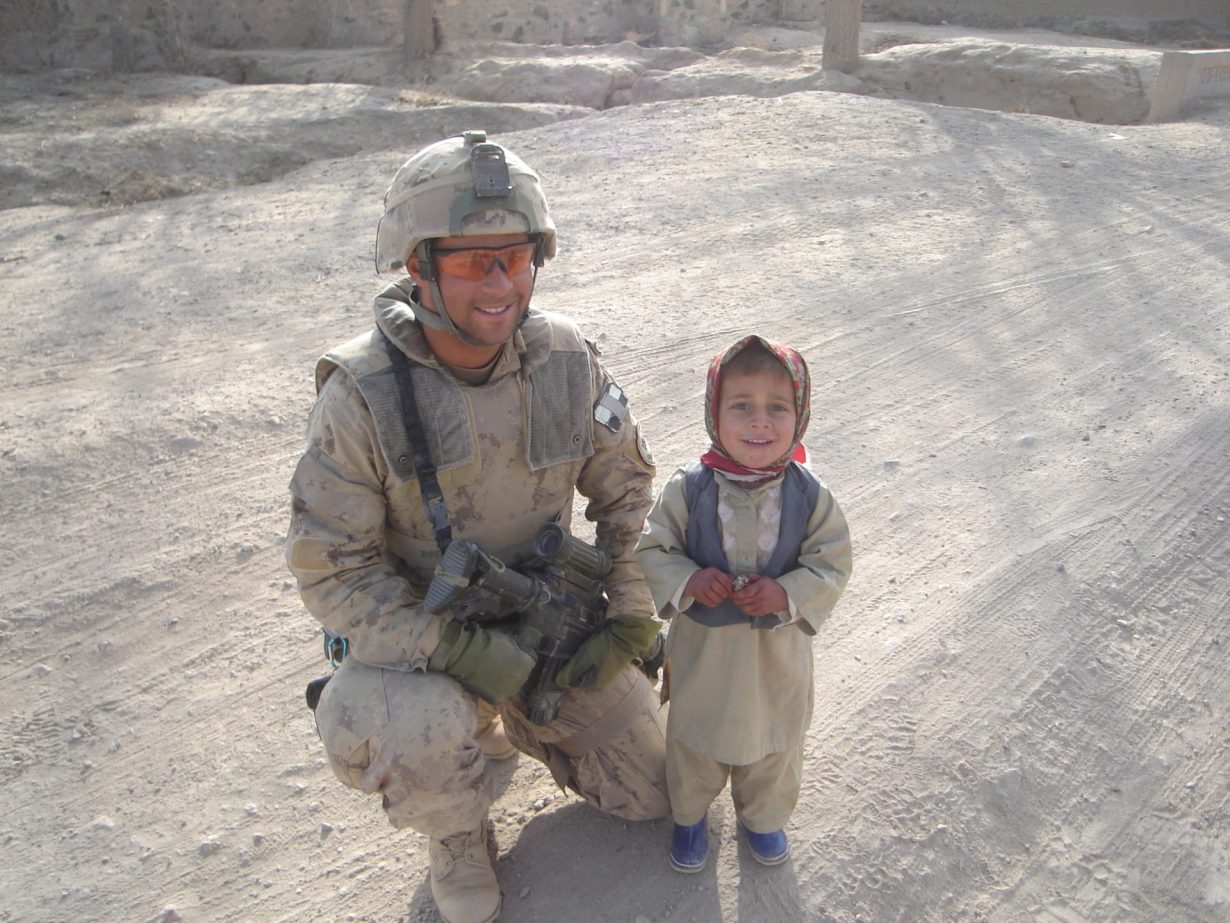
“[I feel] an immense sense of pride… in addition to creating a safer environment for many communities, Canada enabled hundreds of quick impact projects and larger scale projects that all had the view of enhancing the lives of local Afghans. There’s a large body of enduring work that we can all be proud of. These projects, ranging from building schools, to roads, to wells to many others, are part of Canada’s positive legacy in Afghanistan.”
– Lt Anthony Robb
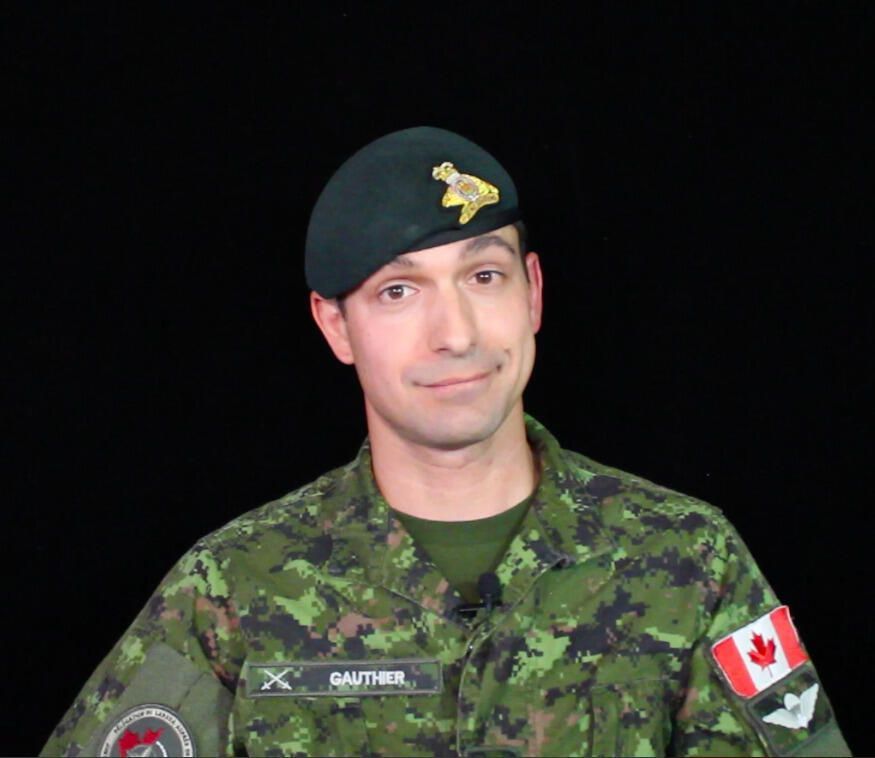
“I often switch between being very proud of what I and the small team have managed to do there– I think it was wonderful, I think it well, I think we have really made a difference– and the other way around, it was such a small part on a big enterprise and on thousands of people spread on almost 14 years. Was it a significant part? Is it important that it’s significant? I do not know. All that to say that I have a hard time figuring out how to talk about it.”
– Nicholas Gauthier, Royal Montreal Regiment
Exhibit title