
On June 6th,1944, Operation Overlord, the largest sea-borne invasion in human history took place on the beaches of Normandy. The operation to open the western front of Europe took the form of an assault on the Nazis’ Atlantic Wall at five beaches: Gold, Juno, Sword, Omaha and Utah. Trooper Lorne A. Tozer was among the thousands of Canadians who came ashore on Juno that day. On the same day thousands of kilometres away, his younger brother, Elvin ‘Byng’ Tozer, made his way to Fredericton, NB and enlisted in the Canadian Army with four of his friends. United by this single day, these two brothers, my uncles, would experience very different wars.
The Replacement
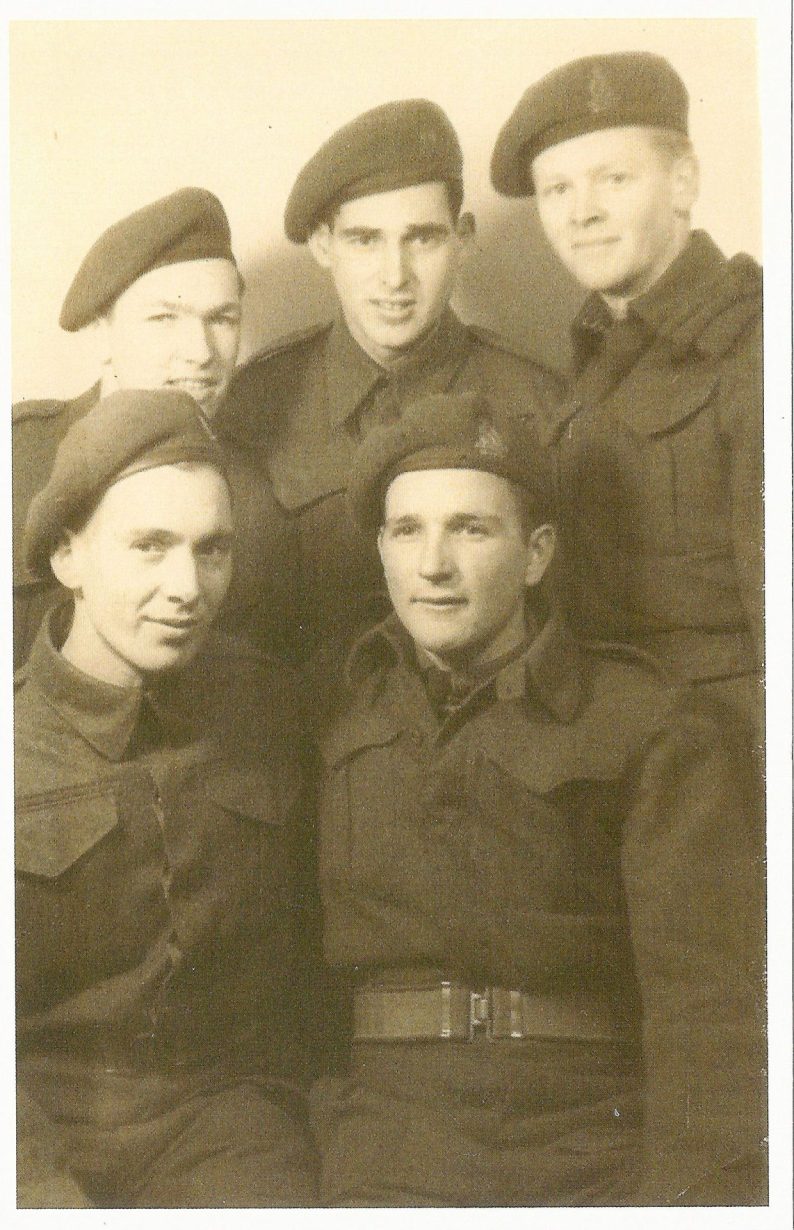
On that June day, Byng and his buddies made their way to Fredericton to enlist in the Canadian Army. They had no way of knowing what was going on at the other side of the ocean. Byng signed up with Boyd Leach, Burton Matchett, Harold Matchett and Omer Matchett. He was the third son of Elvin and Hattie Tozer of Sunny Corner, NB. At 19, he was off for a great adventure. With his brother already overseas, Hattie cried when she saw him in uniform. She felt the family had risked enough with one son at war, and the thought of risking another was too much for her. She had seen the casualty notifications. Hattie had hoped that he would be exempted from conscription because they needed him on the family farm, and here he had gone and volunteered. At this point in the war, Canada was heavily involved in land warfare and was desperate for men to replace the losses in the infantry.
Born February 25, 1925, as Elvin Burton, he had a lot going for him. He was tall, good-looking and charming. He had been named after his father, but shortly after his birth his mother had nicknamed him after the Governor General of Canada, General Julien Byng. This was the name he would use throughout his life.
After training in Canada, Byng was sent to Europe as an infantry replacement. After a harrowing flight from the UK to North West Europe, he was assigned to the Carleton and York Regiment (C&Y) part of the 3rd Brigade, 1st Canadian Infantry Division on February 12, 1945. This unit had been involved in heavy fighting throughout the Italian Campaign and was now deep in the mud of Holland. They had suffered significant casualties and were in need of re-enforcements. Both Byng and his friend Omer were sent to join the C&Y. After the war, Byng did not share stories of his experiences of war.
As part of Canada’s efforts to Liberate Holland, the C&Y were involved in some of the hardest fighting of Canada’s war, with harrowing events that marked soldiers like Byng for the rest of their lives. Byng was assigned to be the squad Bren Gunner. The Bren Gun was the Commonwealth light machine gun developed in the 1930s. It was the main fire support weapon for the assaulting unit.
Byng joined his unit on the frontlines on April 11, 1945, in time for the final big push. Operation Cannonshot was designed to liberate the city of Apeldoorn. As the C&Y crossed the canal and moved through the town, their elements came under repeated harassing sniper fire. On April 25, Byng and his squad moved forward to clear the sniper from a church tower. He later said that “it didn’t need to happen.” As they manoeuvred forward, the squad leader warned of an area that was believed to be mined. This would prove to be prophetic as Omer stepped on a German Schu-mine 42. These wooden anti-personnel mines were designed to be very simple to make and very hard to find. Shoebox sized, it was activated when a person stepped on its lid. In the cold calculations of war, the Germans had reasoned that it took more men to help a wounded colleague than a dead one. As designed, the mine immediately blew Omer Matchett’s lower leg off but left him very much alive. Omer was one of the 506 casualties suffered by the 1st Division during this operation. Under orders to push forward, Byng was haunted by the memory of being forced to leave his friend behind. Omer did survive, but part of Byng never forgave himself for leaving him behind.
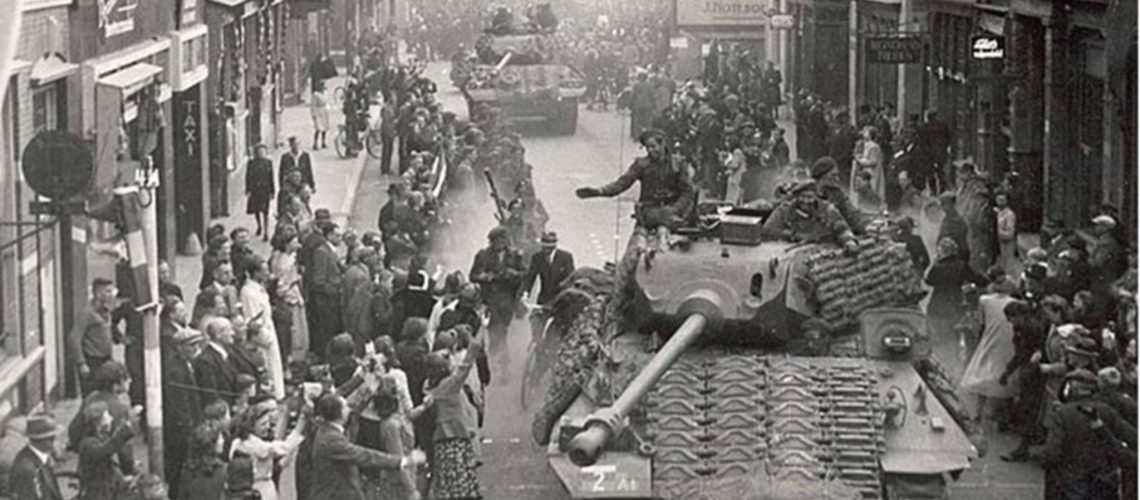
Victory in Europe (VE) Day was May 8, 1945. The fighting in Europe had ended and Byng was in Holland. Unlike his brother Lorne, he was not anxious to return to Canada. The governments of the Allies had known the end was at hand, and had begun to think about what to do next. After the First World War, Germany had by and large not been occupied, and the Allied powers thought this may have been a mistake. An ‘Army of Occupation’ thus had to be created. The Allies divided Germany into four zones: British, American, French and Soviet. Canada planned to be part of the British occupation force. Their mandate lasted from May 1945 until June 1946. This division became known as Canadian Army Occupation Force (CAOF) and operated in Germany’s North-West. The formation was made up of men who either volunteered or had low point scores. As a result of the government experiences at the end of the Great War, a point system had been introduced to provide some kind of equitable way to organize repatriation home on the overseas contingent. At his request on June 20, 1945 Byng was transferred to the newly cloned North Shore Regiment (CAOF). The division was based out of Bad Zwischenahn and would be repatriated in the spring and early summer of 1946.
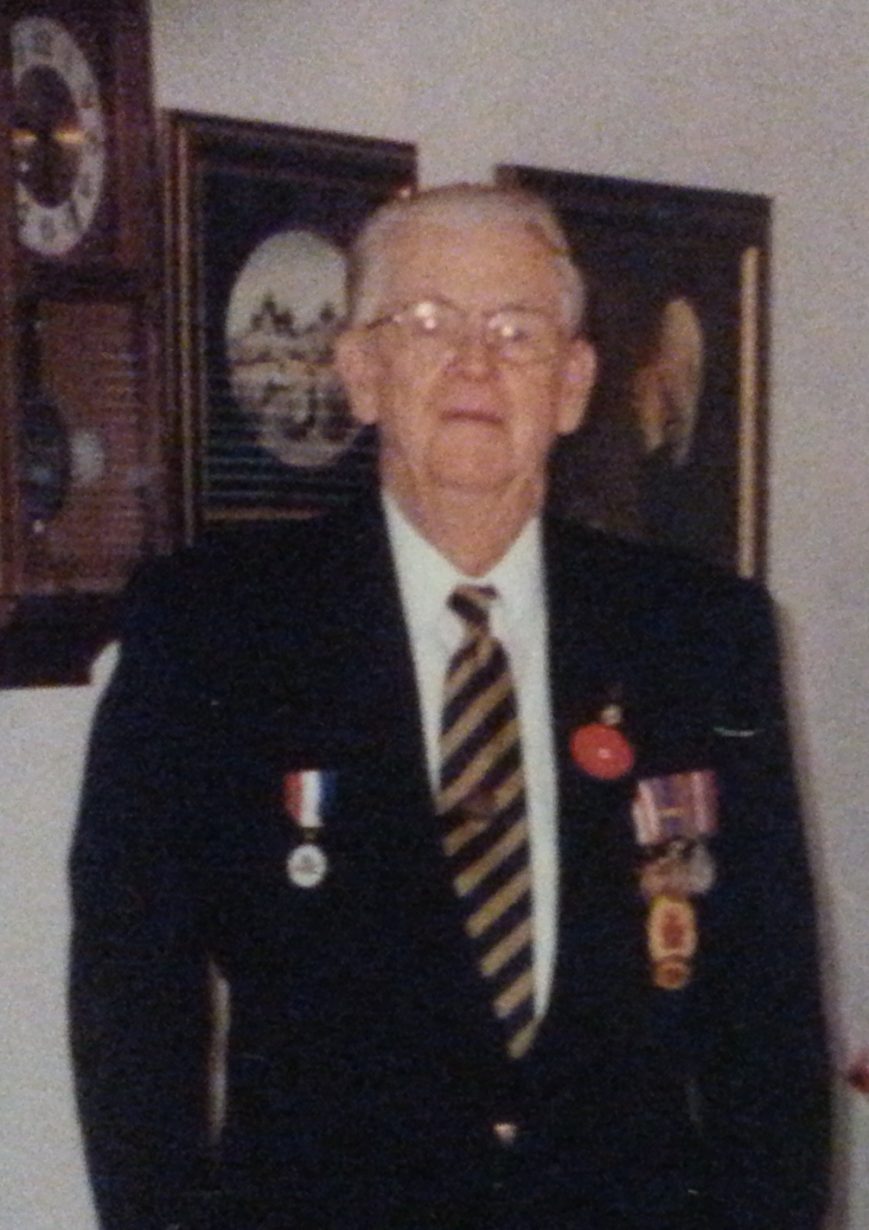
Both of my uncles suffered from some form of Post Traumatic Stress Disorder (PTSD). Lorne would never like fireworks and had recurrent dreams that gave him no peace. Byng came from a teetotalling family, yet he returned as an alcoholic. He, like many veterans, struggled to come to terms with a world that did not understand what they had experienced and like many, he turned to self-medication. He found comradery as a member of the Royal Canadian Legion. These men understood.
In 1951, Byng married Mary Sawchuk, a former Canadian Women’s Royal Canadian Naval Serves (WREN) veteran and settled in Cambridge, Ontario. Together, they raised one son. Byng worked for Cambridge Brass in their medical fittings section. After May’s death in 1986, he travelled back to his hometown and married his high school girlfriend, Shirley Hare-Lawlor. He passed away from bladder cancer on April 30, 2008, at 83 years old.
Guest written by Kris Tozer for Honouring Bravery