Aleutian Islands

In 1942, the state of the Asia-Pacific War was becoming rather unfavorable for Japan. The Americans had started to make several breakthroughs and the Japanese navy was in trouble. On June 3, 1942, a few days before the famous American victory at the Battle of Midway, Japan decided to send contingents of troops to invade the Aleutian Islands. Their intention was to open a front further north in order to protect their positions and slow down the Allied advances. By capturing the islands of Kiska and Attu, their objective was to open up a network with Midway Island that could help them in a naval war against the Americans. In fact, such an invasion presented little risk to the Japanese army given the very small presence of American troops on these islands. Moreover, a successful invasion would be a major boost to the morale of the empire.
What are the Aleutian Islands?
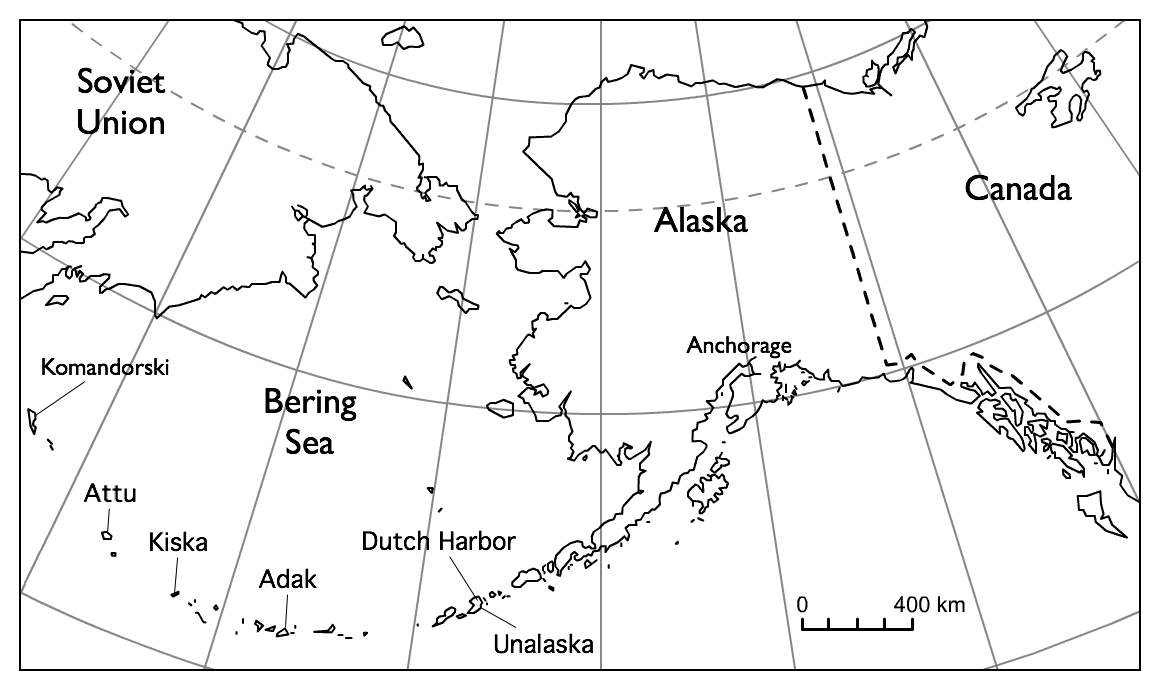
The Aleutian Islands are a group of small islands that start from southern Alaska and extend in the direction of Asia. The vast majority of these islands are very small and sparsely populated. Indigenous peoples, such as the Unangan people, are found on several of the islands. However, at the time of the war, these communities were relatively few in number. In addition, the Unangax^ were still experiencing the terrible effects of the Russian and American colonial expeditions of the 19th and 20th centuries. It is estimated that there were about 1,500 Unangax^ at the time of the Japanese attacks. Aside from the Unangax^, some non-Indigenous Americans were also stationed in the Aleutian Islands for meteorological and other missions.
The attack began on June 3, 1942 with a two-day bombardment of the U.S. naval base at Dutch Harbor. The Japanese strategy consisted of getting close to the target by ship and aircraft carrier to bombard it from the sea as well as from the air. This first attack was a small success for the Japanese army, which reported no casualties and little material damage. Moreover, it opened the door to the invasion of the islands of Attu and Kiska a few days later. For the Americans, although the attack caused minimal destruction (apart from a few deaths and destroyed planes), it meant above all that the Japanese were poised to launch a large-scale offensive on the entire west coast.
Following their success at Dutch Harbor, the Japanese landed on the island of Kiska a few days later, on June 6, 1942. Apart from the presence of a small team of American meteorologists, the 500 or so Japanese soldiers landing on the island met virtually no resistance. The invasion of Attu Island took place one day later, on June 7, 1942. As was the case at Kiska, there was no resistance: the only inhabitants of the island were about 40 Unangax^ and two American professors. Both islands were thus easy victories for the Japanese army.
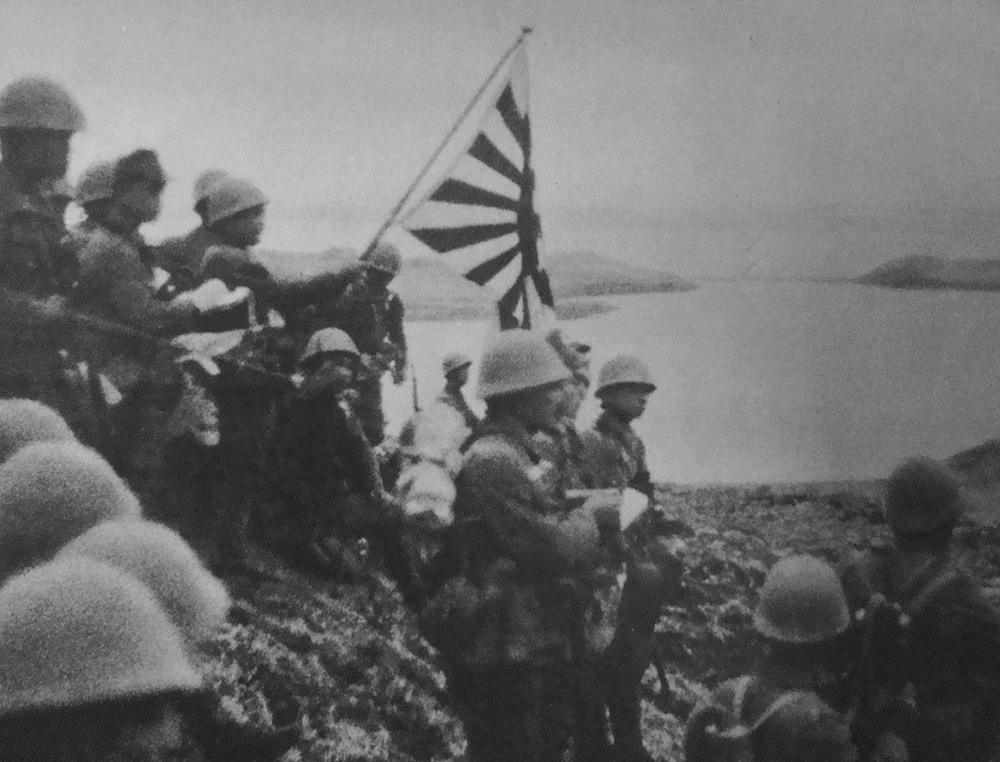
The Japanese occupation of Kiska and Attu was very for the few people living there. All captured Unangan and American residents who were not killed were deported to Japan and placed in internment camps and held there until the end of the war. The Japanese remained on the islands for several months. The American response was very fierce, however: they regularly bombed the Japanese throughout the occupation.
The Allied Recapture
During the Japanese occupation of the islands, the US Air Force, supported by a few RCAF squadrons, led several raids to deter the Japanese forces. While effective in damaging infrastructure and mining their morale, these bombardments were not enough to expel the occupiers. A land invasion was thus decided.
The recapture of the islands by the Allies took place during the summer of 1943. In the meantime, the Japanese garrisons had been reinforced. At Kiska, for example, the Japanese had increased their strength from 500 soldiers in June 1942 to more than 5,000 a year later. For the Allies, this signalled that the fighting would be difficult. Japanese soldiers had a reputation for fighting hard for their positions. As a result, a number of Allied regiments were mobilized for the counterattack: some 15,000 American soldiers were sent to reconquer the island of Attu, with important support from the Navy and Air Force. Canada’s contribution to the offensive was two ships, the HMCS Dawson and Vancouver, which were tasked with neutralizing any enemy submarines during the battle.
The fighting on the island of Attu was extremely brutal. The U.S. General Staff estimated that it would take three days to capture the island, but instead it took nearly twenty days – from May 11 to 30, 1943. The Japanese strategy at Attu was representative of their strategies during the war: withdraw to key positions, slow the enemy down as much as possible, and launch a final offensive when the situation became desperate. The fighting was thus long, tiresome and arduous for the Americans while the enemy soldiers dug in on the island’s mountains. To complicate matters, the weather was inhospitable: the cold alone caused more than half of the American casualties with more than 1,800 soldiers put out of action.
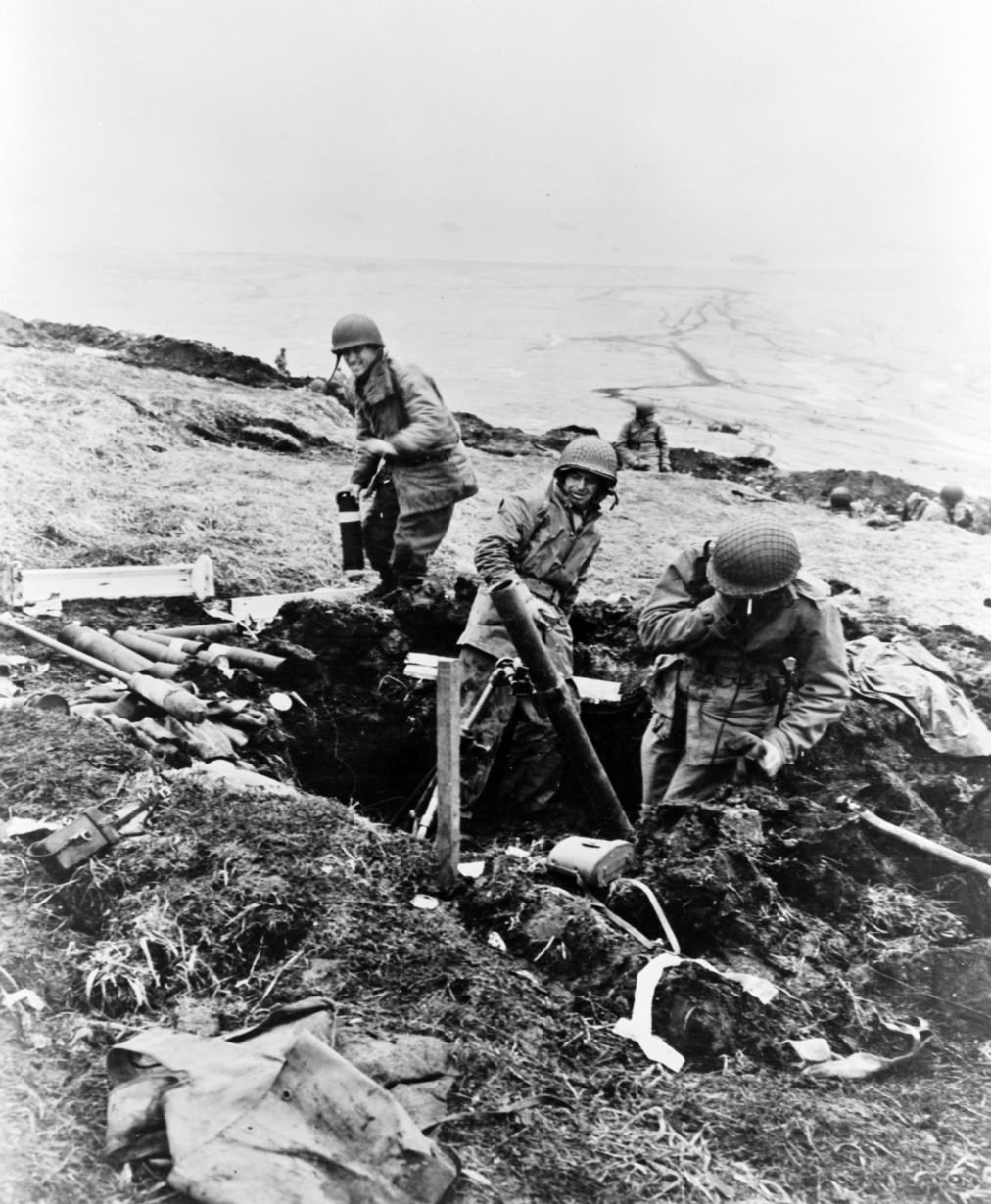
It all came to a head on May 29 1943, when the Japanese launched a desperate counterattack. Paul Nobuo Tatsuguchi, a medic for the Japanese army who was killed during the charge, left a detailed diary of the final days of the battle. According to him, all available men, regardless of their status, were to participate in the assault and the wounded were ordered to commit suicide. There is little need to describe the brutality of the last Japanese offensive, which largely consisted of hand-to-hand combat. In the end, out of all of the soldiers at the Japanese garrison at Attu, only 28 soldiers were captured by the Americans; the rest were killed during the battle.
With the conclusion of the Battle of Attu, the Allies prepared for a similar battle at Kiska. Expecting the fighting to be just as fierce at Attu, a force of 32,000 Canadian and American troops, twice as many as at Attu, arrived on the island on 15 August 1943. In support of their American allies, the Canadians sent the 6th Canadian Infantry Division which consisted of the Canadian Fusiliers from Ontario, the Rocky Mountain Rangers from British-Colombia, Le Régiment de Hull from Quebec and the Winnipeg Grenadiers from Manitoba— which was newly reformed after the Battle of Hong Kong. Additionally, the First Special Service Force, an elite joint US-Canadian force with extensive training for mountainous and winter-weather conditions, was also sent to Kiska. More than 5,300 Canadians— most of them conscripts— were thus mobilized for the invasion. However, the Japanese army had left the island a few days before.
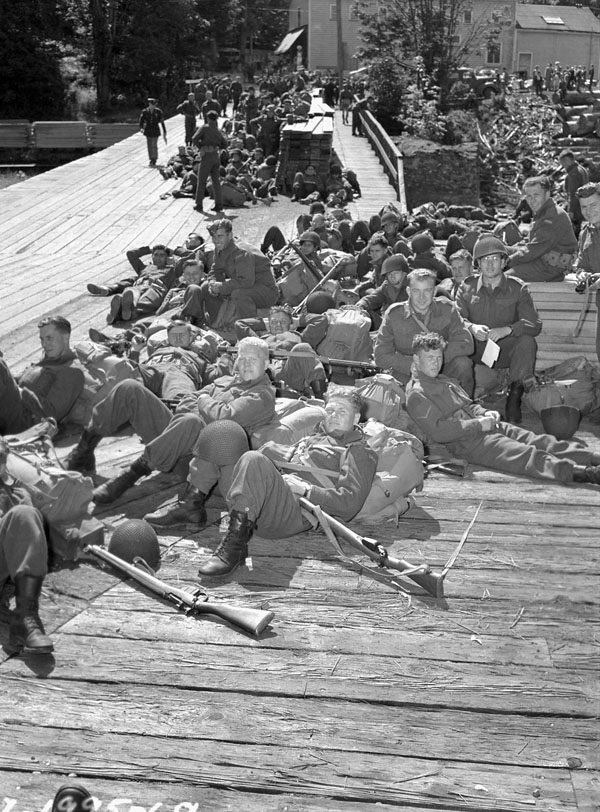

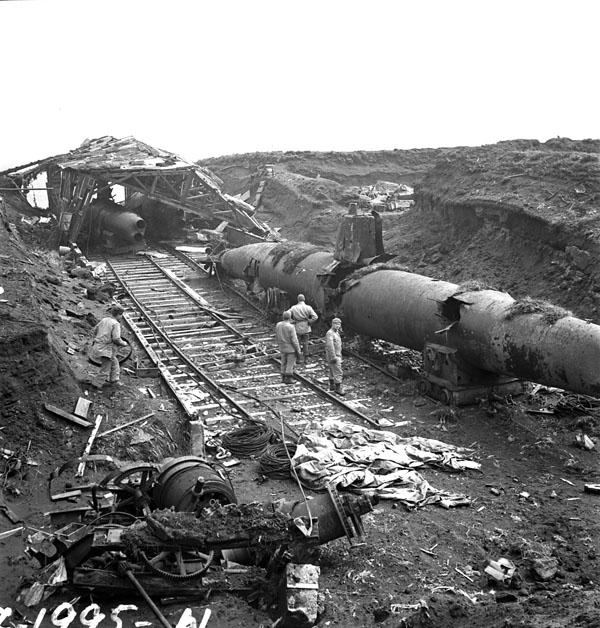
Although there was no fighting on Kiska, the Allies suffered several casualties during the following days due to numerous traps left by the Japanese, accidents, friendly fire and weather conditions. The Allied troops lost 300 soldiers in this way. Among them, four were Canadians.
Canadian Losses at Kiska
Think: We mostly hear about military casualties related to battles. What do these stories tell us about the risks and sacrifices of individuals who served but never saw combat?
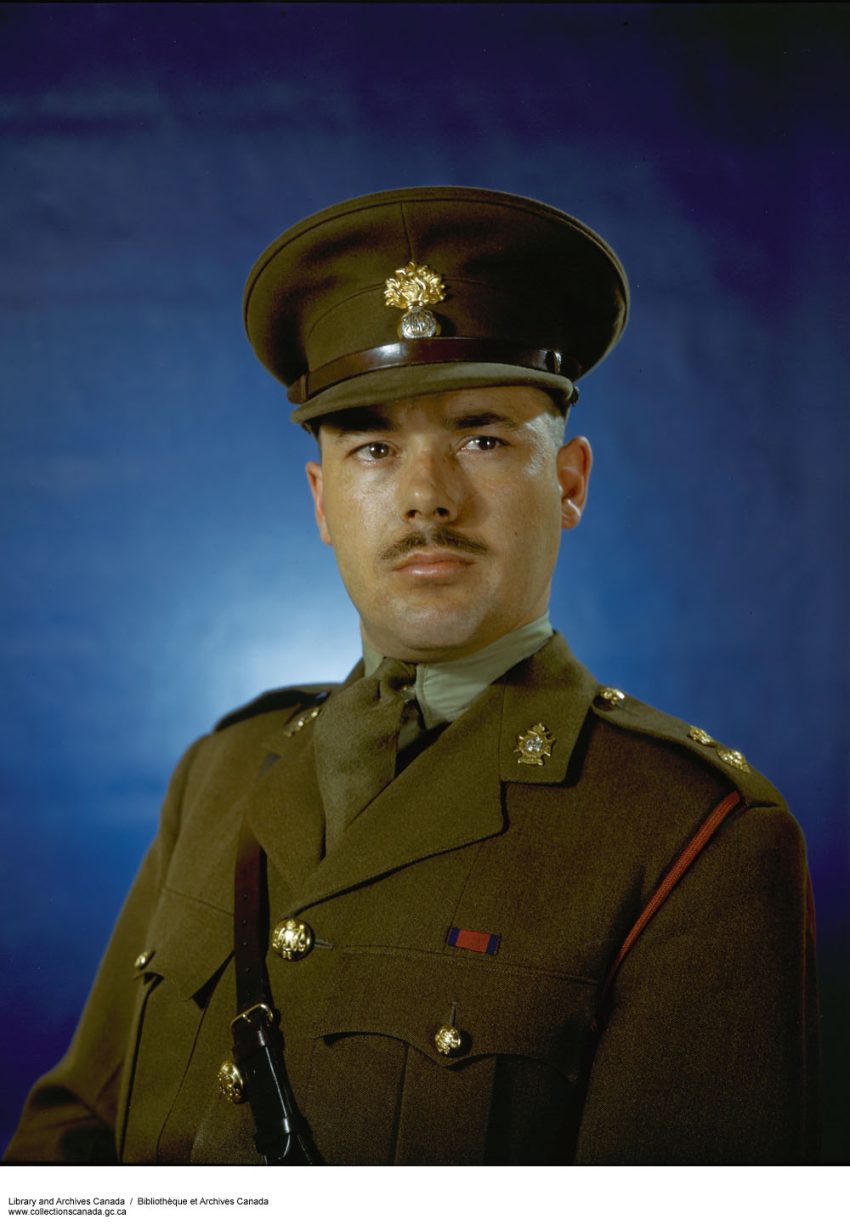
With the advance of American troops elsewhere in the Pacific, the Japanese abandoned the Aleutian Islands and mobilized their troops elsewhere. The Allies, however, remained on the islands for a long time to ensure their safety. At Kiska, for example, it was the Quebec officer Dollard Ménard who held the garrison with the Hull Regiment until they returned home several months later.
The Unangax̂ were tragically the biggest victims of the Aleutian Islands campaign. After the invasion of Attu, 41 people were captured as prisoners of war by the Japanese and were sent to Hokkaido, where they suffered brutal living conditions. More than half of them died as a consequence of their imprisonment. Things were only slightly better for the other Indigenous groups. Disappointingly, the US government used the question of the security of the islands as an excuse to evacuate 800 Unangax̂ living on the archipelago and to intern them in mainland Alaska, where they lived in terrible conditions. Nearly 75 people passed away during that period. The survivors were eventually compensated in 1988 by the US government and were given an official apology in 2017.
The Aleutian Islands campaign remained a minor front in the Asia-Pacific War and despite the difficult fighting at Attu, few remember the sacrifice of the soldiers there. For the Canadian troops who participated in the Kiska operation, no battle honour was given to them as no combat took place. The result was undoubtedly anticlimactic as the Canadian Army was hoping that the successful usage of conscript troops— whose high spirits and good attitude were praised by their officers— would change the public opinion about conscription. War, however, isn’t simply a matter of fighting. The Canadian soldiers at Kiska trained hard, worked hard, and proved that they were ready for anything.
Forgotten Front: Canada in the Pacific War