After the War

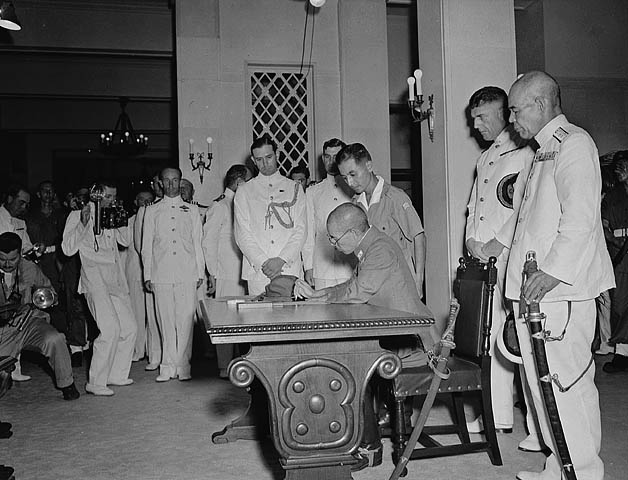
The American army advanced rapidly on the Japanese positions. In 1945, Japan’s army was pushed back into its archipelago, and the Allies massively bombed the country’s main cities. This operation culminated in the atomic bombings of Hiroshima and Nagasaki at the beginning of August, a show of force that convinced Japan to surrender a few days later, on August 15th. Their capitulation was officially signed on September 2nd.
Snapshot of Service
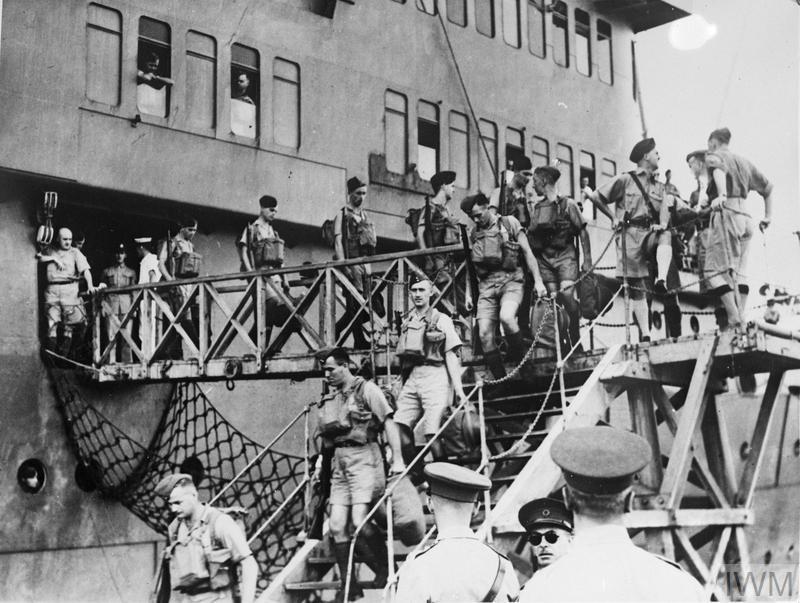
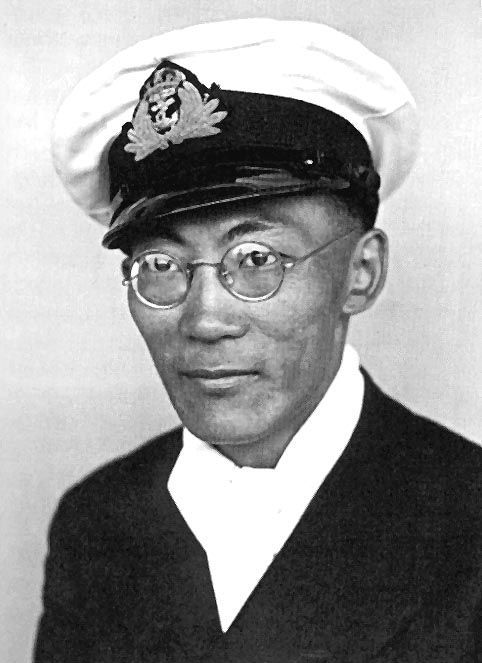
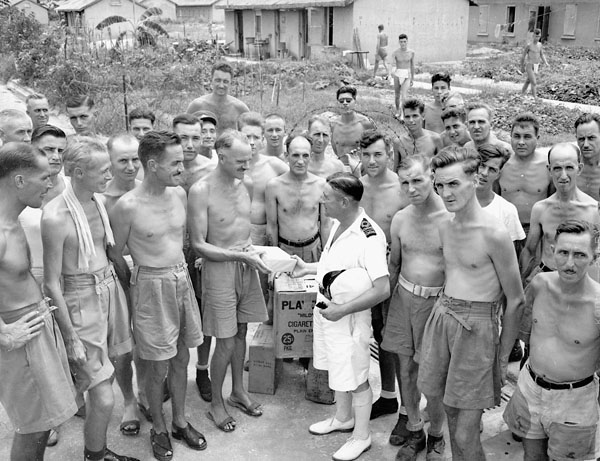
After working out of Ceylon where he helped prepare plans for the recapture of Rangoon, Naval Officer William Lore was sent to help liberate Hong Kong in 1945. William Lore was the first Chinese Canadian to join the Royal Canadian Navy and, working with the British, was the first officer to land in the colony. With his men, he liberated Sham Shui Po Camp and proceeded to evacuate its prisoners.
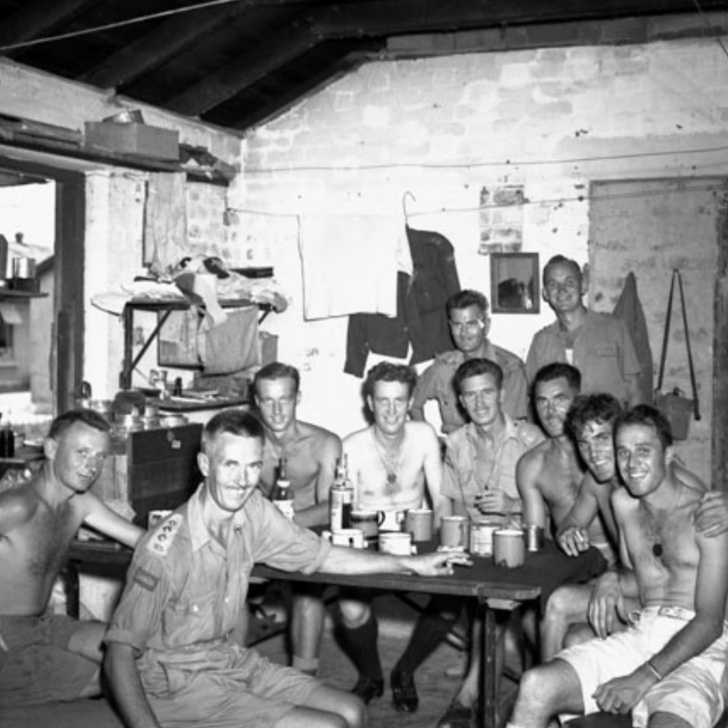
Prisoners held in Japanese Prisoner of War Camps since the Battle of Hong Kong began their slow journey home in September 1945. Many had to spend long periods in military hospitals in Guam, the Philippines, or San Francisco before returning to Canada. They arrived in Vancouver, where they could call their families for the first time. The veterans then took the train home and were greeted like heroes at each station. Most were lucky enough to spend Christmas at home with their families, but they had to report back to the Canadian Army for further hospitalization, as their malnutrition required months of treatment.
The war took its toll on all of the Canadians mobilized in Asia. Despite being deployed towards the end of the war, many members of Force 136 suffered from diseases and injuries while on operation. Most POWs also returned to Canada with illnesses directly related to the lack of food at the camps. Indeed, all former prisoners suffered from vitamin deficiencies and had varying degrees of sight problems. Others bore physical scars from battle wounds or from being attacked by guards. Many veterans came back with psychological scars that were never diagnosed. Unemployment, chronic illness, dependency, blindness, and shortened life expectancy were all consequences of the months of abuse, malnutrition and forced labour that would last a lifetime.
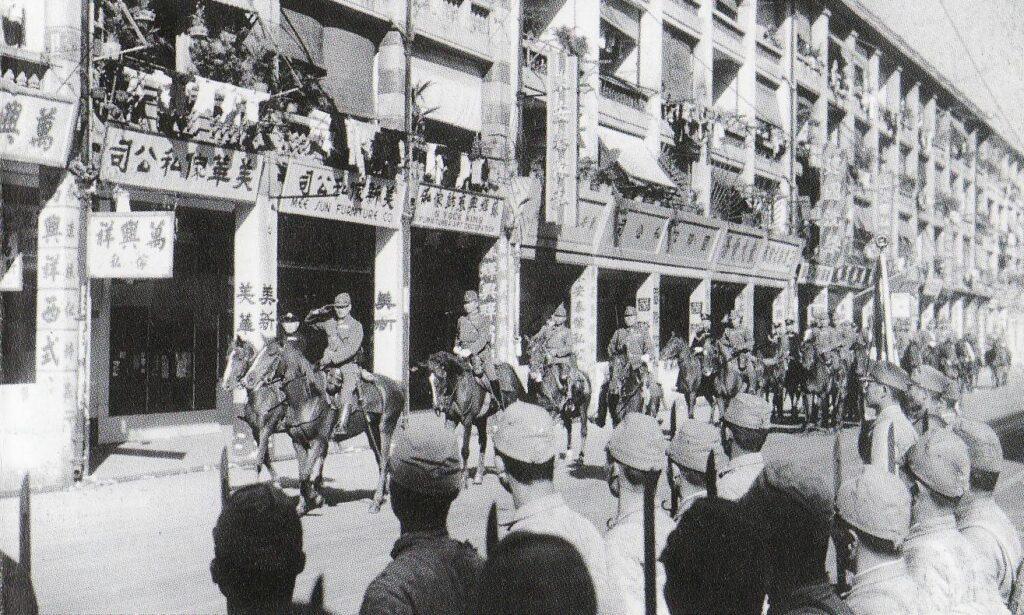
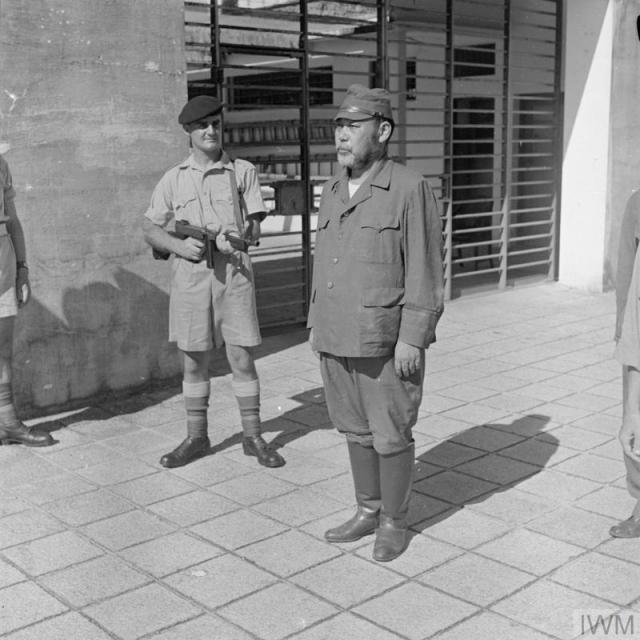
In keeping with U.S. policy, in 1952 Canada absolved Japan of any responsibility for wartime atrocities. With the rise of communism in Asia and the Cold War becoming a reality, the United States needed Japan to be a reliable ally. The trials of war criminals were therefore governed by politics rather than justice. In Hong Kong, however, the colonial administration held 60 trials against Japanese war criminals. Colonel Esao Tokunaga, who was in charge of all camps in Hong Kong, was arrested and sentenced to death.
Think: What effect do you think this policy has had on our historical memory of Japan’s actions in the war?
Hong Kong veterans fought for a long time to receive reparations for the conditions of their incarceration. Scarred by their experiences during the war, the veterans often clashed with the Japanese Canadians who also sought reparations for their internment. In August of 1988, the Canadian government agreed to disperse $21,000 to each Japanese Canadian who was interned and pronounced a formal apology. However, it was not until December 11, 1998, that the Canadian government agreed to compensate the veterans of Hong Kong with approximately $24,000 each. On December 8, 2011, 70 years after the battle, Japan formally apologized to the Canadian POWs but did not offer any financial compensation.
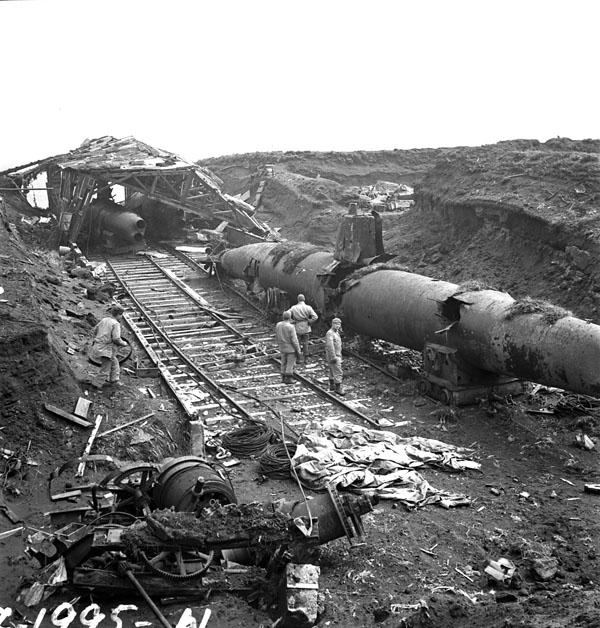
Despite their efforts, many Canadian veterans who served in the Asia-Pacific theatre felt that their contributions to the war were overshadowed by the events in Europe. Indeed, while the European front saw numerous successes for the Canadian Army, the same couldn’t be said for the Asia-Pacific front: the battle of Hong Kong was a terrible defeat, the battle of Kiska was a non-event and the contributions of thousands of other Canadians around the British army were subsumed by the larger British and US forces. However, the war against Japan had many consequences for Canadians. Many veterans of the Asia-Pacific Theatre left the war permanently scarred, with lingering injuries, and long-term mental health issues. Perhaps worst of all: few in the Canadian public acknowledged their part in the war. Nevertheless, the contributions of those who took part in the Asia-Pacific theatre remain important reminders of the extraordinary actions of Canadians during the Second World War.
Forgotten Front: Canada in the Pacific War