Southeast Asia and Japan

Struggles in the Southeast
As the Asia-Pacific War progressed, Japan continued its advance into Southeast Asia and quickly began occupying territory. By February 1942 Japan had occupied the Dutch East Indies, Malaya and Singapore. In the face of the Japanese advance, the Allies began increasing their defenses. In March, the RCAF’s 413 Squadron was transferred to Ceylon (Sri Lanka) to help with reconnaissance. The squadron became the first Canadian unit to serve in Southeast Asia during the war.
The Savior of Ceylon
Leonard Birchall was born in St. Catherines, Ontario in 1915. In March 1942 he was the squadron leader of 413 when they transferred to Ceylon. Only two days after arriving, Birchall and his crew spotted a Japanese naval fleet approaching Ceylon.
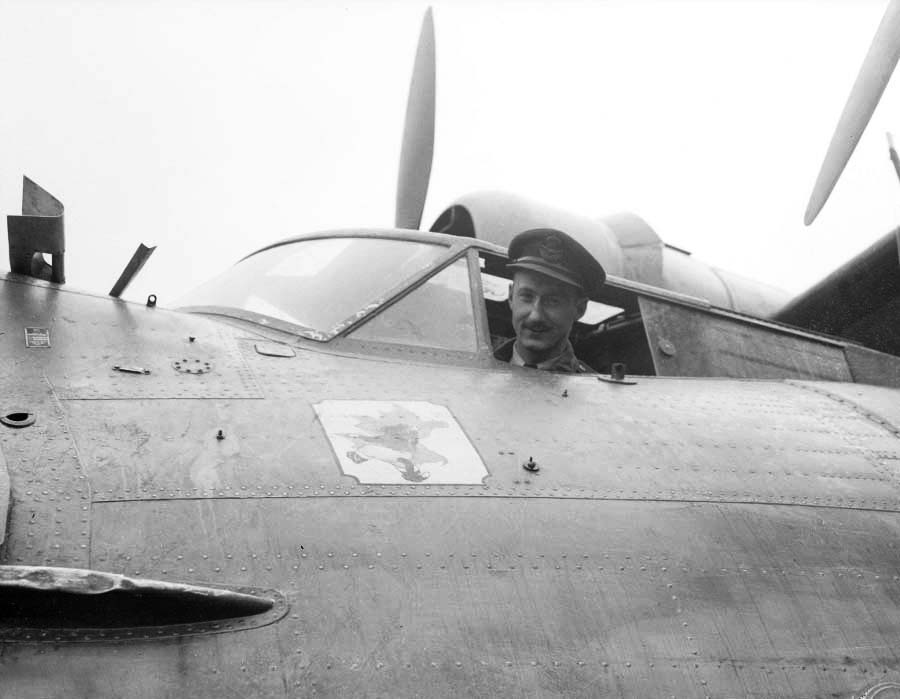
The crew radioed to fleet headquarters warning of the impending arrival of the Japanese fleet. Soon after, a Japanese plane shot them down. Burchill and five of his crew survived, but spent the remainder of the war in Japanese Prisoner of War Camps. However, the warning that Birchall and his crew sent ultimately prevented a surprise attack on Ceylon and Birchall was later awarded the Distinguished Flying Cross.
On March 9th 1942, Japanese forces captured the city of Rangoon in the British colony of Burma (now Myanmar). Burma was a strategic location for the Allies, as it provided a route for safe transportation of supplies to China and created a defensive barrier against a potential Japanese invasion into India. However, on May 20, 1942, Japan finally took hold of the entire colony and British forces were forced to withdraw to India.
Although the Allies conducted some small operations in Burma, a large-scale plan for the recapture of the colony officially began at the Quebec Conference in August 1943. During the conference, the Allies also established the South East Asia Command (SEAC) to control operations throughout Southeast Asia. Since many Canadians served in non-Canadian units in the SEAC, the total number of Canadians who served in these operations is unknown. However, it is estimated that around 7500 Canadians in total served in Southeast Asia.
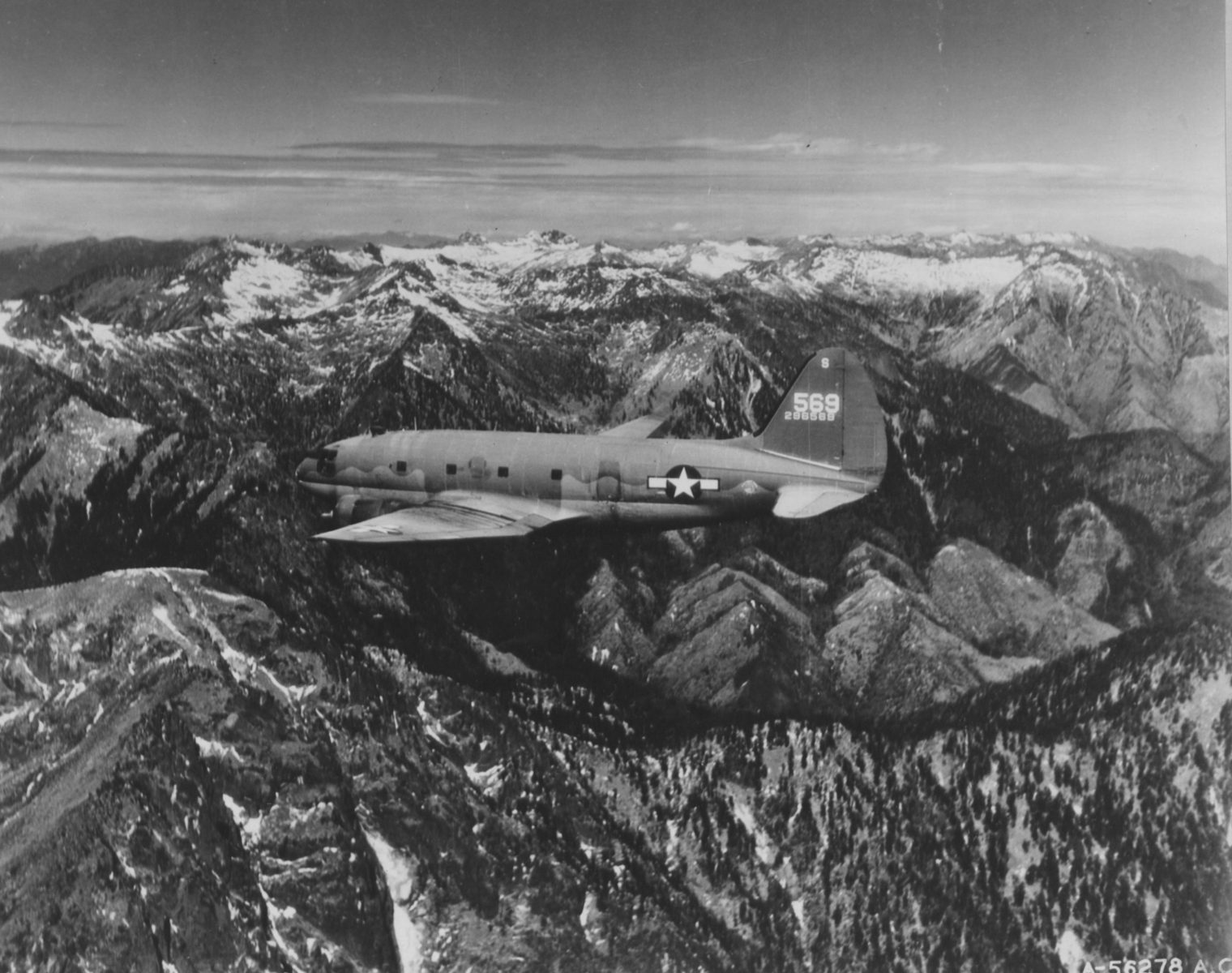
Before Burma’s occupation, Allied supplies heading east from India would travel up the Burma Road into China. As Japan now occupied the Burma Road, the Allies instead switched to air transport to deliver supplies over the “Burma Hump”. In fact, 90% of supplies for military operations in Burma came from air transport.
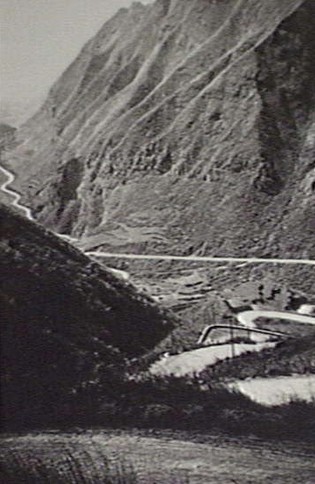
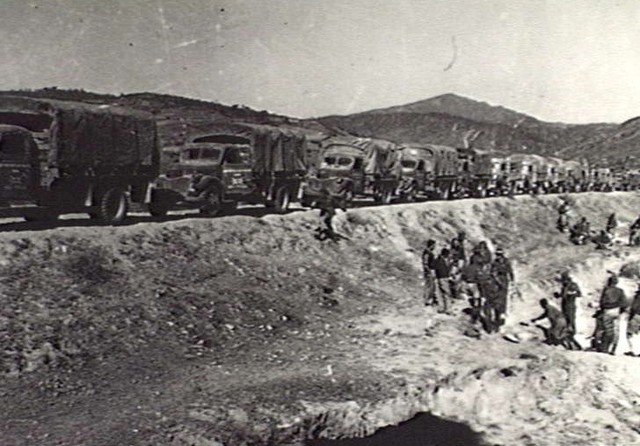
Left: Portion of the Burma Road near the Annan Pass. Right: Australians on British Militrary Mission 204 transporting supplies along the Burma Road in 1942 (Australian War Memorial).
Of the 14 air supply squadrons assigned to SEAC, two were from the Royal Canadian Airforce (RCAF): 435 Squadron and 436 Squadron. Based in India, Squadrons 435 and 436 helped bring much needed supplies to troops within Burma.
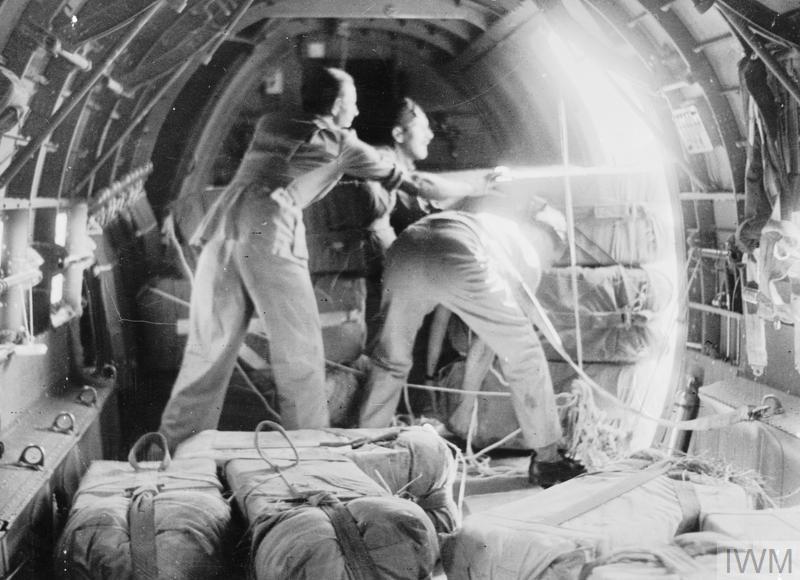
Transporting supplies was not an easy task. Pilots would fly over the Himalayan mountains to their drop zone and lower the plane to 200 feet. Other crew members would then push the cargo out of the plane so that it could be retrieved by troops below. Japanese forces often targeted these transport planes as they were not well equipped to defend themselves from attacks. During monsoon season the excessive rain and clouds also limited visibility, making it difficult to fly in the rough jungle terrain. Besides delivering cargo, Squadrons 435 and 436 also sometimes evacuated casualties. Finally, near the end of their mission in Burma, the Squadrons delivered humanitarian aid to the Burmese population.
Did you know?
Canadian Brigadier Douglas Storms created a material that helped make military runways in Burma? Made up of bitumen soaked hessian fabric, Storms’ Bit-Hess was waterproof and could be laid over difficult terrain, making it the perfect material to quickly make runways in the Burmese jungle.
Ground troops sometimes relied on mules to help move resources within the difficult Burmese terrain. Due to the complexity of transporting mules by air, they were instead shipped to Burma on boats. 180 Canadians, including many WWI veterans in the Veterans Guard, helped transport the animals as “Mule skinners”.
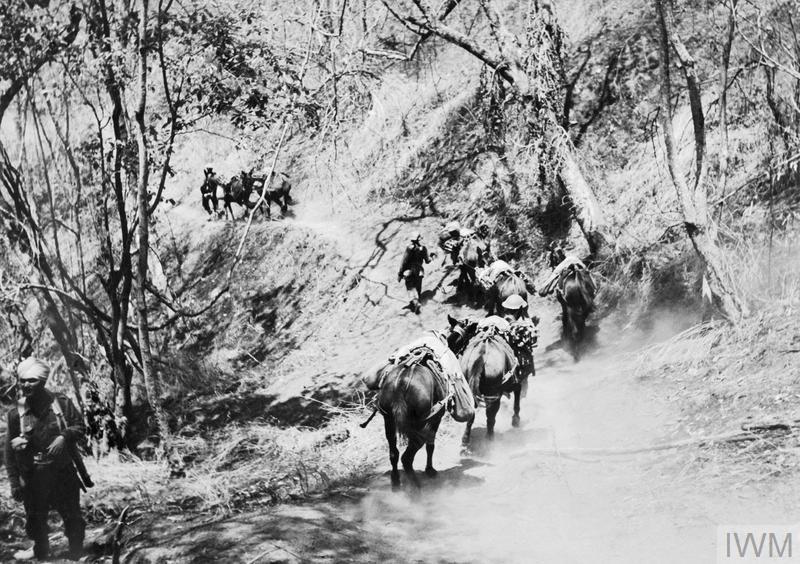
These mule skinners travelled aboard ships run by the merchant navy, a fleet of commercial ships that helped transport equipment, personnel and goods during the war. Although it is difficult to determine how many Canadian merchant ships sailed into Southeast Asia, we do know that 17 merchant navy ships lost seamen as a direct result of Japanese attacks.
Think: Why were supply missions so important? How might supply missions have differed between the Asia-Pacific front and the war in Europe?
By 1944, the Allies were extremely eager to regain control of Southeast Asia and devised a plan with Britain’s Special Operation Executive (SOE) to carry out the mission. The SOE had already successfully deployed military personnel behind enemy lines to support resistance movements in Europe and the Allies decided to take a similar approach in Southeast Asia. However, they needed soldiers who could blend seamlessly into the local population. Chinese Canadians were ideal candidates to train for these sabotage and intelligence missions. Not only did they speak English and Chinese dialects commonly spoken in the area, many had already shown interest in volunteering for the war effort. As a result, the Canadian Army recruited around 150 Chinese Canadians to take part in these dangerous missions. This group became known as Force 136.
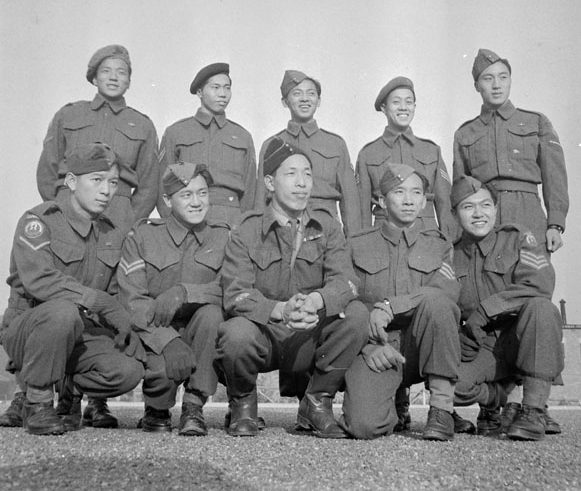
For these men, joining Force 136 was more than just an opportunity to serve their country. Chinese Canadians did not yet have the right to vote and many had previously been rejected from enlisting due to their ethnic origins. The chance to join Force 136 was therefore a way to demonstrate their loyalty to Canada and help them get the right to vote.
The men endured rigorous training, including in guerrilla warfare tactics and wireless operation. Once behind enemy lines, the men met with resistance fighters and sabotaged Japanese communication and supply lines. This was very dangerous work and the men knew that there was a high chance that they would not come home if the enemy found them. Conditions were also extremely poor and some of the men dealt with malaria and dysentery. However, the war ended before the majority of members of Force 136 were able to deploy on missions. Only approximately 14 were deployed on missions in Burma, Borneo, Singapore and Malaysia.
Snapshot of a Soldier
Born on March 4, 1919, Ronald Lee was one of the 150 Canadians selected for Force 136. Lee did basic training in Chilliwack, British Columbia before travelling to England, Cairo, India and Ceylon.
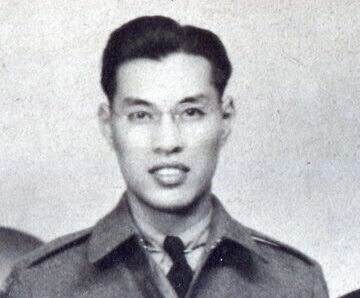
Lee described being issued two specific items in his kit before deployment: he was given an opium pill and cyanide pill. The first could prove helpful for trading and the second was to be used in case of capture. Lee was scheduled to be parachuted into Burma for a mission he would have been unlikely to survive when the U.S. dropped atomic bombs over Hiroshima and Nagasaki.
When the war ended, Lee returned home along with his unit. He became part of the Chinese Canadian movement to lobby the Canadian government for the right to vote, which they eventually received in 1947. Ronald Lee died at home in Vancouver on December 6, 2020 months after celebrating his 101st birthday. Although he kept images of his time with the Force in his wallet, his family only found out about these photos and his experiences in Force 136 after the wallet was lost and later returned to the family.
In March 1944, Japanese forces advanced into India and attacked British bases at Imphal and Kohima. The fighting was intense and proved to be some of the worst of the war. However, British and Indian soldiers defended their positions and eventually the Allies pushed the Japanese back into Burma. The Allies continued battling into central Burma and finally recaptured Rangoon on May 3, 1945. Soon after, the Japanese forces withdrew from Burma entirely.
The Frogman of Burma
George Henry Avery was born in Ottawa in 1917 and enlisted with the Royal Canadian Air Force during the war. Because he was an avid swimmer, he was chosen to be part of the Search Reconnaissance Unit (SRU)— a special operation unit of the British military that focused on marine operations and combat diving.
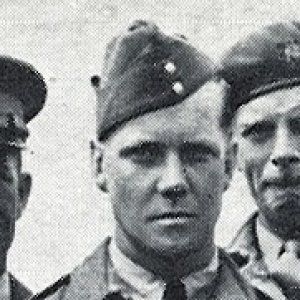
On the night of Feb 24, 1945 he was leading a section of the unit over the Irrawaddy River. The River was a natural barrier into central Burma and crossing it was crucial to the success of recapturing the colony. Under heavy fire, Avery and his team successfully established a bridgehead which allowed the rest of his division to later cross over the river. For his actions with the SRU, he received the Military Cross.
The Saga of the HMCS Uganda
HMCS Uganda was the only Royal Canadian Navy (RCN) ship that fought against the Japanese in the Asia-Pacific theatre. The Uganda is better known, however, for another unique feat: it was also the only ship whose crew voted itself out of the war.
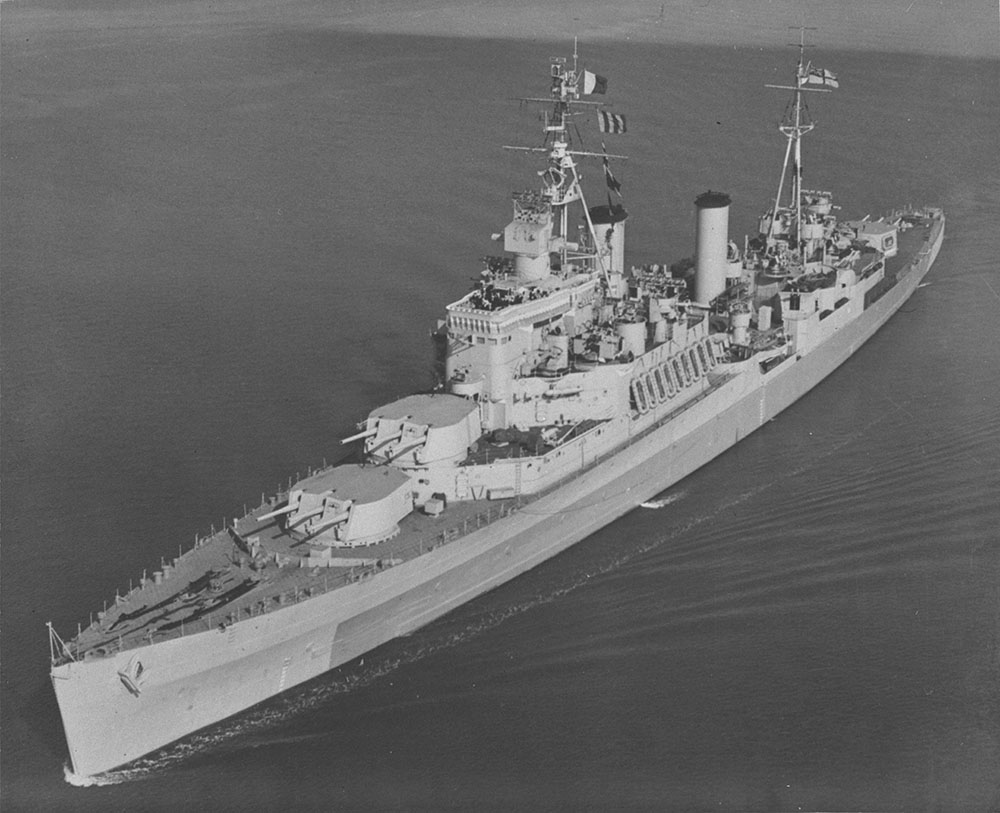
The Uganda was initially a British vessel, HMS Uganda, and served in the Royal Navy. After sustaining damage off the coast of Italy in 1943, the ship was sent to Charleston, South Carolina for repairs and the Canadian government negotiated her transfer to the Royal Canadian Navy in October 1944. A cruiser-class vessel, HMCS Uganda measured 555 feet in length and was heavily armed, making her the largest and most powerful vessel in the Royal Canadian Navy at that time. Newly Canadian, she was ironically assigned to the British Pacific Fleet.
What’s in a name?
The Royal Canadian Navy requires ship names to be distinctly and recognizably Canadian. Current Halifax-class frigates, for example, are named after Canadian cities, while Orca-class patrol vessels are named after Canadian animals. So, why HMCS Uganda? Cruiser-class vessels in the British Royal Navy were named after British colonies, such as Jamaica, Bermuda or Newfoundland. When HMS Uganda was transferred to Canada, the Royal Navy requested that the Canadians keep the name, as the colony of Uganda had adopted the ship and supplied it with gifts. The ship was renamed HMCS Quebec in 1952.
Over 900 officers and men from every Canadian province were selected to serve on the Uganda. They sailed from Halifax at the end of 1944 and headed for the United Kingdom to train. From the UK, they sailed down through the straight of Gibraltar into the Mediterranean, and across to the Suez Canal, making her the first RCN ship to navigate the Suez Canal. They crossed the Indian Ocean to Australia, then sailed up to Papua New Guinea, where they met up with the rest of the British Pacific Fleet (BPF) and joined the fight against Japan in the first days of April 1945.
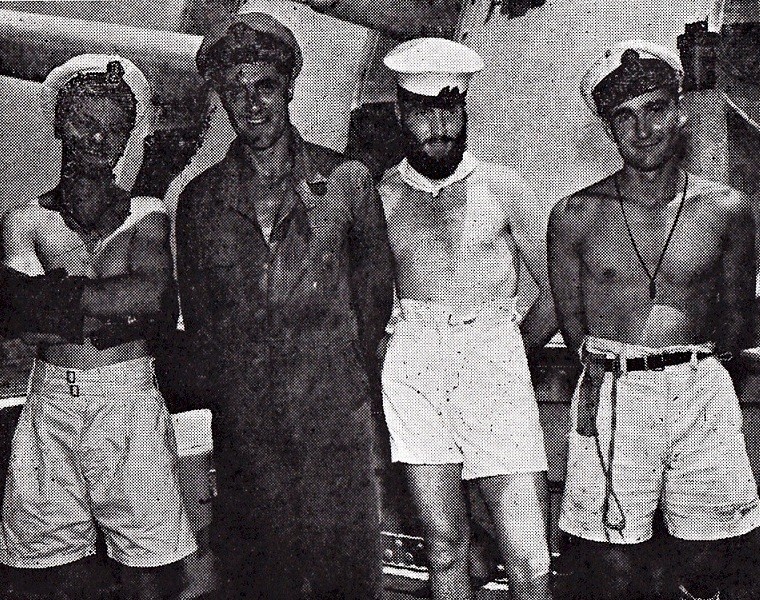
The Canadians arrived just in time to join the Americans and the BPF in the early stages of the Battle of Okinawa (April 1, 1945 – June 22, 1945), which saw some of the fiercest fighting in the Asia-Pacific theatre. HMCS Uganda was primarily tasked with anti-aircraft protection for air carriers. The role was essential: the Japanese relied heavily on kamikaze aircraft as their first line of defence. In the month of April alone, for example, the Japanese forces managed to destroy 20 American ships and damage over 150 more. The Uganda had the task of shooting down Japanese planes before they could pose a threat to the ships in their fleet. On April 12, 1945, Stoker 1c Lawrence Brown wrote in his diary: “Raid was successful, for the day twelve Jap planes… fell twenty thousand feet into the sea. Out [of] nine planes only one crashed through fleet.” The Uganda also participated in raids on islands, approaching from the sea to bomb Japanese air installations. The Canadians had no battle casualties of their own, but experienced shelling and saw the damage done to other ships in their fleet.
Article from The Crows Nest newspaper

Image: For Posterity’s Sake
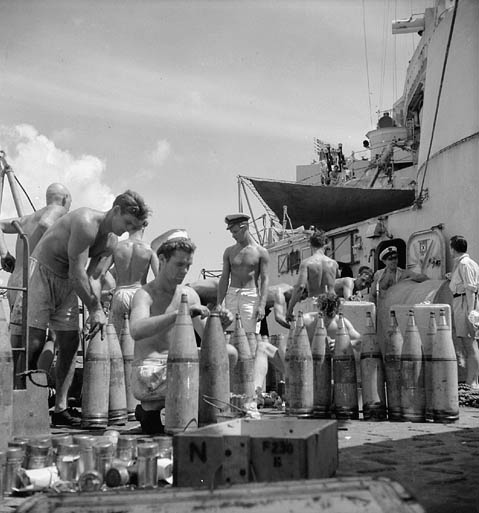
HMCS Uganda sailors setting shell fuses before the bombardment of Truk.
Image: Library and Archives Canada
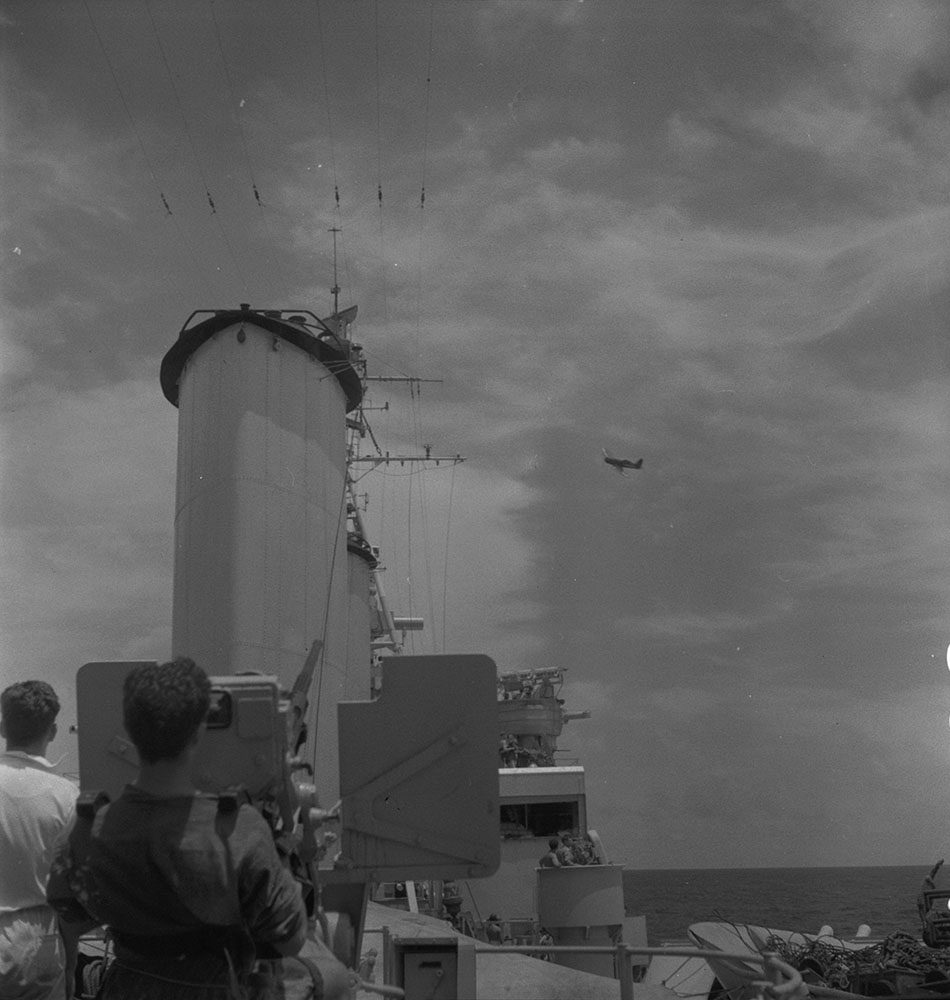
A Japanese aircraft attacking the HMCS Uganda near Ryukyu, Japan
Image: Library and Archives Canada
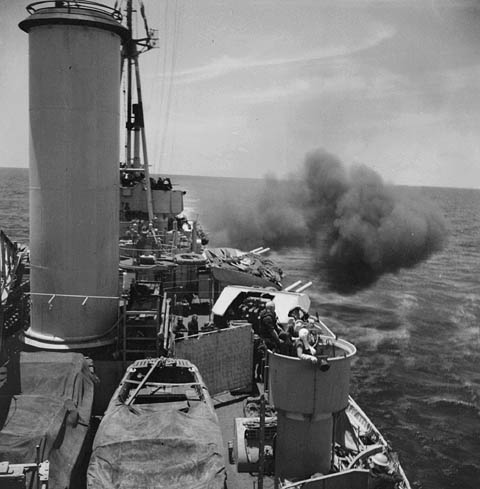
HMCS Uganda bombing Sukuma Airfield on Miyako Jima
Image: Library and Archives Canada
While the Canadians on the Uganda were in the middle of battle, the war against Germany was ending on the other side of the world. Canada could now dedicate military resources and personnel to the war against Japan. Prime Minister Mackenzie King, however, still reeling from the political crisis surrounding conscription, decreed that only volunteers would be deployed to the Asia-Pacific theatre and that anyone who volunteered would receive 30 days of leave in Canada before heading to the Pacific. This made sense for a soldier serving in Europe, but for the 907 men on HMCS Uganda, it was ridiculous. Even more ridiculous: all of the men on the Uganda, indeed all of the men in the Royal Canadian Navy, had volunteered, and had volunteered to fight wherever they were told to. Nonetheless, the government asked each man on the Uganda to re-volunteer. Ship captain Edmond Rollo Mainguy later explained:
“We were busy shooting the Japanese islands and we got a signal saying that the war was over in Europe… The next signal we got fairly shortly was: “Do you volunteer to fight against the Japanese?” It seemed pretty stupid… And after great exchange of signals, we were given orders finally that we had to vote. Everybody on board votes secretly as to whether or not they volunteered to fight against the Japanese. If they said yes, they’d get 30 days leave. Well, that sounded a bit improbable as we were already fighting. So [this] annoyed everybody, every single soul on board.”
Excerpt from Rawling, Bill “Paved with Good Intentions: HMCS Uganda, the Pacific War, and the Volunteer Issue.” Canadian Military History 4, 2 (1995).
The crew were not just annoyed. Living conditions on the Uganda were atrocious. They were serving primarily near the equator in suffocating heat, but the ship wasn’t equipped with exhaust fans and very little air circulated to the sailors’ quarters below deck. The ship did not have a sufficiently large water distillation plant either and drinking water was scarce. The quality of the food was a frequent source of complaint and was so terrible it sometimes left the crew sick.
The vote was held on May 7th, 1945. Of the 907 men aboard, 605 refused to re-volunteer. The ship would have to return to Canada. The British Pacific Fleet, however, couldn’t spare the Uganda quite yet. The crew of HMCS Uganda remained in the Pacific until July 27, 1945, finishing out the Battle of Okinawa, and even joining the attack on mainland Japan. HMCS Uganda arrived back in Canada, at Esquimault, BC, on August 10, just days after the United States dropped the first atomic bomb on Hiroshima and days before Japan’s surrender.
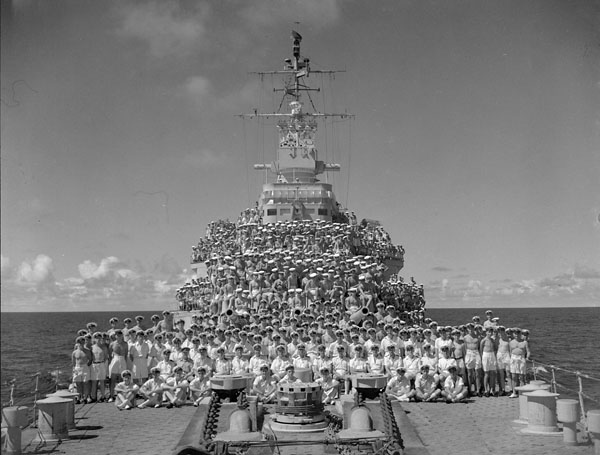
The crew of HMCS Uganda had spent 150 days at sea, they had crossed the world from Halifax back to BC, and they had represented Canada with bravery and tenacity in some of the greatest battles in the Pacific. Their vote to return to Canada is not an illustration of cowardice, but rather of the bizarre circumstances that can arise when politics meets war.
Forgotten Front: Canada in the Pacific War